




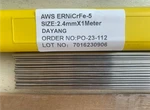
Low Alloy Steel Electrode
High-Strength Low Alloy Steel Electrodes
High-Strength Low Alloy Steel Electrodes are specialized welding consumables designed for welding low alloy steels (steels with alloy element content ≤5%, such as 16Mn, 15CrMo, and Q355). With a low alloy steel core (blended with elements like manganese, chromium, and molybdenum) and low-hydrogen or rutile coatings, they ensure welds match the base material’s strength, toughness, and corrosion resistance. These electrodes are widely used in construction, machinery manufacturing, and energy industries, where structural parts require high load-bearing capacity and durability.


Product Categories and Models
Based on alloy composition and application scenarios, common models include:
E5015-G (J507)
Suitable for welding low alloy high-strength steel (e.g., Q355) with tensile strength ≥490MPa. Features low hydrogen content (≤8mL/100g) and good crack resistance, ideal for bridges and construction machinery.
E5515-G (J557)
Used for welding medium-strength low alloy steel (e.g., 16MnR) with tensile strength ≥550MPa. Contains manganese and silicon to enhance strength, suitable for pressure vessels and heavy-duty machine frames.
E6015-B3 (R307)
Chromium-molybdenum low alloy electrode, designed for heat-resistant low alloy steel (e.g., 15CrMo) working at ≤550°C. Resists high-temperature oxidation, used in boiler pipes and steam pipelines.
Performance Characteristics
Strength Matching
Welds have tensile strength comparable to the base low alloy steel (490–650MPa), ensuring structural load-bearing capacity.
Crack Resistance
Low-hydrogen coatings (hydrogen content ≤8mL/100g) and optimized alloy composition reduce cold cracks and hot cracks, critical for thick-walled components.
Environmental Adaptability
Heat-resistant models (e.g., E6015-B3) resist high-temperature creep, while general-purpose models offer good atmospheric corrosion resistance.
Weldability
Compatible with DC reverse polarity (and AC for some rutile models), ensuring stable arcs and easy slag removal in all-position welding.
Application Areas
Construction Engineering
Welding of bridge steel structures, high-rise building frames, and stadium trusses (using E5015-G for Q355 steel).
01
Pressure Vessels
Welding of oil storage tanks, chemical reactors, and boiler drums (using E5515-G for 16MnR steel).
02
Energy Industry
Welding of power plant steam pipelines, oil and gas transmission pipes, and offshore platform structures (using E6015-B3 for heat-resistant parts).
03
Machinery Manufacturing
Welding of excavator arms, crane booms, and heavy-duty gearboxes (requiring high strength and impact resistance).
04
FAQ
Q1: What is a high-strength Low Alloy Steel Electrode?
A1: A high-strength Low Alloy Steel Electrode is a welding electrode with a low alloy steel core (alloy elements like Mn, Cr, Mo) and functional coating, designed to weld low alloy steels. Its “high-strength” feature refers to weld tensile strength ≥490MPa, matching the base material’s strength. Unlike ordinary carbon steel electrodes, it adds alloy elements to enhance toughness and crack resistance, making it suitable for load-bearing low alloy steel structures.
Q2: How does a Low Alloy Steel Electrode differ from a carbon steel electrode?
A2: In composition, Low Alloy Steel Electrodes contain alloy elements (Mn 1–2%, Cr 0.5–1.5%, etc.) to match low alloy steels, while carbon steel electrodes (e.g., E4303) are iron-carbon based with few alloys. In performance, Low Alloy Steel Electrodes produce welds with higher strength (490MPa+ vs. 420MPa for carbon steel electrodes) and better toughness. Applications: Low Alloy Steel Electrodes for bridge steel; carbon steel electrodes for general structural steel.
Q3: How to choose a Low Alloy Steel Electrode based on the base material?
A3: Match the electrode to the base steel’s strength and alloy type:
●Q355, 16Mn (tensile strength 490MPa): Use E5015-G (J507) for strength matching.
●16MnR, Q390 (tensile strength 550MPa): Choose E5515-G (J557) for higher strength.
●15CrMo, 12Cr1MoV (heat-resistant): E6015-B3 (R307) with Cr-Mo alloy to resist high-temperature creep.
Q4: Why are low-hydrogen coatings common in Low Alloy Steel Electrodes?
A4: Low alloy steels (especially thick-walled ones) are prone to hydrogen-induced cold cracks due to their higher strength and rigidity. Low-hydrogen coatings (hydrogen content ≤8mL/100g) minimize hydrogen intake during welding, reducing crack risks. They also resist moisture absorption better than rutile coatings, ensuring stable performance in humid environments—critical for outdoor projects like bridges.
Q5: What pre-weld treatments are needed for Low Alloy Steel Electrodes?
A5: Key treatments include:
●Base material cleaning: Remove oil, rust, and scale with a wire brush + acetone (prevents hydrogen and porosity).
●Preheating: For steel >12mm thick or high-carbon low alloy steel, preheat to 80–150°C (reduces cooling rate and hardening).
●Electrode baking: Low-hydrogen electrodes (e.g., E5015-G) must be baked at 350–400°C for 1–2 hours, then stored in a 100–150°C oven (avoids moisture).
Q6: What welding parameters are suitable for Low Alloy Steel Electrodes?
A6: Parameters vary by diameter and position:
●3.2mm electrode (all positions): 90–120A, 22–26V (for 6–12mm steel).
●4.0mm electrode (flat/horizontal): 140–180A, 24–28V (for 12–20mm steel).
●5.0mm electrode (flat): 180–220A, 26–30V (for >20mm steel).
Use DC reverse polarity for low-hydrogen models; control interpass temperature ≤300°C to avoid grain coarsening.
Q7: What defects are common in Low Alloy Steel Electrode welds, and how to prevent them?
A7: Common defects include:
●Cold cracks: Caused by hydrogen or high stress. Prevent by baking electrodes, preheating, and post-weld stress relief.
●Hot cracks: From sulfur/phosphorus segregation. Prevent by using low-sulfur electrodes and avoiding excessive current.
●Lack of fusion: Due to low current. Prevent by ensuring proper heat input (e.g., 160A for 4.0mm electrodes on 16mm steel).
Q8: How to store Low Alloy Steel Electrodes to maintain performance?
A8: Unopened low-hydrogen electrodes have a 2-year shelf life in dry storage (≤60% humidity). After opening:
●Bake at 350°C for 1 hour, then store in a 100–150°C holding oven.
●Use within 4 hours of removal from the oven (exposure to air absorbs moisture).
●Rutile low alloy electrodes (e.g., E5016) are less sensitive but still store in dry conditions (use within 1 month of opening).
Q9: Is post-weld heat treatment required for Low Alloy Steel Electrode welds?
A9: It depends on thickness and stress:
●Thin steel (<12mm) in low-stress parts: No treatment needed, but slow cooling is recommended.
●Thick steel (>20mm) or pressure vessels: Stress relief annealing at 600–650°C for 1–2 hours (reduces residual stress).
●Heat-resistant steel (e.g., 15CrMo): Tempering at 720–760°C to restore creep resistance.
Q10: Can Low Alloy Steel Electrodes weld low alloy steel to carbon steel?
A10: Yes, use an electrode matching the lower-strength material. For example, when welding Q355 (low alloy) to Q235 (carbon steel), use E5015-G (matches Q355 but works for Q235). Preheat to 80°C, use low current to avoid dilution, and ensure the weld transitions smoothly between the two steels.
Q11: How to test the strength of welds made with Low Alloy Steel Electrodes?
A11: For structural parts, perform a tensile test—weld strength should be ≥490MPa (for E5015-G) and within 50MPa of the base material. For impact resistance, a Charpy test at -20°C should show ≥27J (critical for cold-region projects). For pressure vessels, ultrasonic testing detects internal defects that reduce strength.
Q12: What is the impact of welding position on Low Alloy Steel Electrode performance?
A12: Vertical and overhead positions require better molten pool control. Use 3.2mm electrodes (vs. 4.0mm for flat) and reduce current by 10–15% to prevent sagging. Low-hydrogen electrodes with “-1” in the model (e.g., E5015-G-1) are designed for all positions, offering better slag retention in vertical welding.
Q13: How to handle moisture-absorbed Low Alloy Steel Electrodes?
A13: Slightly damp low-hydrogen electrodes (exposed to 60–70% humidity for <2 hours) can be re-baked at 350°C for 1 hour. Severely damp electrodes (coating caking) must be discarded—moisture increases hydrogen content, risking cracks in high-strength welds. Never use damp electrodes for pressure vessels or bridges.
Q14: What is the difference between rutile and low-hydrogen Low Alloy Steel Electrodes?
A14: Rutile electrodes (e.g., E5016): Have titanium dioxide coatings, offering stable arcs and easy slag removal—suitable for thin steel or all-position welding. They tolerate minor moisture but have lower crack resistance.
Low-hydrogen electrodes (e.g., E5015-G): Have calcium carbonate coatings, low hydrogen content, and high crack resistance—ideal for thick steel, pressure vessels, or high-stress parts. They require strict baking and storage.
Q15: How to choose electrode diameter for Low Alloy Steel Electrode welding?
A15: Match diameter to steel thickness and position:
●6–12mm steel (all positions): 3.2mm electrode.
●12–20mm steel (flat/horizontal): 4.0mm electrode.
●20mm steel (flat): 5.0mm electrode (root pass) + 4.0mm (filling).
●Example: A 16mm bridge steel plate welded horizontally uses a 4.0mm E5015-G electrode.
Q16: What safety precautions are specific to Low Alloy Steel Electrodes?
A16: Low-hydrogen coatings may release fluorine fumes—ensure ventilation and wear a respirator. Baking electrodes at 350°C requires heat-resistant gloves to avoid burns. Welding high-strength steel produces bright arcs—use a welding helmet with proper shading (shade 10–12).
Q17: How to prevent arc instability when using Low Alloy Steel Electrodes?
A17: Arc instability (caused by moisture, worn electrodes, or improper current) leads to uneven welds. Prevention:
●Use freshly baked electrodes and store them in a holding oven until use.
●Ensure the electrode core is clean (no oil or rust).
●Match current to diameter (e.g., 160A for 4.0mm electrodes) and use DC reverse polarity.
Q18: How to evaluate the quality of Low Alloy Steel Electrode welds?
A18: Key criteria:
●Visual: No cracks, pores, or undercuts; uniform weld shape.
●Mechanical: Tensile strength ≥490MPa, impact toughness ≥27J at -20°C.
●Non-destructive: Ultrasonic/X-ray for internal defects (required for pressure vessels).
●Hydrogen content: ≤8mL/100g (verified via lab testing for critical parts).
Q19: Can Low Alloy Steel Electrodes be used for overlay welding?
A19: Yes, they are used to overlay low alloy steel on carbon steel to enhance strength or corrosion resistance. Use E5015-G for strength overlay or E6015-B3 for heat-resistant overlay. Weld in thin layers (≤3mm) with low current to avoid diluting the alloy elements.
Q20: How to handle weld porosity in Low Alloy Steel Electrode welds?
A20: Porosity is caused by moisture, oil, or poor shielding. Solutions:
●Clean the base material thoroughly and use baked electrodes.
●For low-hydrogen electrodes, ensure no gaps in the coating (which let air in).
●Maintain a short arc (arc length = electrode diameter) to prevent gas entrapment.
Q21: What is the maximum thickness Low Alloy Steel Electrodes can weld?
A21: With multi-layer welding and preheating, they can weld up to 60mm thick low alloy steel. For thick plates:
●Use 5.0mm electrodes for root and hot passes (current 180–220A).
●Fill with 4.0mm electrodes, keeping interpass temperature ≤300°C.
●Preheat to 120°C and stress-relieve after welding to avoid cracks.
Q22: How does temperature affect Low Alloy Steel Electrode performance?
A22: Low ambient temperatures (<5°C) increase cold crack risks—preheat to 150°C instead of 80°C. High temperatures (>35°C) accelerate moisture absorption—store opened electrodes in a moisture-proof cabinet and use within 2 hours.
Q23: What post-weld cleaning is needed for Low Alloy Steel Electrode welds?
A23: Remove slag with a wire brush, then grind sharp edges to reduce stress concentration. For corrosion resistance, paint the weld after 24 hours (allows hydrogen to escape, reducing under-paint cracking). For pressure vessels, perform a liquid penetrant test to detect surface defects.
Q24: Can different types of Low Alloy Steel Electrodes be mixed?
A24: No, mixing (e.g., E5015-G with E6015-B3) causes uneven alloy distribution, leading to strength mismatches or cracks. Use one electrode type per weld. If switching is necessary, test the joint for strength and toughness first.
Q25: How to prevent undercuts in Low Alloy Steel Electrode welds?
A25: Undercuts weaken welds and concentrate stress. Prevention:
●Avoid excessive current (which melts the base metal edge).
●Keep the electrode angle at 30–45° to ensure molten metal fills the weld toes.
●Use a slight weaving motion to distribute metal evenly at the edges.
Q26: What is the shelf life of Low Alloy Steel Electrodes?
A26: Unopened low-hydrogen electrodes have a 2-year shelf life; rutile ones have 1.5 years. Opened low-hydrogen electrodes must be used within 4 hours of baking (or re-baked). Opened rutile electrodes last 1 month in dry storage.
Q27: How to choose Low Alloy Steel Electrodes for high-temperature applications?
A27: Choose chromium-molybdenum electrodes (e.g., E6015-B3) for temperatures ≤550°C—chromium resists oxidation, and molybdenum enhances creep resistance. For higher temperatures (550–650°C), use electrodes with more molybdenum (e.g., E7015-B3) or nickel-based alloys.
Q28: How to test for cold cracks in Low Alloy Steel Electrode welds?
A28: Perform a delayed crack test: store the weldment at 25°C for 48 hours, then check with liquid penetrant testing (cold cracks often form within 48 hours). For critical parts, use a hydrogen probe to measure weld hydrogen content (must be ≤8mL/100g).
Q29: What is the impact of interpass temperature on Low Alloy Steel Electrode welds?
A29: Interpass temperature (≤300°C for most models) affects grain size: too high causes coarsening (reducing toughness); too low leads to incomplete fusion. For heat-resistant steel, interpass temperature must be ≥250°C to avoid cold cracks in Cr-Mo alloys.
Q30: How to repair cracked low alloy steel with Low Alloy Steel Electrodes?
A30: Grind the crack to a V-shape (2mm beyond the visible crack) and clean. Preheat to 150°C (higher than normal). Weld with a new baked electrode, using low current and multi-layer passes. Post-weld, stress-relieve and test with ultrasonic flaw detection.
Q31: Can Low Alloy Steel Electrodes be used with AC current?
A31: Rutile low alloy electrodes (e.g., E5016) can use AC, but DC reverse polarity is better for stability. Low-hydrogen electrodes (e.g., E5015-G) require DC—AC causes arc flicker and hydrogen absorption, increasing crack risks.
Q32: How to ensure all-position welding performance with Low Alloy Steel Electrodes?
A32: Use “-1” graded electrodes (e.g., E5015-G-1) designed for all positions. For vertical welding, use upward progression with a 3.2mm electrode and 100–120A. For overhead welding, keep the arc short and use a slight push angle to control the molten pool.
Q33: What is the difference between E5015-G and E5515-G Low Alloy Steel Electrodes?
A33: E5015-G (J507) has tensile strength ≥490MPa, suitable for Q355 steel (490MPa). E5515-G (J557) has ≥550MPa strength, matching Q390 steel (550MPa). E5515-G contains more manganese (1.2–1.6% vs. 1.0–1.3% in E5015-G) to enhance strength, making it ideal for higher-load parts like crane booms.
Q34: How to prevent slag inclusions in Low Alloy Steel Electrode welds?
A34: Slag inclusions are caused by incomplete slag removal or fast welding. Prevention:
●Clean slag thoroughly between layers with a chisel.
●Use a moderate welding speed to allow slag to float to the surface.
●Avoid excessive weaving, which traps slag in the weld.
Q35: How to maintain the corrosion resistance of Low Alloy Steel Electrode welds?
A35: For atmospheric corrosion resistance, choose electrodes with copper or chromium (e.g., E5015-G with 0.2% Cu). Post-weld, clean the weld to remove slag and oxides, then apply anti-corrosion paint. For marine environments, use a zinc-rich primer to prevent galvanic corrosion.