




Welding Glasses
Excellent Welding Glasses for Safe Welding Operations
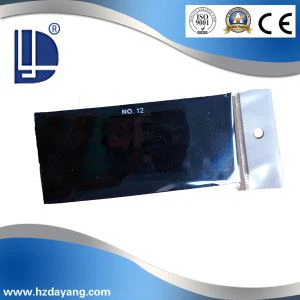
Welding glasses are core protective equipment in welding operations, designed to shield the eyes and facial skin from intense arc light, ultraviolet (UV) rays, infrared (IR) rays, high-temperature spatter, and metal debris. Our product range covers multiple types of welding glasses, tailored to different welding methods (such as arc welding, TIG welding, and oxy-acetylene welding) and working environments (high-temperature, precision operations, etc.), ensuring comprehensive safety protection and stable operation experience for workers in various industries.
Product Series
Standard Welding Glasses
SG-100 General-Purpose Welding Glasses
• Features: Equipped with polycarbonate lenses (impact-resistant and not easy to break), an anti-scratch coating (extending lens service life by 30%), a lightweight PP frame (weight ≤70g), and an adjustable elastic headband (suitable for head circumferences of 52-65cm). The lens has good light transmittance, ensuring clear observation of the weld pool while blocking harmful rays.
• Technical Parameters: Available in lens shade numbers 9 and 10. The visible light transmittance is 0.12% (shade 9) and 0.08% (shade 10). It provides UV protection in the 200-380nm range and IR protection in the 780-1400nm range, meeting ANSI Z87.1 impact resistance standards.
• Applications: Manual arc welding, shielded metal arc welding, general maintenance and repair welding (such as machinery part patching), and low-current welding operations (current ≤200A).
SG-200 High-Definition Welding Glasses
• Features: Adopts optical-grade glass lenses (high light transmittance with negligible distortion), a multi-layer anti-fog coating (effective in high-humidity environments), and an ergonomic nylon frame (fitting the facial contour to reduce pressure on temples). The lens edge is polished to avoid glare reflection.
• Technical Parameters: Available in lens shade numbers 11 and 12. The visible light transmittance is 0.06% (shade 11) and 0.04% (shade 12), with a light transmittance error of ≤2%. The weight is 85g.
• Applications: Gas metal arc welding (MIG), flux-cored arc welding, medium-current welding (200-300A), and scenarios requiring clear observation of weld pool details (such as decorative metal welding).
Auto-Darkening Welding Glasses
AD-300 Auto-Darkening Welding Glasses
• Features: Uses LCD liquid crystal lenses (with fast response), automatic shade adjustment (shade 9-13, adjustable according to arc intensity), sensitivity and delay controls (delay time 0.1-1.0s, adapting to different cooling speeds of welds), and a replaceable CR2032 battery (easy to replace without tools).
• Technical Parameters: The response time is ≤1/25000s, and the darkening time is 0.1-0.3s. The light state transmittance is ≥80%, and the battery life is over 1000 hours.
• Applications: TIG welding, precision spot welding, multi-position welding (vertical, overhead), and scenarios requiring frequent arc starting/stopping (such as assembly line welding).
Special Environment Welding Glasses
HE-400 High-Temperature Resistant Welding Glasses
• Features: The frame is made of high-temperature resistant silicone (withstanding 200°C continuous high temperature), with a flame-retardant polycarbonate lens (resistant to spatter burning) and a sweat-absorbing cotton headband (reducing discomfort from long-term use in high temperatures).
• Applications: Oxy-acetylene welding, furnace mouth welding, high-temperature metal forging auxiliary welding, and other high-temperature operations (ambient temperature 50-150°C).
Technical Advantages
Key Advantages
• High-Quality Lenses: Select imported optical materials, with a UV/IR blocking rate of ≥99.9%, ensuring no harmful rays leak. The light transmittance error is less than 2%, avoiding blurred vision caused by poor lens quality.
• Advanced Coating Technology: Adopt a 5-layer composite coating (anti-scratch, anti-fog, anti-reflective, UV-blocking, IR-blocking), which not only extends the lens service life by 50% but also maintains clear vision in humid or high-light environments.
• Strict Quality Testing: Undergo 8 strict performance tests from raw materials to finished products, including impact resistance (simulating spatter impact), high-temperature resistance (100°C baking for 24 hours), UV blocking effect (spectrophotometer detection), and lens durability (10,000 times of friction testing), ensuring stable product performance.
Technical Parameters Comparison
• Standard Welding Glasses: UV blocking rate ≥99.9%, IR blocking rate ≥99.5%, service life over 500 hours, suitable for general welding and low to medium current environments.
• Auto-Darkening Welding Glasses: UV blocking rate ≥99.9%, IR blocking rate ≥99.8%, service life over 800 hours (excluding battery), suitable for precision welding and multi-position operations.
• High-Temperature Resistant Welding Glasses: UV blocking rate ≥99.9%, IR blocking rate ≥99.5%, service life over 600 hours, suitable for high-temperature and spatter-intensive environments.
Applications
Industry Applications
• Construction: On-site steel structure welding, bridge component welding, high-rise building steel frame connection.
• Manufacturing: Automobile body welding, machinery part assembly welding, pressure vessel sealing welding.
• Energy: Oil and gas pipeline welding, power plant boiler maintenance welding, offshore platform steel structure welding.
• Metallurgy: Steel mill continuous casting machine welding, metal mold repair welding, high-temperature alloy welding.
Case Studies
• Large Bridge Construction Project: Workers used SG-200 high-definition welding glasses for on-site steel structure welding. The anti-glare coating effectively reduced the interference of sunlight, and the high-definition lens made the weld pool clearly visible, reducing welding defects by 25%.
• Automobile Manufacturing Plant: AD-300 auto-darkening welding glasses were adopted in the assembly line welding. The automatic shade adjustment function avoided the trouble of repeatedly lifting the glasses when positioning workpieces, improving welding efficiency by 30%.
• Metallurgical Factory: HE-400 high-temperature resistant welding glasses performed stably in furnace mouth welding. The high-temperature resistant frame did not deform after 8 hours of continuous use, and the flame-retardant lens successfully blocked multiple high-temperature spatters, ensuring worker safety.
Specifications
• SG-100: Lens size 50×100mm, frame material polypropylene, weight 70g, packaging 50 pcs/box.
• SG-200: Lens size 55×110mm, frame material nylon, weight 85g, packaging 50 pcs/box.
• AD-300: Lens size 45×90mm, frame material PC + aluminum alloy, weight 95g, packaging 30 pcs/box.
• HE-400: Lens size 50×100mm, frame material high-temperature silicone, weight 90g, packaging 40 pcs/box.
Quality Certification
• ANSI Z87.1 (American National Standards Institute) Certification: Ensures impact resistance and protective performance meet U.S. safety standards.
• EN 166 (European Standard) Certification: Certifies optical clarity, UV/IR blocking effect, and structural stability, suitable for the European market.
• GB 30035-2013 (National Standard of China) Compliance: Meets the requirements of China's welding protective equipment standards, applicable to domestic industrial scenarios.
• ISO 9001 Quality Management System Certification: Ensures the entire production process (from raw material procurement to product delivery) is controlled, with stable product quality.
FAQ
Q1: What factors should I consider when selecting welding glasses?
A1: When selecting welding glasses, consider the welding method (e.g., TIG requires clear observation, so auto-darkening glasses are preferred), welding current (high current needs higher shade), working environment (high temperature requires heat-resistant models), and personal comfort (frame weight, headband adjustability). It is crucial to ensure the glasses match the protective requirements of the task and fit well to avoid slipping.
Q2: What is the difference between standard welding glasses and auto-darkening welding glasses?
A2: Standard welding glasses have a fixed shade, are low-cost and easy to maintain, but require lifting the glasses to observe the workpiece before welding, which is inefficient. Auto-darkening welding glasses can automatically switch from a light state (shade 3-4, convenient for positioning) to a dark state (shade 9-13) when an arc is generated, suitable for precision welding and frequent start-stop operations. However, they are more expensive and require battery replacement.
Q3: How to choose the right lens shade number?
A3: The shade number is mainly determined by the welding current and method:
• Low current (≤100A, such as small TIG welding): Shade 9-10
• Medium current (100-300A, such as MIG welding): Shade 11-12
• High current (>300A, such as heavy-duty arc welding): Shade 13-14
• Oxy-acetylene welding (lower arc intensity but high heat): Shade 4-6
Q4: How to maintain welding glasses daily?
A4: Daily maintenance steps:
• After use, wipe the lenses with a soft, lint-free cloth to remove dust and oil stains (avoid rough paper towels to prevent scratches).
• Clean the frame with a neutral detergent and dry it with a cloth to prevent sweat corrosion (especially for metal frames).
• Store in a dedicated protective case to avoid extrusion (prevent lens cracking or frame deformation).
• For auto-darkening glasses, if not used for more than 1 month, remove the battery to prevent leakage and damage to internal circuits.
Q5: What is the service life of welding glasses?
A5: Under proper storage and maintenance:
• Standard welding glasses: 1-2 years. Replace them if the lens is severely scratched (affecting vision) or the frame is cracked (losing fixation).
• Auto-darkening welding glasses: The lens service life is 2-3 years; the battery life is 6-12 months (depending on usage frequency, usually 1000 hours of continuous use). If the darkening response becomes slow, replace the battery first; if it still fails, the lens may need to be replaced.
• High-temperature resistant glasses: 1.5-2 years. Check the frame's high-temperature resistance regularly (if it softens or deforms at high temperatures, replace it immediately).
Q6: Can welding glasses be shared among multiple people?
A6: It is not recommended. Sharing has two main risks: 1) Hygiene: The frame is in contact with the skin, and sharing may spread sweat, bacteria, or skin diseases. 2) Safety: Everyone's head size and wearing habits are different. Ill-fitting glasses may shift during welding, causing light leakage around the lenses and exposing the eyes to arc light or spatter.
Q7: How to check if welding glasses are still effective?
A7: Regular inspection items:
• Lenses: Check for cracks, deep scratches, or coating peeling. Even small cracks will reduce the UV/IR blocking effect, so they must be replaced.
• Frames: Ensure there is no looseness (such as loose headband screws) or deformation (such as bent temples), otherwise, the glasses cannot fit closely to the face.
• Auto-darkening function: Test by striking an arc. The lens should darken within 0.3 seconds, and return to light state within 1 second after the arc is extinguished. If there is a delay or uneven darkening, it indicates a failure.
Q8: Are there special requirements for using welding glasses in high-temperature environments?
A8: In high-temperature environments (such as furnace welding, oxy-acetylene cutting), the glasses must meet the following requirements:
• Frame material: Choose heat-resistant materials (such as fiberglass or silicone-coated plastic) that can withstand 150-200°C (avoid ordinary plastic frames, which may soften and deform).
• Lens performance: Use flame-retardant lenses (resistant to high-temperature spatter, not easy to melt or crack).
• Wearing comfort: Equipped with sweat-absorbing and heat-insulating headbands (such as cotton or breathable mesh) to reduce discomfort caused by prolonged sweating.
Q9: Can welding glasses protect against all harmful rays?
A9: Qualified welding glasses can block more than 99.9% of UV and IR rays generated by welding arcs, but they have limitations: 1) They cannot block light from the side (such as arc light from the left/right of the lenses). For high-intensity welding, they should be used with a welding hood to cover the entire face. 2) They are not designed to protect against other light sources (such as laser cutting rays), which require specialized laser protective glasses.
Q10: What should I do if the lens of welding glasses is scratched?
A10: Different handling methods according to the degree of scratches:
• Minor scratches (not in the central vision area and does not affect vision): Can be used temporarily, but pay attention to observation.
• Severe scratches (in the central area, causing blurred vision, or breaking the protective coating): Must be replaced immediately. Scratches will reduce the UV/IR blocking ability and may cause eye fatigue due to blurred vision.
• Do not use sandpaper or sharp tools to polish the scratches, as this will further damage the lens.
Q11: Do auto-darkening welding glasses need to be calibrated?
A11: High-quality auto-darkening glasses are factory-calibrated and do not require user calibration under normal use. If you find problems such as inconsistent darkening on both sides of the lens or failure to darken, first check if the battery is exhausted (replace the battery and test again). If the problem persists, contact the manufacturer's after-sales service for professional calibration or repair—do not disassemble them yourself (to avoid damaging internal components).
Q12: Can welding glasses be used for other tasks, such as cutting or grinding?
A12: Welding glasses are designed for welding arcs and are not fully applicable to other tasks:
• Cutting (such as plasma cutting): The arc characteristics are similar to welding, so you can use welding glasses with the corresponding shade (same as welding of the same current).
• Grinding: Generates a large amount of high-speed flying debris. Welding glasses focus on blocking light, but their impact resistance may not meet the grinding requirements. It is recommended to use specialized grinding safety glasses (ANSI Z87.1 certified for high impact resistance).
Q13: What is the difference between "shade number" and "light transmittance"?
A13: Both reflect the light-blocking ability but in different ways:
• Shade number: A standardized rating, with higher numbers indicating stronger light blocking. For example, shade 9 blocks more light than shade 8, and shade 12 is darker than shade 11.
• Light transmittance: The percentage of light passing through the lens. Lower transmittance means darker lenses. For example, shade 10 lenses have a transmittance of about 0.08%, meaning only 0.08% of visible light can pass through.
The two are corresponding: the higher the shade number, the lower the light transmittance.
Q14: How to choose between glass and polycarbonate lenses?
A14: Choose according to the working scenario:
• Glass lenses: Advantages are high hardness (not easy to scratch), good optical clarity (no distortion), suitable for low-spatter tasks (such as TIG welding). Disadvantages are heavy weight (easy to cause discomfort after long-term wearing) and fragility (easy to break when dropped).
• Polycarbonate lenses: Advantages are light weight (reducing wearing burden), strong impact resistance (resistant to spatter and drops), suitable for high-spatter tasks (such as MIG welding). Disadvantages are poor scratch resistance, so choose models with anti-scratch coating.
Q15: Can welding glasses with a lower shade number be used for short welding tasks?
A15: No. Even short-term exposure to unfiltered arc light can cause "arc eye" (acute corneal inflammation), with symptoms such as eye pain, redness, tearing, and photophobia, which may appear 6-12 hours after exposure. For example, using shade 8 for 300A welding (which requires shade 12) will cause the eyes to be exposed to excessive light, even if the welding time is only 1-2 minutes. Always choose the shade number according to the current, regardless of the welding duration.
Q16: Are there welding glasses suitable for people with prescription glasses?
A16: Yes. There are two solutions: 1) "Over-prescription" welding glasses: Designed with a larger frame or adjustable structure, which can be worn over ordinary prescription glasses, ensuring both vision correction and protection (suitable for temporary use). 2) Custom prescription welding glasses: The manufacturer can grind the lens according to the user's prescription, integrating vision correction and protective functions (more comfortable, suitable for long-term use, need to provide a prescription certificate).
Q17: What causes fogging on welding glass lenses, and how to prevent it?
A17: Fogging is caused by the condensation of water vapor on the lens surface (warm, moist air from breathing or sweat meets the relatively cold lens). Prevention methods:
• Choose glasses with anti-fog coating (most high-end models have this function, which can reduce fogging by 80%).
• Spray anti-fog agent on the lens before use (available in the market, suitable for ordinary glasses).
• Ensure the frame is not too tight (leave a small gap for air circulation to reduce moisture accumulation).
• In cold environments, pre-warm the glasses with hands before wearing to reduce the temperature difference between the lens and the air.
Q18: How to adjust the headband of welding glasses for a secure fit?
A18: The adjustment goal is "snug but not tight" to ensure stability without discomfort:
• Adjust the headband length: Pull the headband to make the glasses fit the forehead, with no obvious gaps between the lenses and the eyes (no light leakage when looking up/down).
• Adjust the frame angle: Tilt the frame so that the top edge of the lenses is aligned with the eyebrows, covering the eye sockets to block overhead light.
• Check stability: Shake the head gently. If the glasses do not shift, the adjustment is appropriate; if they slide, shorten the headband slightly.
Q19: What safety certifications should I look for in welding glasses?
A19: Key certifications to ensure quality and protection:
• ANSI Z87.1 (U.S.): Verifies impact resistance (resistant to spatter and debris) and UV/IR protection performance.
• EN 166 (Europe): Tests optical clarity, frame strength, and protective effect, mandatory for the European market.
• GB 30035-2013 (China): Specifies the technical requirements for welding protective glasses, including light transmittance and structural safety, applicable to domestic use.
• ISO 9001: Reflects the manufacturer's quality management level, ensuring stable product consistency.
Q20: Can children or people with small head sizes use standard welding glasses?
A20: Standard glasses may be too loose for small heads, leading to instability. It is recommended to choose "junior welding glasses" designed for small head sizes, which have:
• Adjustable headbands (minimum head circumference 50cm, suitable for teenagers or people with small heads).
• Lightweight frames (reducing pressure on the neck).
• Smaller lens sizes (fitting the eye distance of children or small faces).
Note: Welding operations are not recommended for minors. If it is for training, it must be under strict adult supervision.
Q21: How to dispose of worn-out welding glasses?
A21: Environmentally friendly disposal methods:
• Lenses: If they are glass lenses and not broken, they can be recycled as ordinary glass (check local recycling regulations). Polycarbonate lenses can be recycled as plastic (marked with recycling code #7).
• Frames: Metal frames (such as aluminum) can be recycled as scrap metal; plastic frames can be recycled according to their material (such as PP, nylon).
• Auto-darkening glasses: Remove the battery first (dispose of as hazardous waste), then recycle the lenses and frames separately.
Q22: Do welding glasses need to be replaced after being hit by spatter?
A22: Judgment based on the damage degree:
• If the spatter bounces off without leaving marks, the glasses can continue to be used.
• If the spatter leaves a small burn mark on the lens but does not affect vision and the coating is not damaged, it can be used temporarily (but check regularly).
• If the spatter causes the lens to crack, or the frame is hit and deformed (affecting the fit), replace it immediately.
Q23: Can welding glasses be used for underwater welding?
A23: No. Underwater welding requires specialized diving welding masks, which have the following characteristics that ordinary welding glasses do not have: 1) Waterproof structure (preventing water from entering the mask and affecting vision). 2) Pressure resistance (adapting to underwater pressure, avoiding mask deformation). 3) Integrated design (combining breathing tubes and protective lenses, suitable for underwater operations). Ordinary welding glasses are not waterproof and cannot withstand underwater pressure, so they are completely unsuitable.
Q24: What is the difference between "passive" and "active" auto-darkening welding glasses?
A24: Both are auto-darkening, but the power supply methods are different:
• Passive auto-darkening glasses: Use solar cells to power the darkening function (no need to replace batteries), suitable for continuous welding with frequent arcs (solar cells can be continuously charged). The disadvantage is that they may not work properly in dark environments (insufficient light to charge).
• Active auto-darkening glasses: Use replaceable batteries (such as CR2032), which can work normally in dark environments (such as indoor welding at night). They usually have adjustable sensitivity and delay, suitable for complex welding scenarios. The disadvantage is that the battery needs to be replaced regularly.
Q25: How to choose welding glasses for outdoor welding?
A25: Outdoor welding (such as construction sites) is affected by sunlight, so choose glasses with the following features:
• Anti-glare coating on lenses (reducing the reflection of sunlight, avoiding glare that affects the observation of the weld pool).
• Auto-darkening glasses with high sensitivity (can accurately detect arcs even in strong sunlight, avoiding failure to darken).
• Frames with side shields (blocking sunlight from the sides and wind-blown sand and debris).
Q26: Can welding glasses cause eye strain?
A26: Poorly selected or worn glasses may cause eye strain, mainly for the following reasons:
• Incorrect shade: Too dark (the eyes need to work hard to see the weld pool) or too light (the eyes are stimulated by strong light and squint for a long time).
• Poor lens clarity: Lenses with low transmittance or distortion force the eyes to focus continuously, causing fatigue.
• Ill-fitting frames: Frequent slipping requires constant adjustment, leading to eye movement and strain. Choosing high-definition lenses and properly fitting frames can minimize eye strain.
Q27: How to clean oil or spatter from welding glass lenses?
A27: Correct cleaning steps:
• Wait for the spatter to cool completely (do not wipe hot spatter, which may melt the lens or spread the spatter to a larger area).
• For oil stains: Dip a soft cloth in a small amount of neutral detergent solution, gently wipe the lens, and then wipe it clean with a dry cloth.
• For solidified spatter: Do not scrape with a knife or hard object (to avoid scratching the lens). Soak the lens in warm water for 5 minutes to soften the spatter, then gently wipe it off.
• Do not use organic solvents (such as acetone, alcohol) to clean, as they will damage the anti-fog or anti-scratch coating.
Q28: Are there welding glasses designed for people with sensitive skin?
A28: Yes. For people with skin sensitivity (prone to allergies or rashes), choose the following glasses:
• Hypoallergenic frames: Made of medical-grade silicone or titanium (these materials have low irritation to the skin and are not easy to cause allergies).
• Smooth surface: The frame has no rough edges or burrs to avoid rubbing the skin.
• Breathable headbands: Made of cotton or mesh fabric (absorbing sweat and reducing stuffiness, avoiding skin rashes caused by long-term contact).
Q29: What is the minimum age for using welding glasses?
A29: There is no strict "minimum age" for the glasses themselves, but welding is a high-risk operation, and minors (under 18 years old) are not recommended to engage in it according to labor regulations. If it is for welding skill training (such as vocational school students), the age is generally over 16 years old, and they must use age-appropriate glasses (junior models) and be supervised by professionals.
Q30: How to verify the authenticity of branded welding glasses?
A30: Authenticity verification methods:
• Scan the unique QR code on the packaging (most brands include this for verification).
• Check for certification labels (e.g., ANSI Z87.1, EN 166) with valid serial numbers (fake labels often lack details).
• Contact the manufacturer’s customer service with the product batch number for confirmation.