




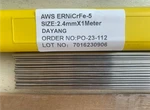
Carbon Steel Electrode
High-Performance Carbon Steel Electrodes
Carbon steel electrodes are essential consumables for arc welding, designed to provide stable arc performance, excellent weld quality, and reliable mechanical properties. Our product range includes multiple models optimized for different welding scenarios, ensuring efficient and high-quality welding results across industries.


Product Series
1. General Purpose Electrodes
E6013 Carbon Steel Electrode
Features:
- Rutile-based coating for stable arc and easy slag removal
- All-position welding capability
- Excellent bead appearance with minimal spatter
Technical Parameters:
|
Diameter (mm) |
Length (mm) |
Tensile Strength (MPa) |
Current Type |
|
2.5 |
350 |
≥420 |
AC/DC |
|
3.2 |
400 |
≥420 |
AC/DC |
|
4.0 |
400 |
≥420 |
AC/DC |
Applications:
General construction, machinery manufacturing, automotive components, and maintenance welding.
2. Low Hydrogen Electrodes
E7018 Low Hydrogen Electrode
Features:
- Low hydrogen potassium coating, minimal diffusible hydrogen content (≤8mL/100g)
- Excellent crack resistance and impact toughness
- Suitable for all-position welding
Technical Parameters:
|
Diameter (mm) |
Length (mm) |
Yield Strength (MPa) |
Impact Energy (J) |
|
3.2 |
400 |
≥490 |
≥47 |
|
4.0 |
400 |
≥490 |
≥47 |
|
5.0 |
450 |
≥490 |
≥47 |
Applications:
Pressure vessels, high-rise building steel structures, offshore platforms, and critical welding applications.
3. High-Efficiency Electrodes
E7024 Iron Powder Electrode
Features:
- Iron powder-enhanced coating for high deposition rate
- Fast welding speed and excellent bead appearance
- Suitable for large-scale welding projects
Technical Parameters:
|
Diameter (mm) |
Welding Current (A) |
Deposition Rate (kg/h) |
Applicable Position |
|
4.0 |
140-180 |
5-8 |
Flat & Horizontal |
|
5.0 |
180-220 |
8-12 |
Flat & Horizontal |
Applications:
Heavy machinery, bridge construction, and large structural welding.
Technical Advantages
Lorem ipsum dolor sit, amet consectetur adipisicing elit.
Material Advantages
- High Purity Raw Materials: Using 99.95% pure electrolytic copper and low-carbon steel core wires
- Advanced Manufacturing: German imported production line ensures consistent quality
- Quality Control: 7-step quality inspection process from raw material to finished product
Performance Advantages
|
Advantage |
Details |
|
Arc Stability |
Stable arc even at low current, minimal spatter |
|
Weld Quality |
Meets AWS A5.1 and GB/T 5118 standards |
|
Environmental Performance |
Lead-free and low hydrogen formula, RoHS compliant |
|
Storage Life |
2 years shelf life under proper storage conditions |
FAQ
Q1: What factors should I consider when selecting a carbon steel electrode?
A1: Key considerations include: base material type, joint design, required mechanical properties, and welding position. For critical applications, low hydrogen electrodes (like E7018) are recommended.
Q2: What is the difference between E6013 and E7018 electrodes?
A2: E6013 is general-purpose with rutile coating for easy use, while E7018 is low hydrogen type with higher strength (70,000 psi tensile strength) and superior crack resistance, suitable for critical structures.
Q3: How to properly store opened electrodes?
A3: After opening, store in airtight containers with humidity ≤60%. Low hydrogen electrodes must be stored in heated ovens at 80-100°C if not used immediately.
Q4: What causes weld porosity and how to prevent it?
A4: Porosity is mainly caused by moisture, oil, or rust. Prevention methods include thorough cleaning, proper electrode drying, and controlled welding parameters.
Q5: Can carbon steel electrodes weld stainless steel?
A5: Not recommended. Carbon steel electrodes will contaminate stainless steel, reducing corrosion resistance. Use stainless steel-specific electrodes instead.
Q6: What is the correct drying procedure for low hydrogen electrodes?
A6: Bake at 350-400°C for 1-2 hours, then store at 80-100°C in a holding oven. Re-dry if exposed to air for >4 hours.
Q7: How to determine electrode diameter based on material thickness?
A7: General guidelines:
≤3mm material: 2.5mm electrode
3-8mm material: 3.2mm electrode
8mm material: 4.0-5.0mm electrode
Q8: What safety precautions are needed for electrode welding?
A8: Essential precautions: wear auto-darkening helmet, flame-resistant clothing, and ensure adequate ventilation during operation.
Q9: How to handle electrode moisture absorption?
A9: Low hydrogen electrodes must be baked at 350-400°C for 1-2 hours before use. Never use electrodes with visible moisture or damaged coating.
Q10: What is the effect of welding current on penetration?
A10: Higher current increases penetration depth: for E7018 (4.0mm), 140-180A provides optimal penetration without burn-through.
Q11: Can I use AC power for low hydrogen electrodes?
A11: AC is possible but not recommended. DC+ (direct current electrode positive) is preferred for low hydrogen electrodes to ensure arc stability.
Q12: How to select electrode diameter for different material thicknesses?
A12: General recommendations:
≤3mm: 2.5mm electrode
3-8mm: 3.2mm electrode
8-16mm: 4.0mm electrode
Q13: What is the maximum allowed humidity in the welding environment?
A13: Relative humidity should not exceed 80% for general electrodes; ≤60% for low hydrogen electrodes to prevent moisture absorption.
Q14: How to identify counterfeit electrodes?
A14: Check for: proper certification marks, batch number traceability, and verify through manufacturer's official website authentication system.
Q15: What is the effect of welding speed on weld quality?
A15: Optimal speed: 150-250mm/min. Too fast causes insufficient penetration; too slow increases heat input and distortion.
Q16: Can carbon steel electrodes weld galvanized steel?
A16: Yes, but requires thorough cleaning of zinc coating and use of E6011 cellulose electrodes with higher current.
Q17: What is the difference between AWS and GB standards for electrodes?
A17: AWS focuses on mechanical properties, while GB emphasizes manufacturing processes and raw material requirements.
Q18: How to prevent weld spatter during welding?
A18: Solutions include: adjusting current parameters, maintaining proper arc length, and using anti-spatter compounds.
Q19: What is the service life of unopened electrode packages?
A19: Typically 2 years from production date when stored under recommended conditions (10-30°C, ≤60% humidity).
Q20: How to handle welding of rusty steel plates?
A20: Use E6011/E6010 cellulose electrodes, increase current by 10-15%, and ensure thorough cleaning of the welding area.
Q21: What is the effect of electrode angle on weld formation?
A21: Maintain 60-75° angle for flat welding, 45-60° for vertical welding to control penetration and bead shape.
Q22: Can I use E7018 electrodes for overhead welding?
A22: Yes, E7018 is suitable for all positions, including overhead, with proper current control (reduce by 10-15% vs flat position).
Q23: How to achieve good root fusion in pipe welding?
A23: Use E6010 cellulose electrodes for root pass, ensuring 100% penetration with proper current and travel speed.
Q24: What is the effect of preheating temperature on welding quality?
A24: Recommended preheating: 80-150°C for carbon steel, measured with contact thermometers to ensure accuracy.
Q25: Can carbon steel electrodes weld cast iron?
A25: Yes, use nickel-based electrodes (ENi-CI) specifically designed for cast iron welding applications.
Q26: How to handle welding of high-carbon steel?
A26: Use low hydrogen electrodes (E7018), preheat to 150-250°C, and implement post-weld heat treatment.
Q27: What is the difference between "rutile" and "cellulose" coatings?
A27: Rutile coatings (E6013) offer better slag removal; cellulose (E6010) provides deeper penetration.
Q28: How to select electrodes for different welding positions?
A28: Choose "1" in the fourth digit of AWS classification (e.g., E7018 where "1" indicates all-position capability).
Q29: What is the maximum allowed moisture content in low hydrogen electrodes?
A29: ≤0.2% moisture content, verified through moisture analysis before use.
Q30: How to verify electrode quality upon receipt?
A30: Check for: intact packaging, clear batch number, certification documents, and proper storage conditions.
Q31: What causes undercut defects and how to prevent them?
A31: Undercut is caused by excessive current or travel speed. Solutions: reduce current, adjust travel speed, and maintain proper arc length.
Q32: Can I use E6013 electrodes for high-temperature applications?
A32: No, E6013 is not suitable for high-temperature service. Choose E7018 or specialized high-temperature electrodes instead.
Q33: How to ensure consistent weld quality in mass production?
A33: Implement welding procedure specifications (WPS), regular operator training, and statistical process control.
Q34: What is the effect of electrode coating thickness on performance?
A34: Optimal coating thickness: 1.2-1.5 times core wire diameter, ensuring proper gas formation and protection.
Q35: How to handle welding of galvanized steel with carbon steel electrodes?
A35: Remove zinc coating in weld area, use E6011 electrodes with DC+ polarity, and ensure adequate ventilation.
Q36: What is the effect of electrode storage time on performance?
A36: Beyond 2 years from production date, electrodes require re-certification testing before use.
Q37: Can I use E7018 electrodes for submerged arc welding?
A37: No, submerged arc welding requires specialized submerged arc wires, not covered electrodes.
Q38: How to select electrodes for repair welding?
A38: For repair work, E6013 (general) or E7018 (critical structures) are recommended based on repair importance.
Q39: What is the difference between "fast-freeze" and "slow-freeze" electrodes?
A39: Fast-freeze (E6010) solidifies quickly; slow-freeze (E7018) provides better fusion and mechanical properties.
Q40: How to prevent hydrogen-induced cracking?
A40: Key measures: low hydrogen electrodes, proper drying, preheating, and post-weld heat treatment at 250-350°C for 1-2 hours.
Q41: What is the effect of welding cable length on current?
A41: For 300A current, use ≥50mm² cable; length ≤50m to minimize voltage drop (<3%).
Q42: Can I use the same electrode for both root and fill passes?
A42: Yes, but root pass requires deeper penetration (E6010/E6011), while fill passes can use E7018 for higher strength.
Q43: How to select electrodes for low-temperature service?
A43: Choose low hydrogen electrodes with guaranteed impact toughness at service temperature (e.g., -40°C for E7018).
Q44: What is the effect of electrode age on performance?
A44: Beyond 2 years from production date, electrodes require re-certification testing to verify mechanical properties.
Q45: How to achieve good sidewall fusion in groove welding?
A45: Maintain proper electrode angle (70-80°), use oscillation technique, and ensure sufficient current for sidewall penetration.
Q46: What is the difference between AWS and ISO standards for electrodes?
A46: AWS focuses on mechanical properties; ISO emphasizes chemical composition and manufacturing processes.
Q47: Can I use E7018 electrodes for underwater welding?
A47: No, specialized underwater electrodes are required due to unique environmental challenges.
Q48: How to handle welding of clad steel plates?
A48: Use electrodes matching the clad layer material, with proper cleaning and controlled heat input.
Q49: What is the effect of electrode extension on welding current?
A49: Longer extension increases resistance, requiring higher voltage to maintain proper current levels.
Q50: How to select electrodes for automated welding systems?
A50: Choose smooth-feed electrodes with consistent diameter, like E70S-6 solid wire for GMAW processes.
Q51: What causes arc instability and how to fix it?
A51: Causes include dirty workpiece, improper polarity, or moisture. Solutions: clean workpiece, verify polarity, and dry electrodes.
Q52: Can carbon steel electrodes weld aluminum?
A52: No, aluminum requires specialized aluminum electrodes (e.g., ER4043/ER5356) due to different metallurgical properties.
Q53: How to prevent slag inclusion in multi-pass welding?
A53: Thoroughly clean slag between passes, maintain proper travel speed, and ensure complete slag removal.
Q54: What is the effect of joint design on electrode selection?
A54: V-groove joints require smaller diameter electrodes (3.2mm) for better access and fusion control.
Q55: How to select electrodes for high-speed welding applications?
A55: Choose E7024 iron powder electrodes with high deposition rate (≥120% efficiency).
Q56: What is the difference between "fast-freeze" and "slow-freeze" electrodes?
A56: Fast-freeze (E6010) solidifies quickly for vertical welding; slow-freeze (E7018) provides better fusion control.
Q57: How to handle welding of pre-heated steel?
A57: Use low hydrogen electrodes, maintain interpass temperature ≤300°C, and control cooling rate.
Q58: What is the effect of electrode coating thickness on performance?
A58: Optimal coating thickness: 1.2-1.5 times core diameter, ensuring proper gas formation and protection.
Q59: Can I use E7018 electrodes for pulse welding?
A59: Yes, E7018 works well with pulse welding, reducing heat input and distortion on thin materials.