




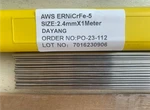
Cast Iron Electrode
High-Quality Cast Iron Electrodes
Cast Iron Electrodes are specialized welding consumables designed for cast iron welding, including gray cast iron, ductile cast iron, and other cast iron materials. They are formulated to address the brittleness and poor weldability of cast iron, ensuring strong weld bonding, reduced cracking risks, and stable welding performance. They are widely used in cast iron part repair and manufacturing in machinery, automotive, and pipeline industries.

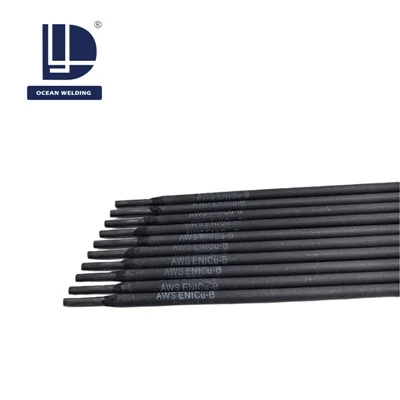


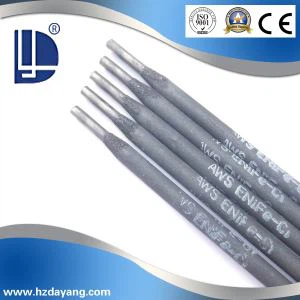
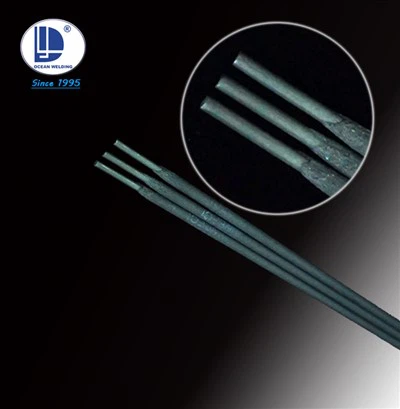


Product Categories and Models
According to alloy composition and application scenarios, Cast Iron Electrodes can be divided into the following main types:
Nickel-Based Cast Iron Electrodes (ENi-CI)
General-purpose electrodes with a pure nickel core and titanium-calcium coating. They offer good machinability of weld metal and low cracking tendency, suitable for gray cast iron repair (e.g., engine cylinder blocks, pump housings).
Nickel-Iron Cast Iron Electrodes (ENiFe-CI)
High-strength electrodes with a nickel-iron alloy core and low hydrogen coating. They have high weld strength and excellent impact resistance, ideal for ductile cast iron welding (e.g., machine tool beds, heavy-duty cast iron components).
Copper-Based Cast Iron Electrodes (ECuNi)
Copper-nickel alloy core electrodes with good electrical conductivity, suitable for thin-walled or non-critical cast iron parts (e.g., cast iron pipe flanges, small brackets).
Performance Characteristics
Crack Resistance
The core alloy and coating formula reduce welding stress, effectively preventing cold cracks and hot cracks common in cast iron welding.
Machinability
Weld metal can be processed by turning, milling, or drilling, maintaining the same machining performance as the base cast iron in most cases.
Weld Bonding
Designed to match the chemical and physical properties of cast iron, ensuring strong metallurgical bonding between the weld and base material.
Applicability
Compatible with shielded metal arc welding (SMAW) and other common welding processes, adapting to different welding positions (flat, horizontal) and workpiece thicknesses.
Application Areas
Machinery Repair
Welding repair of cast iron parts such as engine blocks, cylinder heads, and crankcases in construction machinery and agricultural machinery.
01
Equipment Manufacturing
Welding of cast iron components in machine tool beds, guide rails, and worktables to ensure structural stability.
02
Pipeline Engineering
Connection and repair of cast iron water pipes, sewage pipes, ensuring pipeline tightness and pressure resistance.
03
Automotive Industry
Repair of cast iron parts in automobile engines, gearboxes, and brake systems, restoring their functional performance.
04
FAQ
Q1: What is Cast Iron Electrode?
A1: Cast Iron Electrode is a specialized welding electrode designed for cast iron materials, with cores made of nickel-based, nickel-iron-based, or copper-based alloys, and functional coatings. It is formulated to solve the problem of poor cast iron weldability, ensuring strong and reliable weld joints.
Q2: What is the difference between Cast Iron Electrodes and nickel alloy welding wires?
A2: In composition, Cast Iron Electrodes are mainly nickel-based, nickel-iron-based, or copper-based, while nickel alloy welding wires are nickel-based with high alloy element content; in application, Cast Iron Electrodes are specifically for cast iron welding, while nickel alloy welding wires are for nickel-based alloys, stainless steel, etc.; in performance, Cast Iron Electrodes focus on crack resistance and machinability for cast iron, while nickel alloy welding wires emphasize high temperature and corrosion resistance.
Q3: How to choose Cast Iron Electrodes according to cast iron types?
A3: For gray cast iron (common in general parts), choose ENi-CI electrodes; for ductile cast iron (high-strength cast iron), use ENiFe-CI electrodes with higher strength; for thin-walled or non-critical gray cast iron parts, ECuNi electrodes are suitable.
Q4: Do Cast Iron Electrodes require preheating before welding?
A4: Yes. Preheating is necessary to reduce welding stress: gray cast iron is usually preheated to 200–300°C; ductile cast iron requires higher preheating (300–400°C); slow cooling after welding (e.g., covering with heat-insulating cotton) is also required to avoid cracking.
Q5: What defects are prone to occur when using Cast Iron Electrodes?
A5: Common defects include weld cracks (caused by insufficient preheating or rapid cooling), porosity (from oil, rust, or moisture on the base material surface), and poor fusion (due to low welding current or improper operation).
Q6: How to prevent cracks when welding with Cast Iron Electrodes?
A6: Strictly control preheating and post-weld cooling (avoid rapid temperature changes); choose low-hydrogen type electrodes (such as ENiFe-CI) for high-stress parts; use small current and multi-layer welding to reduce heat input; ensure the base material surface is clean (no oil, rust).
Q7: What is the storage condition for Cast Iron Electrodes?
A7: Store in a dry and ventilated warehouse with room temperature 10–30°C and relative humidity ≤60%; keep the packaging sealed to prevent moisture (moisture may cause coating degradation or weld pores); unused electrodes should be stored in a moisture-proof cabinet.
Q8: How to choose the diameter of Cast Iron Electrodes?
A8: For cast iron parts with thickness ≤3mm, use 2.5mm diameter electrodes; for 3–8mm, choose 3.2mm; for ≥8mm, use 4.0mm or 5.0mm electrodes. The diameter should also match the welding current (smaller diameter for lower current).
Q9: Can Cast Iron Electrodes be used for other materials besides cast iron?
A9: Generally, Cast Iron Electrodes are not suitable for other materials. They are specifically designed for the unique properties of cast iron. Using them on materials like carbon steel or aluminum can lead to poor weld quality, lack of proper adhesion, and a high risk of defects. Each material has its own set of welding requirements, and specialized electrodes are made to meet those needs. For example, carbon steel requires electrodes like E6013, which are formulated to bond well with carbon steel and provide the necessary mechanical properties for the weld.
Q10: How long should Cast Iron Electrodes be baked before use?
A10: Most Cast Iron Electrodes need to be baked at 150°C for about 1 hour before welding. This baking process helps to remove any moisture absorbed by the electrode coating. Moisture in the coating can cause porosity in the weld and affect the overall quality of the weld joint. However, always refer to the manufacturer's instructions for the specific electrode you are using, as some may have slightly different baking requirements. For instance, certain high-performance Cast Iron Electrodes might have a more precise baking temperature and time range to optimize their performance.
Q11: Are Cast Iron Electrodes suitable for welding cast iron parts bearing impact stress?
A11: Not all Cast Iron Electrodes are suitable for parts bearing impact stress. For such applications, electrodes with high strength and good impact resistance, like ENiFe-CI nickel-iron cast iron electrodes, are preferred. These electrodes can form welds that can better withstand the dynamic forces associated with impact. On the other hand, some electrodes with lower strength and toughness, such as certain copper-based or basic nickel-based electrodes used for non-critical or low-stress applications, may not be able to handle impact stress well and could lead to weld failures under such conditions.
Q12: Can Cast Iron Electrodes be used for welding thin cast iron pieces?
A12: Yes, but the choice of electrode and welding parameters need to be carefully selected. For thin cast iron pieces (usually ≤3mm thick), smaller diameter electrodes like 2.5mm are recommended. Nickel-based electrodes such as ENi-CI can be used as they offer good weldability and machinability. Additionally, lower welding currents should be used to avoid overheating and burning through the thin material. The welding process should be precise and controlled to ensure a good quality weld without causing excessive distortion or damage to the thin cast iron piece.
Q13: What should be done if the weld metal after using Cast Iron Electrodes is too hard to machine?
A13: If the weld metal is too hard to machine, several steps can be taken. First, ensure that the correct electrode was chosen for the application. For example, if machinability was a requirement, an electrode known for producing machinable welds like ENi-CI should have been used. If the wrong electrode was used, re-welding with the appropriate one might be necessary. If the correct electrode was used, preheating the part before machining can sometimes help soften the weld metal. Post-weld heat treatment, such as annealing at a specific temperature range (usually around 600 - 700°C depending on the cast iron type and electrode used), can also reduce the hardness of the weld and improve its machinability. Additionally, using proper machining techniques with sharp tools and appropriate cutting speeds and feeds can aid in the machining process.
Q14: How do I know if the Cast Iron Electrode I'm using is of good quality?
A14: A good quality Cast Iron Electrode should have a consistent coating thickness without any visible cracks, bumps, or missing sections on the coating. When welding, it should produce a stable arc with minimal spatter. The slag should be easy to remove after welding, and the weld bead should have a smooth and regular appearance. The electrode should also meet the specified chemical composition and mechanical property requirements as stated by the manufacturer and relevant industry standards. For example, if an electrode claims to be an ENiFe-CI type, its nickel and iron content should fall within the standard range for that electrode type, and the weld it produces should have the expected strength and impact resistance. Reputable manufacturers will also provide quality certifications and test reports for their electrodes.
Q15: What is the impact of welding speed on weld quality when using Cast Iron Electrodes?
A15: Welding speed directly affects the heat input and fusion effect. Too fast a speed will lead to insufficient fusion between the weld and base metal, resulting in incomplete penetration or slag inclusions—this is especially risky for thick cast iron parts. Too slow a speed will cause excessive heat accumulation, leading to overheating of the base metal, coarse grains in the weld, and increased brittleness (even cracks). For example, when welding a 5mm thick cast iron plate with a 3.2mm electrode, a moderate speed (about 10-15 cm/min) is recommended to balance fusion and heat control.
Q16: Can Cast Iron Electrodes be used for welding cast iron to stainless steel?
A16: Yes, but it requires targeted operation. Nickel-based electrodes (such as ENi-CI) are preferred because nickel can form a transitional bond between cast iron (high carbon) and stainless steel (chromium-nickel alloy). Preheat both materials to 200-300°C to reduce thermal stress, and use a small current to avoid dilution of alloying elements in stainless steel. After welding, perform slow cooling (e.g., wrap with heat-insulating cotton) to prevent cracks at the joint.
Q17: How to handle slag inclusions in welds when using Cast Iron Electrodes?
A17: Slag inclusions are usually caused by incomplete slag removal between welding layers, excessive welding current (leading to rapid solidification of the weld pool), or improper electrode angle. To solve this:
• Clean slag thoroughly with a hammer or wire brush before each new welding layer;
• Adjust the current to a moderate range (e.g., 80-100A for 3.2mm electrodes) to ensure slag floats to the surface;
• Maintain a 20-30° electrode angle to help slag separate from the molten pool.
Q18: What should be noted when welding cast iron parts with oil stains using Cast Iron Electrodes?
A18: Oil stains on cast iron surfaces are a major cause of pores and cracks in welds—oil burns into gas during welding, which gets trapped in the molten pool to form pores, and also increases brittleness. Before welding:
• Clean oil stains with a degreasing agent (such as acetone or alcohol) and wipe dry;
• For heavy oil stains, use a wire brush to remove surface oil film first, then degrease;
• Preheat the part to 150-200°C after cleaning to evaporate residual moisture or oil, then start welding.
Q19: Can Cast Iron Electrodes be reused if they are left unused after opening the package?
A19: It depends on storage conditions. If opened electrodes are stored in a dry, moisture-proof cabinet (relative humidity ≤60%) and sealed in a plastic bag, they can be reused within 1 month. If exposed to humid air for a long time (more than 2 weeks), the coating may absorb moisture, leading to pores or cracks in the weld—such electrodes should be baked at 150-200°C for 1-2 hours before reuse. For low-hydrogen type cast iron electrodes (e.g., ENiFe-CI), the storage time after opening should be within 1 week even in dry conditions.
Q20: How to reduce welding deformation when using Cast Iron Electrodes for thin cast iron parts?
A20: Thin cast iron parts (≤5mm) are prone to warping due to uneven heating. To reduce deformation:
• Use small-diameter electrodes (2.5mm) and low current to minimize heat input;
• Adopt symmetrical welding (weld from both sides alternately) to balance stress;
• Use fixtures to clamp the part before welding to limit movement;
• Choose intermittent welding (weld short segments, cool, then continue) instead of continuous welding to avoid concentrated heat.
Q21: What is the difference in welding performance between nickel-based and copper-based Cast Iron Electrodes?
A21: Nickel-based electrodes (e.g., ENi-CI, ENiFe-CI) have better crack resistance and strength—their welds can withstand higher stress, making them suitable for load-bearing parts like machine tool beds. Copper-based electrodes (e.g., ECuNi) have better machinability but lower strength, so they are only suitable for non-critical parts like cast iron brackets. In terms of arc stability, nickel-based electrodes perform better in high-current welding, while copper-based electrodes are more prone to spatter if current is too high.
Q22: How to choose between AC and DC current when using Cast Iron Electrodes?
A22: Most nickel-based and copper-based Cast Iron Electrodes are compatible with both AC and DC, but DC is preferred for better arc stability and less spatter—this is especially important for thin parts or precision welding (e.g., engine block repair). AC can be used for thick cast iron parts where penetration is more critical, as AC arc heat is more evenly distributed. Check the electrode label: if marked "AC/DC", either is acceptable; if marked "DC only", use DC to avoid arc instability.
Q23: What causes undercuts in welds when using Cast Iron Electrodes, and how to prevent them?
A23: Undercuts (grooves at the weld edge) are usually caused by excessive welding current, overly steep electrode angle, or too fast welding speed. To prevent them:
• Reduce current to avoid melting the base metal edge excessively;
• Keep the electrode angle at 30-45° to the workpiece (not too steep);
• Slow down the welding speed to allow the molten pool to fill the edge;
• Use a slight weaving motion (small left-right swing) to ensure the weld metal fills the edge.
Q24: Can Cast Iron Electrodes be used for welding cold cast iron (cast iron stored in low-temperature environments)?
A24: Yes, but preheating is critical. Cold cast iron (stored at <5°C) has high internal stress and is prone to cold cracks during welding. Preheat the part to 200-300°C first (use a torch to heat evenly) to eliminate residual stress. After welding, cover with heat-insulating cotton to cool slowly (cooling time ≥1 hour for parts >10mm thick). Avoid welding cold cast iron directly—sudden heating can cause thermal shock and cracks.
Q25: How to test the strength of welds made with Cast Iron Electrodes?
A25: For non-destructive testing, use ultrasonic flaw detection to check for internal defects (which affect strength). For destructive testing (on test pieces), perform a tensile test to measure weld tensile strength—qualified welds should reach ≥320MPa (for nickel-based electrodes). For impact resistance, conduct a Charpy impact test: welds for heavy-duty parts (e.g., offshore cast iron components) should have an impact toughness ≥20J at room temperature.
Q26: What is the effect of electrode storage time on welding performance?
A26: Over time, electrode coatings absorb moisture, leading to pores or cracks in welds. Unopened nickel-based electrodes can be stored for 2 years in dry conditions; copper-based electrodes have a 1.5-year shelf life. Opened electrodes must be used within 1 month (stored in moisture-proof cabinets) — beyond that, bake them at 150°C for 1 hour to remove moisture. Expired electrodes (stored for >2 years unopened) may have degraded coating adhesion, causing spatter or unstable arcs—avoid using them for critical parts.
Q27: How to handle weld cracks found after using Cast Iron Electrodes?
A27: First, use a grinder to remove the cracked area completely (grind 2-3mm beyond the visible crack to ensure all defects are eliminated). Clean the grinding area with a wire brush to remove debris. Preheat the repaired area to 200-300°C, then weld with the same electrode (use multi-layer welding for deep cracks, cleaning slag between layers). After welding, cool slowly and check with penetration testing to confirm no new cracks.
Q28: What is the best way to clean cast iron surfaces before welding with Cast Iron Electrodes?
A28: Thorough cleaning is the key, the steps are as follows:
1. Use a wire brush or angle grinder to remove surface rust and scale (the oxide layer on the surface of cast iron will hinder fusion);
2. Use acetone or alcohol to wipe to remove oil stains (oil stains will produce pores after heating);
3. For areas with old welds or cracks, use a drill to drill a stop hole (3-5mm in diameter) at the end of the crack to prevent the crack from expanding during welding;
4. Use a clean rag to wipe off the remaining debris and ensure that there is no visible impurities on the surface before preheating for welding.
Q29: Can Cast Iron Electrodes be used for overlay welding (surfacing) on cast iron parts?
A29: Yes, nickel-based electrodes are suitable for overlay welding (e.g., repairing worn machine tool guide rails). Choose 3.2-4.0mm diameter electrodes, use low current (80-120A) to avoid melting the base metal too deeply, and weld in thin layers (each layer ≤3mm thick). After each layer, clean slag and cool to 150°C before welding the next layer to reduce stress. The overlay weld can be machined to restore the part’s original dimensions.
Q30: What is the difference in application between ENi-CI and ENiFe-CI Cast Iron Electrodes?
A30: ENi-CI is a general-purpose nickel-based electrode with good machinability—its welds are easy to turn or mill, making it ideal for parts that need post-weld machining (e.g., pump housings). ENiFe-CI adds iron to the core, improving strength and impact toughness—its welds can withstand higher loads, so it is used for critical structural parts (e.g., ductile cast iron gearboxes). ENi-CI is more cost-effective for non-load-bearing parts, while ENiFe-CI is preferred for high-stress applications.
Q31: How to prevent arc blow (unstable arc deviation) when welding large cast iron parts with Cast Iron Electrodes?
A31: Arc blow is caused by uneven magnetic fields in large cast iron parts, leading to arc deviation and uneven welds. To prevent it:
• Use DC reverse polarity (electrode positive) to stabilize the arc;
• Keep the arc short (arc length = electrode diameter) to reduce susceptibility to magnetic fields;
• Weld away from edges or corners (where magnetic fields are strongest) first, then work toward them;
• Use a magnetic clamp to balance the magnetic field around the weld area.
Q32: What should be done if the weld surface turns black after using Cast Iron Electrodes?
A32: Black weld surfaces are usually caused by oxidation (insufficient protection during cooling) or excessive heat input. If oxidation is mild, use a wire brush to remove the black oxide layer—this will not affect strength. If the oxide layer is thick (indicating severe oxidation), grind off the black area and reweld, ensuring the weld cools slowly in a clean, dry environment (avoid drafts that introduce oxygen). To prevent it: reduce current to avoid overheating, and cover the weld with heat-insulating cotton immediately after welding to isolate air.
Q33: Can Cast Iron Electrodes be used for welding cast iron pipes carrying water or gas?
A33: Yes, but choose nickel-based electrodes (e.g., ENiFe-CI) for their leak-tightness and corrosion resistance. Before welding, drain the pipe completely and dry the inner wall to avoid steam-induced pores. Weld in small segments (5-10cm per segment) and cool between segments to prevent pipe deformation (which could cause leaks). After welding, perform a pressure test (e.g., 0.6MPa water pressure for 30 minutes) to confirm no leaks.
Q34: How to choose electrode diameter for welding cast iron with irregular shapes (e.g., curved surfaces)?
A34: For irregular or curved cast iron parts, prioritize small-diameter electrodes (2.5-3.2mm) — they offer better control over the weld pool, making it easier to follow the curved surface. Use a short arc and slow welding speed to ensure fusion at the curved edge. If the part has both thick and thin areas, use a 3.2mm electrode (versatile for 3-8mm thickness) and adjust current: lower current (80-100A) for thin areas, higher current (100-120A) for thick areas.
Q35: What safety precautions are specific to using Cast Iron Electrodes?
A35: In addition to general welding safety (wearing a helmet, flame-resistant gloves), note these specifics:
• Cast iron welding produces more fumes (containing nickel or copper particles) — ensure good ventilation or use a fume extractor to avoid inhalation;
• When grinding cast iron before welding, wear a dust mask to prevent iron dust inhalation;
• Preheating cast iron with a torch may release toxic gases (if the surface has oil or paint) — keep a safe distance and avoid breathing fumes;
• After welding, do not touch the hot cast iron part or electrode (temperatures can exceed 300°C) to prevent burns.