




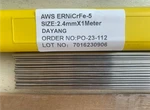
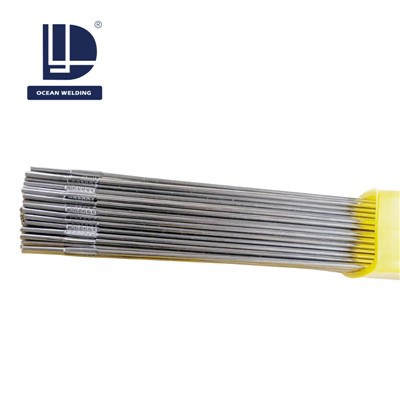
Stainless Steel Welding Wire

Stainless steel welding wire is a filler metal specially used for welding stainless steel materials. Its main components include chromium, nickel, molybdenum and other elements, which can provide excellent corrosion resistance and mechanical properties. Stainless steel welding wire is divided into two types: solid wire and flux-cored wire. The former is suitable for inert gas shielded welding (such as MIG, TIG), while the latter requires specific flux to complete welding.




Product categories and models
The characteristics of stainless steel welding wire include corrosion resistance, high strength, high temperature resistance, crack resistance and intergranular corrosion resistance. According to different application scenarios and welding requirements, stainless steel welding wire has a variety of models and specifications. The following are some common models and their characteristics:
ER304
Suitable for welding austenitic stainless steel 304, with good corrosion resistance and mechanical properties.
01
ER316L
Suitable for AISI 316L stainless steel, with excellent corrosion resistance, especially in chloride environment.
02
ER309L
Used for welding 22Cr-12Ni stainless steel (such as SUS309S) and composite materials, with high strength and heat resistance.
03
ER308L
Suitable for welding low carbon steel and stainless steel, with good welding performance and low carbon content.
04
ER347
Suitable for welding with resistance to intergranular corrosion and high temperature strength, such as welding AISI 347, 321, 304L, etc.
05
Performance characteristics
Corrosion resistance
Stainless steel welding wire has good corrosion resistance and can resist the erosion of corrosive media such as acid, alkali, and salt. It is suitable for harsh environments such as chemical industry and ocean.
High strength and high toughness
The welding wire shows high strength and toughness during the welding process and can withstand large impact loads and high temperature environments.
Good welding performance
The welding wire has good arc stability, beautiful weld formation, and less spatter, and is suitable for a variety of welding processes.
Environmental performance
Modern stainless steel welding wire production process pays attention to environmental protection and adopts low emission technology to reduce the impact on the environment.
Application areas
Construction industry
Used to manufacture bridges, steel structures, construction equipment, etc.
Chemical industry
Used to manufacture chemical equipment, pipelines, etc., especially where corrosion resistance is required.
Machinery manufacturing
Used to manufacture automobiles, ships, aerospace equipment, etc.
Medical equipment
Used for welding medical equipment, such as surgical instruments and medical containers.
Food machinery
Used for welding food processing equipment to ensure food safety.
Petrochemical
Used for welding pipelines and equipment, especially in high temperature and corrosive environments.
FAQ
Q1: What is the effect of the difference in composition between the deposited metal and the base material of stainless steel welding wire on the performance of the welded joint?
A1: If the difference in composition between the deposited metal and the base material is too large, it may lead to mismatch in weld strength and toughness, reduced corrosion resistance, and even defects such as hot cracks and cold cracks. For example, if the carbon content of the deposited metal is too high, chromium carbide is easily formed at the grain boundary, causing intergranular corrosion.
Q2: How to select stainless steel welding wire according to the stress form of the welded joint?
A2: When the joint is subjected to static loads such as tension and bending, select welding wire that matches the strength grade of the base material; if it is subjected to impact and fatigue loads, select welding wire with good toughness; for joints subjected to wear, welding wire containing wear-resistant alloy elements (such as tungsten carbide) should be selected.
Q3: What are the different requirements for stainless steel welding wire when used in automatic welding and manual welding?
A3: Automatic welding requires uniform wire diameter, smooth surface and good stiffness to ensure stable wire feeding; manual welding has higher requirements on the operability of the welding wire, such as arc stability, slag removal, etc., and manual welding can flexibly adjust welding parameters according to actual conditions.
Q4: When using stainless steel welding wire for welding, how to reduce the harm of welding smoke to the human body?
A4: Keep the welding site well ventilated and use local smoke exhaust equipment; wear dust masks and protective masks that meet the standards; try to use low-dust and low-toxic welding wire to reduce the content of harmful substances in welding smoke.
Q5: What is the reason for undercutting during stainless steel welding?
A5: Excessive welding current, high arc voltage, too fast welding speed, improper welding gun angle, etc. can all cause undercutting. In addition, unreasonable groove design, such as too large angle or too small blunt edge, can also easily cause undercutting problems.
Q6: Can the same type of stainless steel welding wire produced by different manufacturers be mixed?
A6: The chemical composition and coating formula of the same type of welding wire produced by different manufacturers may have slight differences. Mixing may affect the stability of weld quality. If not necessary, try to avoid mixing; if mixing is necessary, welding process assessment is required.
Q7: What is the reason for the blackening of the weld surface after stainless steel welding wire welding?
A7: The blackening of the weld surface may be due to poor gas protection, air entering the molten pool and causing oxidation; the welding current is too large, causing the weld to overheat; or the deoxidation elements in the welding wire are insufficient and cannot be effectively deoxidized.
Q8: How to judge the welding quality of stainless steel welding wire by the appearance of the weld?
A8: The surface of a high-quality weld should have uniform and fine ripples, without defects such as pores, slag inclusions, cracks, and undercuts; the weld excess height is moderate, and the transition with the base material is smooth; the color is silvery white or golden yellow, indicating a low degree of oxidation and good protection effect.
Q9: How to prevent burn-through when welding thin plates with stainless steel welding wire?
A9: Use small diameter welding wire and smaller welding current; increase welding speed and reduce heat input; choose appropriate welding methods, such as pulse welding, which can effectively control heat input; skip welding, arc breaking welding and other methods can be used during welding.
Q10: What is the impact toughness of the weld metal when the welding wire is damp?
A10: When welding with damp welding wire, pores are easily generated in the weld, which will reduce the effective bearing area of the weld metal and become stress concentration points, thereby significantly reducing the impact toughness of the weld metal and reducing the impact resistance of the joint.
Q11: What should be paid attention to when welding stainless steel welding wire in an offshore environment?
A11: The offshore environment has high humidity and high salt content, so it is necessary to strengthen the dehumidification and moisture-proofing of the welding area; use welding wire with good salt spray corrosion resistance; improve the gas protection effect to prevent salt spray from entering the molten pool; welding equipment should be well protected to avoid rust.
Q12: How to test the welding process performance of stainless steel welding wire?
A12: Through welding test inspection, observe arc stability, spatter size, slag fluidity and slag removal, weld formation, etc.; test whether the chemical composition and mechanical properties of the weld metal meet the requirements; check whether defects are easy to occur during welding.
Q13: How to solve the problem of insufficient penetration when welding stainless steel wire?
A13: You can increase the welding current and reduce the welding speed appropriately; adjust the welding gun angle so that the arc is better directed to the molten pool; check the groove size to ensure that the groove angle and blunt edge are appropriate; choose a welding method with strong penetration or adjust the welding parameters.
Q14: Improper storage of welding wire leads to rust. Can rusted welding wire still be used for welding?
A14: Slightly rusted welding wire can be used for welding with low quality requirements after rust removal (such as sandpaper grinding) and drying according to regulations; severely rusted welding wire may have been affected internally and is not recommended to avoid affecting the welding quality.
Q15: When using stainless steel welding wire to weld dissimilar steels (such as stainless steel and carbon steel), how to choose filler materials?
A15: Stainless steel welding wire with high chromium and nickel content is usually selected to reduce the diffusion of carbon in the weld and prevent the formation of hard and brittle martensitic structure on the carbon steel side; nickel-based welding wire can also be used, which has better adaptability to the welding of dissimilar steels.
Q16: How to eliminate the residual stress of the weld after stainless steel welding wire welding?
A16: Heat treatment methods such as annealing and tempering can be used to reduce the hardness of the weld and heat-affected zone and eliminate residual stress; the weld metal can also be plastically deformed by hammering the weld surface to release some stress.
Q17: What should I do if the wire feeding resistance of the stainless steel welding wire is too large during welding?
A17: Check whether the wire feeding wheel pressure is appropriate. Excessive or insufficient pressure will cause abnormal wire feeding resistance; clean the wire feeding hose and remove blockages; check whether the conductive nozzle is worn and replace it if it is severely worn; ensure that the surface of the welding wire is smooth and free of rust and oil.
Q18: How to evaluate the fatigue life of stainless steel welding wire welding joints?
A18: Through fatigue test, under a certain cyclic load, record the number of cycles when fatigue fracture occurs in the welded joint; analyze the microstructure and defects of the weld, because defects such as pores and cracks will significantly reduce the fatigue life; and use finite element analysis to simulate the fatigue performance of the joint.
Q19: When welding stainless steel wire, what is the effect of poor gas protection on the intergranular corrosion resistance of the weld?
A19: Poor gas protection will increase the amount of oxygen and nitrogen absorbed by the weld, resulting in deterioration of the weld structure, forming continuous carbides at the grain boundary, reducing the intergranular corrosion resistance of the weld, and making the welded joint prone to intergranular corrosion in specific media.
Q20: What is the difference in welding efficiency between stainless steel wires of different diameters?
A20: Generally speaking, large-diameter welding wires have fast deposition speed and high welding efficiency, but they have high power requirements for welding equipment and are not easy to perform full-position welding; small-diameter welding wires have relatively slow deposition speed, but are flexible to operate and are suitable for thin plates and full-position welding.
Q21: What is the reason for arc instability during stainless steel wire welding?
A21: It may be that the welding power supply output is unstable; the welding wire and the conductive nozzle have poor contact; the gas flow is abnormal and the protection effect is not good; there is oil and rust on the surface of the welding wire; the welding parameter settings are unreasonable, such as current and voltage mismatch, etc.
Q22: How to judge the quality of stainless steel welding wire welding joints through metallographic analysis?
A22: Observe the grain size and morphology of the weld metal. Small and uniform grains indicate that the welding heat input is properly controlled; check whether there are harmful structures (such as Widmanstatten structure); analyze the grain boundary state to see if there is a tendency for intergranular corrosion; check the fusion of the weld and the parent material, whether there is unfused, inclusions, etc.
Q23: When stainless steel welding wire is welded in a high temperature environment, what are the requirements for the oxidation resistance of the weld joint?
A23: In a high temperature environment, the weld joint is required to have good oxidation resistance, and a welding wire with high content of antioxidant elements such as chromium, silicon, and aluminum should be selected; control the welding heat input to avoid overheating of the joint to cause damage to the oxide film; if necessary, the weld joint can be treated with oxidation resistance.
Q24: When welding stainless steel, what are the differences in the effects of flux-cored wire and solid wire on welding deformation?
A24: Flux-cored wire has high deposition efficiency, more filling metal per unit time, and the generated welding heat is relatively concentrated, which may lead to large welding deformation; solid wire has relatively dispersed heat input during welding. Under reasonable control of parameters, welding deformation is relatively small, but it is also related to the welding process.
Q25: How to evaluate the internal quality of stainless steel wire welded joints through non-destructive testing (such as X-ray flaw detection)?
A25: X-ray flaw detection can detect defects such as pores, slag inclusions, cracks, and incomplete penetration inside the weld. According to the shape, size, number and distribution of defects, the quality of welded joints is graded according to relevant standards to determine whether they meet the use requirements.
The above 25 questions analyze stainless steel welding wire from multiple dimensions. If you want to further explore an answer or have questions in other specific directions, please feel free to let us know.