




Welding Glove
What Makes Reliable Welding Gloves Essential: From Selection to Long-Term Use?
Welding gloves are indispensable protective gear designed to shield welders’ hands and wrists from high-temperature spatter, arc radiation, molten metal, and mechanical impacts during welding. They balance protection, flexibility, and comfort—too thick and they hinder dexterity; too thin and they fail to resist heat. With materials and designs tailored to welding processes and environments, they are critical in industries like metal fabrication, automotive repair, construction, and aerospace, ensuring safety while enabling precise operation.


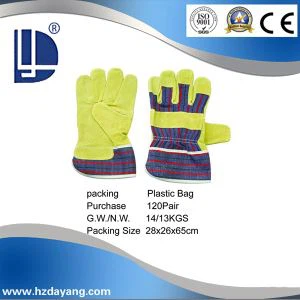


Product Categories and Models
Welding gloves are classified by material, welding process, and use scenario, with typical models including:
By Material
• Leather Welding Gloves: Made of cowhide, pigskin, or goatskin, offering excellent heat resistance and wear resistance.
◦ Example: Full-Grain Cowhide Welding Gloves (thick palm, heat-insulating lining, suitable for heavy-duty arc welding).
• Fabric Composite Welding Gloves: Combined with heat-resistant fabrics (aramid, nomex) and leather, balancing flexibility and protection.
◦ Example: Aramid-Leather TIG Gloves (lightweight, thin fingers, ideal for precision TIG welding).
• Rubber-Coated Welding Gloves: Coated with heat-resistant rubber on the palm, enhancing grip and spatter resistance.
◦ Example: Rubber-Palm MIG Gloves (anti-slip, suitable for wire feeding and rough workpiece handling).
By Welding Process
• Arc Welding Gloves: Thick, heavy-duty, with extended cuffs to resist spatter from manual arc welding.
◦ Example: 16-Inch Cowhide Arc Welding Gloves (cuff covers forearms, used for stick welding thick steel).
• TIG Welding Gloves: Thin and flexible, allowing precise control of the torch and filler wire.
◦ Example: Deerskin TIG Gloves (soft, form-fitting, suitable for aluminum and stainless steel precision welding).
• MIG Welding Gloves: Balanced protection and dexterity, with reinforced fingertips for wire feeding.
◦ Example: Split-Cowhide MIG Gloves (durable palm, flexible fingers, used for automotive sheet metal welding).
Performance Characteristics
Heat Resistance
Withstand high-temperature spatter (up to 500-800℃ for short periods) and radiant heat, thanks to thick leather or heat-insulating linings.
01
Abrasion Resistance
Reinforced palms and fingertips (double-layer leather) resist wear from workpiece handling and tool use.
02
Flexibility
Tailored stitching (e.g., gusseted fingers) and material thickness allow bending and gripping, critical for tasks like feeding filler wire.
03
Fit and Comfort
Adjustable cuffs (Velcro or elastic) prevent spatter from entering; breathable linings reduce sweat buildup during long use.
04
Application Areas
Heavy Industry
Thick cowhide gloves protect against large spatter in steel structure welding and shipbuilding.
Automotive Manufacturing
MIG-specific gloves balance dexterity and protection for car body and component welding.
Precision Welding
TIG gloves enable fine control in aerospace part welding and medical device fabrication.
Outdoor Construction
Weather-resistant gloves (waterproof leather) shield hands from spatter and cold in bridge or pipeline welding.
FAQ
Q1: What factors should be prioritized when choosing welding gloves?
A1: Focus on three core factors: ① Protection level (heat resistance for high-spatter processes like arc welding; flexibility for precision TIG). ② Material durability (cowhide for heavy use; deerskin for softness). ③ Fit (snug but not tight—ensures dexterity without slipping). Also consider the environment: waterproof gloves for outdoor use; breathable ones for hot workshops.
Q2: How to match welding gloves to different welding processes?
A2: Arc welding (stick welding) needs thick, long-cuff gloves (14-16 inches) to block large spatter—cowhide or pigskin works best. MIG welding requires balanced flexibility and protection—split cowhide or fabric-leather composites with reinforced fingertips. TIG welding demands thin, soft gloves (deerskin or goatskin) to feel filler wire and torch controls.
Q3: What causes welding gloves to wear out quickly, and how to extend their life?
A3: Rapid wear is often due to: ① Spatter burning through thin areas (reinforce fingertips with leather patches). ② Overstretching (choose the right size to avoid tearing seams). ③ Moisture (dry gloves after use to prevent leather rot). Extend life by: Cleaning spatter promptly, storing in a dry place, and avoiding contact with oil (which weakens leather).
Q4: Can welding gloves protect against electric shock?
A4: Standard welding gloves are not designed for electrical insulation—leather conducts electricity when wet. For high-voltage welding (e.g., some plasma processes), use gloves with insulated linings (aramid or rubber) that meet electrical safety standards (e.g., ASTM F1236). Always check for holes or wetness before use to avoid risk.
Q5: How to clean welding gloves properly?
A5: For leather gloves: Brush off dry spatter, wipe with a damp cloth (avoid soaking), and air-dry away from direct heat (prevents cracking). For fabric composites: Spot-clean with mild soap and water, then air-dry. Never machine-wash leather gloves—water weakens the material and stitching. Apply leather conditioner annually to keep leather supple.
Q6: What is the difference between cowhide, pigskin, and deerskin welding gloves?
A6: Cowhide: Most durable, heat-resistant, and affordable—ideal for heavy, high-spatter welding. Pigskin: Soft and flexible with good grip, but less heat-resistant than cowhide—suitable for MIG or light arc welding. Deerskin: Ultra-soft and form-fitting, with excellent dexterity but lower durability—perfect for TIG and precision work.
Q7: How to tell if welding gloves are no longer safe to use?
A7: Replace gloves if: ① There are holes, tears, or thinning in the palm/fingertips (spatter can burn skin). ② The lining is frayed or detached (reduces heat insulation). ③ Stitches are loose or broken (gloves may split during use). ④ Leather is hard and cracked (loses flexibility and heat resistance). Worn gloves compromise protection—don’t risk reusing them.
Q8: What features make welding gloves suitable for cold environments?
A8: Cold-weather welding gloves need: ① Thermal linings (fleece or Thinsulate) to retain heat. ② Waterproof leather or coatings (prevent snow/moisture from soaking in). ③ Extended cuffs (cover wrists to block cold air). ④ Flexible materials (avoid stiffening in low temps). Example: Insulated Cowhide Winter Welding Gloves (used for outdoor pipeline welding in winter).
Q9: How to choose the right size for welding gloves?
A9: Measure the circumference of your palm (around the knuckles, excluding thumbs) and match to sizing charts: Small (8-9 inches), Medium (9-10 inches), Large (10-11 inches), X-Large (11+ inches). Gloves should fit snugly—too loose reduces dexterity; too tight restricts movement and causes fatigue. Try them on and grip a torch to test flexibility.
Q10: What causes discomfort or fatigue when wearing welding gloves, and how to fix it?
A10: Discomfort stems from: ① Poor fit (choose the right size). ② Heavy weight (opt for lighter fabric composites for long shifts). ③ Sweaty hands (select gloves with breathable linings or mesh panels). ④ Stiff material (break in new leather gloves gradually by wearing them briefly before use).
Q11: Can welding gloves be used for other tasks, like grinding or cutting?
A11: It’s not recommended. Welding gloves are designed for heat, not sharp objects—grinding sparks or metal edges can cut through leather more easily than dedicated work gloves. Using them for non-welding tasks accelerates wear, reducing their effectiveness when you need them for welding. Use task-specific gloves instead.
Q12: What is the role of glove cuffs, and how to choose the right length?
A12: Cuffs block spatter from entering the glove and protect forearms. Short cuffs (6-8 inches) work for TIG or light MIG welding (better mobility). Long cuffs (12-16 inches) are essential for arc welding or overhead work (more spatter risk). Cuffs with Velcro or elastic closures seal tightly against sleeves—critical for outdoor or high-spatter environments.
Q13: How to prevent welding gloves from slipping off during use?
A13: Choose gloves with adjustable cuffs (Velcro or elastic) to tighten around the wrist. Look for palm designs with textured leather or rubber patches (improves grip on tools). Ensure a snug fit—loose gloves slide, while tight gloves restrict blood flow (causing numbness). For large hands, opt for X-Large sizes with reinforced cuffs.
Q14: What are the advantages of flame-retardant fabric linings in welding gloves?
A14: Flame-retardant linings (aramid, nomex) don’t melt or burn when exposed to spatter, reducing the risk of burns if spatter penetrates the outer leather. They also add heat insulation without excessive bulk, balancing protection and flexibility. Linings wick moisture away from the skin, reducing sweat and discomfort during long shifts.
Q15: How to store welding gloves to maintain their performance?
A15: ① Clean off spatter and dirt before storage. ② Air-dry completely (never store damp gloves—leads to mold). ③ Lay flat or hang by the cuffs (avoid folding, which creases leather). ④ Keep in a cool, dry place (away from direct sunlight, which dries out leather). ⑤ For long-term storage (>1 month), stuff gloves with paper to maintain shape.
Q16: What makes a welding glove “TIG-specific,” and can it be used for MIG welding?
A16: TIG-specific gloves are thin, soft, and form-fitting to feel filler wire and torch controls—they lack the thick padding of MIG gloves. Using them for MIG welding risks spatter burns, as MIG produces more spatter than TIG. TIG gloves are best for their intended use; reserve thicker gloves for MIG or arc welding.
Q17: How do welding gloves protect against UV and infrared radiation from the arc?
A17: Thick leather blocks most UV and IR radiation, preventing skin damage (like “arc burn,” similar to sunburn). Some gloves have reflective coatings or metallic linings to enhance radiation reflection. Extended cuffs protect forearms, which are often exposed. Always ensure gloves cover all skin—even small gaps can let radiation through.
Q18: What is the difference between “stick welding” and “MIG welding” gloves?
A18: Stick welding gloves are thicker, longer, and more heat-resistant to handle large spatter and heavy electrodes. They often have reinforced palms for gripping electrodes. MIG gloves are lighter and more flexible, with reinforced fingertips to withstand wire feeding. MIG gloves balance protection and dexterity, while stick welding gloves prioritize heat resistance.
Q19: How to choose welding gloves for people with sensitive skin?
A19: Opt for gloves with hypoallergenic linings (cotton or bamboo) to avoid irritation from synthetic materials. Choose leather treated with natural conditioners (beeswax instead of chemicals). Look for seamless finger designs (reduces rubbing). Test a small area first—some people are sensitive to certain leathers (e.g., pigskin).
Q20: What causes welding gloves to become stiff, and how to soften them?
A20: Stiffness is due to: ① Leather drying out (apply leather conditioner or beeswax). ② Spatter burning (trim off charred areas and condition). ③ Washing with water (avoid soaking; air-dry and condition). To soften: Rub conditioner into leather, then flex the gloves repeatedly (bend fingers to loosen seams). Store with a soft cloth inside to maintain flexibility.
Q21: Can welding gloves be repaired if they have small holes?
A21: Small holes (<5mm) in non-critical areas (e.g., back of the hand) can be patched with leather glue and a leather patch. However, holes in the palm or fingertips (high-risk areas for spatter) require replacement—patching compromises protection. Never repair gloves used for high-spatter processes; prioritize safety over cost.
Q22: What features are important for welding gloves used in overhead welding?
A22: Overhead welding risks spatter falling into gloves, so look for: ① Extended, flared cuffs (cover forearms and seal tightly). ② Reinforced palms (resist wear from gripping overhead tools). ③ Heat-resistant linings (block falling spatter). ④ Lightweight design (reduces arm fatigue from holding hands up).
Q23: How to test the heat resistance of new welding gloves?
A23: Perform a simple test: Hold a gloved hand 10cm above a lit candle for 10 seconds—no burning, melting, or excessive heat transfer indicates basic heat resistance. For stricter testing, check for certifications like EN 12477 (European standard for welding gloves) or ASTM F1898 (U.S. standard), which verify heat and flame resistance.
Q24: What is the impact of glove thickness on welding precision?
A24: Thicker gloves (>3mm) offer better heat protection but reduce tactile feedback—good for heavy welding but poor for precision tasks like feeding thin filler wire. Thinner gloves (1-2mm) let you feel the torch and wire, critical for TIG welding, but offer less spatter resistance. Choose thickness based on the process: thick for arc welding, thin for TIG.
Q25: How to choose welding gloves for high-humidity environments?
A25: In humid conditions, prioritize breathable gloves with moisture-wicking linings (aramid or cotton) to reduce sweat. Leather treated with water-resistant coatings (but not fully waterproof) allows some breathability. Avoid fully rubber gloves—they trap moisture. Look for gloves with mesh panels in non-critical areas to improve airflow.
Q26: What is the service life of welding gloves, and when should they be replaced?
A26: With regular use, heavy-duty leather gloves last 3-6 months; TIG gloves (softer leather) last 1-3 months. Replace them immediately if: ① Holes or tears expose skin. ② Heat insulation fails (you feel hot through the glove). ③ Stitches come undone (gloves start to fall apart). Don’t wait for complete failure—worn gloves risk injury.
Q27: Can left-handed welders use standard welding gloves, or do they need special ones?
A27: Most welding gloves are ambidextrous, but some high-end models are left/right-specific (better fit for each hand). Left-handed welders can use standard gloves, but may prefer left-specific designs for tasks like TIG (where precise finger movement matters). Check product labels—“ambidextrous” works for all; “left-hand” offers tailored fit.
Q28: How do welding gloves differ from general work gloves?
A28: Welding gloves are designed to resist high heat, spatter, and arc radiation—general work gloves focus on abrasion or cut resistance. Welding gloves use heat-resistant leather and linings; work gloves may use cotton or synthetic materials that melt. Welding gloves also have longer cuffs and reinforced palms for welding-specific risks.
Q29: What is the role of stitching in welding gloves, and what types are best?
A29: Stitching holds gloves together and must resist heat and tearing. Kevlar stitching is ideal—it’s flame-resistant and stronger than cotton or nylon. Double-stitching (two rows of stitches) reinforces critical areas (fingertips, palm). Stitching should be recessed or covered with leather flaps to avoid spatter burning through thread.
Q30: How to choose welding gloves for kids or small hands?
A30: Look for “small” or “youth” sizes (palm circumference 7-8 inches) with scaled-down proportions (shorter fingers, narrower palms). Prioritize lightweight materials (goatskin) to avoid fatigue. Ensure gloves meet safety standards (even for small sizes) and have adjustable cuffs for a snug fit. Avoid adult small sizes—they often have long fingers for kids.
Q31: What causes welding gloves to have a strong odor, and how to reduce it?
A31: Odors come from sweat, spatter residue, or mold (if stored damp). Reduce odors by: ① Air-drying gloves after each use. ② Sprinkling baking soda inside and shaking out after a few hours. ③ Wiping with a cloth dampened with white vinegar (neutralizes odors). ④ Storing with a dryer sheet (temporarily masks odors). Replace moldy gloves—mold weakens leather.
Q32: How to prevent spatter from getting inside welding gloves?
A32: ① Choose gloves with tight-fitting, adjustable cuffs (Velcro or elastic) to seal against sleeves. ② Tuck shirt sleeves into gloves or wear welding sleeves under gloves. ③ Avoid loose cuffs—spatter can slide in. ④ Inspect gloves for holes regularly (seal small ones with leather glue). For overhead welding, use flared cuffs that cover forearms.
Q33: What are the advantages of rubber-coated palms in welding gloves?
A33: Rubber coatings improve grip on wet or oily tools (e.g., MIG torches or greasy workpieces), reducing the risk of dropping equipment. They also repel spatter and liquids (water, oil), keeping the leather underneath dry. Rubber-coated palms are easy to wipe clean, making them ideal for messy environments like automotive repair.
Q34: How to choose welding gloves for multi-process welding (e.g., TIG and MIG)?
A34: Opt for versatile “all-purpose” gloves—medium thickness (2-3mm), leather-palm with fabric fingers for flexibility. Look for reinforced fingertips (for MIG wire feeding) and soft leather (for TIG dexterity). Examples: Goatskin All-Purpose Gloves, which balance protection and feel. Avoid extreme designs (too thick or too thin) that work for only one process.
Q35: What innovations are there in modern welding gloves?
A35: Modern gloves include: ① Gel padding in palms (reduces vibration fatigue). ② Touchscreen-compatible fingertips (allows phone use without removing gloves). ③ Self-extinguishing linings (stop burning if spatter hits). ④ Moisture-wicking “cooling” linings (reduce sweat in hot environments). These features improve comfort and functionality without sacrificing protection.