




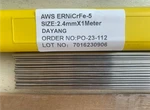
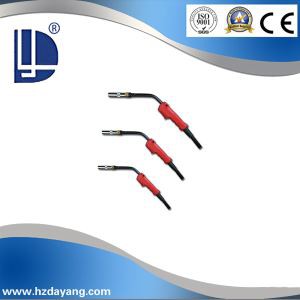
Gas Shielded Welding Guns
High-Performance Gas Shielded Welding Guns
Gas shielded welding guns are core tools in modern welding, integrating electrode wire feeding, shielding gas delivery, and arc ignition functions. They create an inert gas barrier around the weld pool to isolate oxygen, nitrogen, and water vapor in the air, thus avoiding weld defects like oxidation and porosity. With advantages such as stable arc, high welding efficiency, and clean welds, they are widely used in automotive manufacturing, aerospace, pressure vessel production, and precision metal processing.


Product Categories and Models
Gas shielded welding guns are classified by cooling method, welding process, and application scenarios, with representative models as follows:
By Cooling Method
• Air-cooled gas shielded welding guns: Rely on airflow and shielding gas for heat dissipation, lightweight and easy to carry. Suitable for low-current (≤300A) and intermittent welding.
◦ Example: Miller Millermatic 211 MIG Gun (air-cooled, 150A-250A, compatible with 0.8-1.2mm wires, ideal for small workpiece welding).
• Water-cooled gas shielded welding guns: Equipped with a built-in water circulation system, heat dissipation efficiency is 3-5 times that of air-cooled ones. Suitable for high-current (≥300A) and continuous welding.
◦ Example: ESAB Aristo Mig 5000i Water-Cooled Gun (500A continuous current, applicable to thick plate welding in heavy industry).
By Welding Process
• MIG (Metal Inert Gas) welding guns: Feed solid wire continuously, matching inert or active shielding gas. Suitable for welding carbon steel, aluminum, and stainless steel.
◦ Example: Lincoln Electric Magnum 100L MIG Gun (compatible with 0.6-1.6mm wires, widely used in automotive sheet metal welding).
• TIG (Tungsten Inert Gas) welding guns: Use non-consumable tungsten electrodes, with precise gas control. Suitable for high-precision welding of thin plates and dissimilar metals.
◦ Example: Weldcraft WP-20 TIG Gun (lightweight design, suitable for manual TIG welding of aluminum alloys and titanium).
Special-Purpose Models
• Fume-extraction gas shielded welding guns: Integrate fume suction channels to reduce harmful fume exposure.
◦ Example: ABICOR BINZEL xFUME Compact (suction efficiency up to 90%, suitable for indoor precision welding).
• Robotic gas shielded welding guns: Compact and durable, compatible with robotic arms.
◦ Example: Yaskawa Motoman GPW Series Robotic MIG Gun (with anti-collision function, used in automated production lines).
Performance Characteristics
Stable Gas Shielding
Equipped with precision gas nozzles and flow control valves to ensure uniform coverage of the weld pool by shielding gas, reducing porosity and oxidation.
01
Efficient Heat Dissipation
Air-cooled models rely on heat-resistant materials and structural design; water-cooled models use low-temperature coolant circulation to avoid overheating during long-term use.
02
Smooth Wire Feeding
The wire feeding channel is designed with wear-resistant materials (e.g., copper alloys), and the wire feeding wheel pressure is adjustable to prevent wire jamming or deformation.
03
Ergonomic Design
Lightweight handle, anti-slip grip, and balanced weight distribution reduce operator fatigue during long hours of work.
04
Application Areas
Automotive Industry
Used for welding car bodies, frames, and engine components (e.g., MIG guns for welding carbon steel body panels, TIG guns for aluminum alloy engine parts).
Aerospace
Welding of aircraft structural parts and engine components (e.g., water-cooled TIG guns for titanium alloy welding, ensuring high strength and low deformation).
Pressure Vessel Manufacturing
Welding of oil tanks, gas cylinders, and chemical containers (e.g., high-current water-cooled MIG guns for thick-walled steel welding, ensuring weld tightness).
Precision Machinery
Welding of electronic components and instrument parts (e.g., small TIG guns for micro-welding of stainless steel parts).
FAQ
Q1: What factors should be considered when choosing between air-cooled and water-cooled gas shielded welding guns?
A1: Focus on welding current (air-cooled for ≤300A, water-cooled for ≥300A), working duration (air-cooled for intermittent welding, water-cooled for continuous welding), and mobility (air-cooled is lighter and more suitable for on-site welding; water-cooled requires a water circulation system, suitable for fixed workshops).
Q2: How to match the gas shielded welding gun with the shielding gas?
A2: For MIG welding of carbon steel, use 80%Ar+20%CO₂ mixed gas; for aluminum alloy, use pure argon (99.99%Ar); for stainless steel, use 98%Ar+2%O₂. TIG welding of non-ferrous metals mostly uses pure argon. The gun’s gas nozzle diameter should match the gas flow rate (larger nozzles require higher flow rates to ensure coverage).
Q3: What causes unstable arc during welding with a gas shielded welding gun?
A3: Common reasons include: ① Worn contact tip (poor current conduction); ② Blocked gas nozzle (uneven gas flow); ③ Incorrect wire feeding speed (too fast/slow leads to arc instability); ④ Loose cable connection (intermittent current). Check and replace worn parts, adjust parameters, and ensure tight connections.
Q4: How to maintain the wire feeding system of a gas shielded welding gun?
A4: ① Clean the wire feeding wheel weekly to remove metal debris; ② Lubricate the wire feeding guide tube monthly with special lubricant; ③ Check the wire feeding pressure (too high will deform the wire, too low will cause slipping); ④ Replace the wear-resistant sleeve of the wire feeding channel when wire jamming occurs frequently.
Q5: Can a gas shielded welding gun be used for both MIG and TIG welding?
A5: No. MIG guns are designed for continuous wire feeding and use consumable wires as electrodes, while TIG guns use non-consumable tungsten electrodes and do not feed wire (or require separate wire feeding). Their internal structures (e.g., current transmission parts, gas channels) are incompatible, so special guns must be used for each process.
Q6: What is the function of anti-spatter spray for gas shielded welding guns?
A6: It forms a protective film on the nozzle and contact tip to prevent welding spatter from adhering, reducing cleaning frequency. Spray it evenly on the nozzle before welding; avoid excessive use, as it may produce harmful gases when heated.
Q7: How to judge if the shielding gas flow rate is appropriate?
A7: Too low: Weld surface appears gray or porous (oxidation). Too high: Turbulence occurs, sucking in air (weld has pores). For 10-15mm nozzles, the recommended flow rate is 15-25L/min; for 16-20mm nozzles, 25-35L/min. Use a flowmeter to calibrate regularly.
Q8: What should be paid attention to when using a gas shielded welding gun in high-humidity environments?
A8: ① Keep the gun dry (store in a moisture-proof cabinet when not in use); ② Check the gas hose for condensation (drain water if present to avoid blocking gas flow); ③ For water-cooled guns, use anti-rust coolant to prevent internal pipe corrosion; ④ Preheat the workpiece appropriately to reduce moisture impact on the weld pool.
Q9: How to replace the contact tip of a gas shielded welding gun correctly?
A9: ① Turn off the welding machine power first; ② Use pliers to unscrew the old contact tip (avoid damaging the thread); ③ Select a new contact tip matching the wire diameter (e.g., 1.0mm wire with 1.0mm tip); ④ Screw it in tightly (not too tight to avoid thread damage) and test wire feeding for smoothness.
Q10: What are the reasons for wire jamming in gas shielded welding guns?
A10: ① The wire feeding hose is bent or blocked (straighten the hose or clean it with a wire brush); ② The contact tip aperture is smaller than the wire diameter (replace with a matching tip); ③ The wire feeding wheel pressure is too high (adjust to moderate pressure); ④ The welding wire is rusted or bent (replace with new wire).
Q11: Can a gas shielded welding gun weld dissimilar metals (e.g., steel and aluminum)?
A11: Yes, but choose a TIG gun with high precision, match with special filler wire (e.g., aluminum-silicon alloy wire), and use pure argon shielding gas. Control the heat input (low current, fast welding speed) to avoid brittle intermetallic compounds. Pre-clean the metal surface (remove oxide film with a stainless steel brush).
Q12: How to extend the service life of a water-cooled gas shielded welding gun?
A12: ① Replace coolant every 6 months (use dedicated coolant, not tap water); ② Clean the water tank and filter regularly to prevent blockage; ③ Check for water leaks (tighten connections if leaking); ④ After use, drain the coolant in cold environments to avoid pipe freezing and cracking.
Q13: What is the difference between a robotic gas shielded welding gun and a manual one?
A13: Robotic guns are more compact (adapt to robotic arm movement) and have anti-collision sensors (avoid damage when hitting workpieces). They use durable materials (e.g., chrome-plated nozzles) to withstand high-frequency use. Manual guns focus on ergonomics (lightweight, flexible operation) and are easier to maintain.
Q14: How to handle the problem of poor gas tightness in a gas shielded welding gun?
A14: ① Check the gas valve (replace if leaking); ② Inspect the hose connection (re-tighten or replace the seal ring); ③ Check the nozzle for cracks (replace if damaged); ④ Apply soapy water to the connection (bubbles indicate leaks) for accurate troubleshooting.
Q15: What are the safety precautions for using a gas shielded welding gun?
A15: ① Wear protective gear (flame-retardant clothing, welding helmet, heat-resistant gloves); ② Ensure good ventilation (install exhaust fans to avoid gas accumulation); ③ Keep the gas cylinder upright and fixed (prevent tipping); ④ Do not touch the nozzle immediately after welding (high temperature may cause burns).
Q16: How to choose the nozzle size of a gas shielded welding gun?
A16: Small nozzles (10-12mm): Suitable for narrow spaces or thin plate welding (good visibility). Large nozzles (16-20mm): Suitable for thick plate welding (larger gas coverage, better protection). Choose according to workpiece structure and welding position (e.g., vertical welding uses smaller nozzles for easier operation).
Q17: What causes the gas shielded welding gun to overheat quickly?
A17: ① Exceeding the rated current (e.g., 200A gun used for 300A welding); ② Blocked cooling channel (air-cooled: nozzle blocked by spatter; water-cooled: water pipe blocked); ③ Continuous welding time is too long (take intermittent breaks); ④ Poor contact of the power cable (increase resistance and heat generation).
Q18: Can a gas shielded welding gun be used with flux-cored wire?
A18: Yes, but use a MIG gun with a larger wire feeding channel (flux-cored wire is softer). Most flux-cored wires are "self-shielded" (no need for additional gas), but if using "gas-shielded flux-cored wire", match the gun with shielding gas (e.g., 80%Ar+20%CO₂) and adjust the gas flow rate.
Q19: How to maintain the fume-extraction function of a gas shielded welding gun?
A19: ① Clean the fume filter every 8 hours of use (replace if blocked); ② Check the suction fan (remove dust to avoid reduced efficiency); ③ Ensure the suction port is aligned with the weld pool (distance 10-15mm for best effect); ④ Avoid bending the fume pipe (maintain smooth airflow).
Q20: What is the impact of ambient temperature on gas shielded welding guns?
A20: High temperature (>40℃): Accelerates insulation aging of the gun cable; reduce continuous welding time. Low temperature (<0℃): The wire becomes brittle and easy to break; preheat the wire to 10-20℃. For water-cooled guns, avoid freezing (add antifreeze to coolant).
Q21: How to test the performance of a new gas shielded welding gun?
A21: ① Test wire feeding: Continuously feed wire for 5 minutes, check for jamming or uneven speed. ② Test gas tightness: Connect the gas source, close the nozzle, and observe if the pressure gauge drops (no drop indicates good tightness). ③ Test welding: Weld a sample, check for arc stability and weld appearance (no pores or spatter).
Q22: What are the differences between copper and brass contact tips?
A22: Copper tips: Good conductivity, suitable for low-current welding (≤200A), but wear quickly. Brass tips: Higher hardness, wear-resistant, suitable for high-current welding (≥200A), but conductivity is slightly lower. Choose based on current and wire feeding frequency.
Q23: How to adjust the welding gun angle for different welding positions (flat, vertical, overhead)?
A23: Flat welding: 15-20° forward tilt (good penetration). Vertical welding: 5-10° upward tilt (prevent weld metal sagging). Overhead welding: 10-15° backward tilt (ensure weld pool stays in place). Adjust according to the actual forming effect.
Q24: What should be done if the gas shielded welding gun’s handle is hot?
A24: ① Check if the current exceeds the rated value (reduce current); ② Inspect the power cable (replace if damaged or 老化); ③ For air-cooled guns: Check if the air inlet is blocked (clean it); ④ For water-cooled guns: Check if the water flow is normal (increase water flow if too low).
Q25: How to store a gas shielded welding gun for long-term (>1 month) non-use?
A25: ① Clean the gun (remove spatter and oil); ② For water-cooled guns: Drain coolant and blow dry the water pipe. ③ Wrap the cable to avoid bending (prevent internal wire breakage); ④ Store in a dry, ventilated place (avoid direct sunlight); ⑤ Disconnect the gas and power connections.
Q26: What causes the weld to have undercut when using a gas shielded welding gun?
A26: ① The gun angle is too large (>30°), causing excessive heat on both sides; adjust to 15-20°. ② The welding current is too high (melts too much base metal); reduce current by 10-15%. ③ The travel speed is too fast (insufficient filling); slow down appropriately.
Q27: Can a gas shielded welding gun be modified (e.g., replacing the nozzle with a larger one)?
A27: It is not recommended. Modifications may affect gas flow uniformity (cause pores) or exceed the gun’s heat dissipation capacity (overheating). If a larger nozzle is needed, choose a gun model designed for it to ensure matching with internal structures.
Q28: How to choose a gas shielded welding gun for thin plate (<1mm) welding?
A28: Choose an air-cooled MIG or TIG gun with small current (50-150A), match with 0.6-0.8mm wire, and use a small-diameter nozzle (10-12mm). The gun should be lightweight and flexible (e.g., Weldcraft WP-9 TIG Gun) to avoid damaging the thin plate due to operational shaking.
Q29: What are the common faults of the wire feeding motor in gas shielded welding guns?
A29: ① No rotation: Check the power supply (fuse or wiring) or motor burnout (replace motor). ② Slow rotation: The motor is blocked by debris (clean) or the gear is worn (replace gear). ③ Uneven rotation: The speed control potentiometer is faulty (calibrate or replace).
Q30: How to reduce spatter when using a gas shielded welding gun?
A30: ① Use anti-spatter spray on the nozzle; ② Adjust parameters (increase voltage appropriately to make the arc softer); ③ Choose low-spatter welding wire (e.g., low-sulfur wire); ④ Keep the gun at a stable distance from the workpiece (10-15mm).
Q31: What is the role of the gas diffuser in a gas shielded welding gun?
A31: It evenly distributes the shielding gas from the hose into the nozzle, avoiding direct impact on the weld pool (which would cause turbulence). A damaged diffuser (e.g., cracks) will lead to uneven gas flow; replace it immediately if found.
Q32: How to handle the problem of inconsistent weld width when using a gas shielded welding gun?
A32: ① Check if the gun is moving steadily (use a guide rail for auxiliary positioning); ② Adjust the travel speed (uniform speed ensures uniform width); ③ Check if the wire feeding speed is stable (calibrate the wire feeder); ④ Ensure the gun angle is consistent during welding.
Q33: Can a gas shielded welding gun be used in a confined space (e.g., inside a tank)?
A33: Yes, but use a fume-extraction gun and strengthen ventilation (use an exhaust fan). Avoid long-term stay; take turns operating. For gas cylinders, place them outside the confined space and connect via a long hose to prevent gas leakage and accumulation.
Q34: How to judge if the water-cooled system of a gas shielded welding gun is working normally?
A34: ① Check the water flow meter (normal flow: 2-3L/min); ② Touch the gun body during welding (slightly warm is normal, hot indicates poor cooling); ③ Check the return water temperature (should not exceed 50℃); ④ Observe if there is water leakage at the joints.
Q35: What are the advantages of a lightweight gas shielded welding gun?
A35: Reduces operator arm fatigue during long-term welding (e.g., 8-hour shifts); improves operational flexibility (suitable for complex workpieces); reduces the risk of accidental collision with the workpiece (light weight = easier control). Choose models with high-strength plastic handles and aluminum alloy shells.
Q36: How to solve the problem that the gas shielded welding gun’s trigger is stuck?
A36: ① Disassemble the handle and clean the trigger mechanism (remove dust and oil); ② Apply a small amount of lubricating oil (avoid excessive, which may attract dust); ③ Check if the trigger spring is broken (replace if necessary); ④ Avoid pulling the trigger too hard during use (reduce wear).
Q37: What is the impact of wire quality on gas shielded welding gun performance?
A37: Poor wire (e.g., rust, uneven diameter) will accelerate contact tip wear, cause wire jamming, and affect arc stability. Use qualified wire (compliant with GB/T 8110) and store it in a dry place (sealed packaging) to avoid moisture and rust.