




Welding Accessories
How to choose the right welding accessories?
Welding accessories are essential auxiliary tools and components in the welding process, which are crucial for ensuring welding quality, improving operational safety, and enhancing work efficiency. They cover a wide range of products, including protective equipment for welders, tools that assist in welding operations, and components that match welding equipment. These accessories are widely used in industrial manufacturing, construction engineering, automobile repair, metal processing and other fields that involve welding operations.




Product Categories and Models
According to different functions and application scenarios, welding accessories can be divided into multiple categories, such as protective accessories, welding tool accessories, and welding equipment matching accessories. Specific models include but are not limited to:
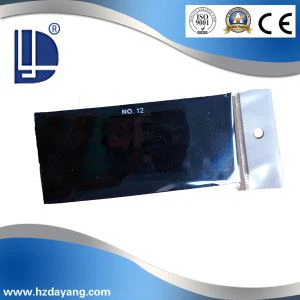
Welding Helmets
There are passive helmets and auto-darkening helmets. For example, the 3M Speedglas 100 auto-darkening helmet is suitable for various welding processes, with adjustable shade levels to adapt to different welding current intensities.
01
Welding Gloves
Including leather gloves and heat-resistant fabric gloves. Lincoln Electric leather welding gloves, for instance, are suitable for heavy-duty welding operations, providing good heat resistance and wear resistance.
02
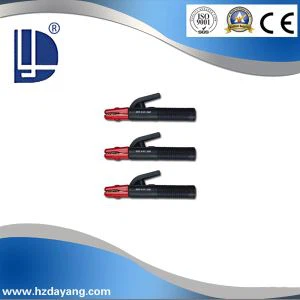
Welding Clamps
Such as ground clamps and electrode holders. The 500A electrode holder is suitable for medium and high current welding, ensuring stable current transmission.
03
Welding Nozzles
Divided into contact tips and gas nozzles. A 1.2mm diameter copper contact tip is suitable for MIG welding, matching welding wires of corresponding specifications to ensure smooth wire feeding.
04
Welding Torches
Including TIG torches and MIG torches. The WP-17 TIG torch is suitable for medium current TIG welding, with good heat dissipation performance.
05
Performance Characteristics
Protective Performance
Protective accessories like welding helmets and gloves have excellent heat resistance, flame resistance, and impact resistance, which can effectively protect welders from arc radiation, high-temperature spatter, and mechanical damage.
01
Stability and Reliability
Welding clamps, nozzles and other accessories have good electrical conductivity and structural stability, ensuring stable current transmission and gas protection during welding, thus reducing welding defects caused by accessory problems.
02
Adaptability
They can be matched with different welding equipment and processes. For example, different types of welding nozzles are suitable for TIG welding, MIG welding, etc., and can adapt to different workpiece materials and welding requirements.
03
Durability
Made of high-quality materials, they have a long service life. For example, wear-resistant welding nozzles and corrosion-resistant ground clamps can withstand long-term use in harsh welding environments.
04
Application Areas
Industrial Manufacturing
Used in the welding of machinery parts, equipment frames, etc. Protective accessories protect workers, and welding tool accessories ensure welding accuracy and efficiency.
Construction Engineering
Applied to the welding of steel structures such as bridges and buildings. Welding clamps and positioning tools ensure the stability of welded joints, and protective accessories adapt to outdoor construction environments.
Automobile Repair
Used for welding automobile bodies and parts. Small and flexible welding tools and accessories are suitable for precise welding in narrow spaces.
Metal Processing
Suitable for welding metal plates, pipes, etc. Welding nozzles and wire feeding accessories ensure uniform weld formation and stable welding quality.
FAQ
Q1: What are welding accessories?
A1: Welding accessories refer to a series of auxiliary tools, components and protective equipment used in the welding process to ensure the smooth progress of welding, protect the safety of welders, and improve welding quality and efficiency. They include welding helmets, gloves, clamps, nozzles, welding torches, etc.
Q2: What factors should be considered when choosing welding helmets?
A2: Consider the welding process (auto-darkening helmets are more suitable for complex processes that require frequent arc starting and stopping); pay attention to the shade level adjustment range (to adapt to different welding current intensities); check the protective performance (such as impact resistance and arc radiation protection); and consider wearing comfort (such as adjustable headbands).
Q3: How to choose welding gloves according to the welding process?
A3: For high-temperature welding processes such as arc welding and gas welding, choose thick leather gloves with good heat resistance; for low-temperature or precision welding such as TIG welding, choose gloves with good flexibility and moderate heat resistance to ensure operational sensitivity; for welding with more spatter, choose gloves with flame-retardant coating.
Q4: What factors need to be considered when selecting welding clamps?
A4: Consider the welding current (choose clamps with corresponding current ratings, such as 300A for low current and 500A for high current to avoid overheating); check the clamping force (it should be sufficient to prevent poor contact); pay attention to the material (choose copper alloy clamps with good conductivity and corrosion resistance).
Q5: How to maintain welding nozzles to extend their service life?
A5: After each use, clean the spatter and debris in the nozzle with a special cleaning tool to avoid blockage; regularly check whether the nozzle is worn or deformed, and replace it in time if there is a problem; apply anti-spatter agent on the surface of the nozzle to reduce spatter adhesion; store it in a dry and clean place when not in use to prevent rust.
Q6: What are the common problems of welding protective helmets and how to solve them?
A6: Common problems include unclear vision (may be caused by lens contamination or damage, which can be solved by cleaning the lens or replacing the lens); failure to auto-darken (may be due to dead batteries or sensor faults, requiring battery replacement or sensor repair); and uncomfortable wearing (can choose helmets with adjustable headbands to adjust the tightness).
Q7: How to choose the right welding wire feeder accessories?
A7: According to the type of welding wire (solid wire or flux-cored wire), select the corresponding wire feeding wheel (grooved wheel for solid wire, toothed wheel for flux-cored wire); ensure that the wire feeding hose matches the wire diameter to avoid wire jamming; choose a wire feeder with stable speed regulation function to adapt to different welding speeds.
Q8: What are the requirements for the use environment of welding ground clamps?
A8: The ground clamp should be connected to a clean and smooth metal surface to ensure good electrical conductivity; avoid long-term use in humid or corrosive environments, otherwise anti-corrosion treatment should be done; keep away from high-temperature areas to prevent the clamp from being damaged by high temperature and affecting its performance.
Q9: How to check whether welding accessories are qualified before use?
A9: Check the appearance for cracks, deformations or damage (such as broken helmet shells, worn glove surfaces); test the functions (such as whether the auto-darkening helmet can darken normally, whether the welding clamp can clamp firmly); check the certification marks to ensure that they meet relevant safety standards (such as CE, ANSI certification).
Q10: What are the differences between different types of welding nozzles in terms of application?
A10: Contact tips are mainly used to transmit current to the welding wire and guide the wire feeding direction, and different diameters correspond to different wire diameters to ensure stable current; gas nozzles are used to spray protective gas to form a gas shield around the weld pool, and larger diameter gas nozzles are suitable for large-area welding, providing better gas protection.
Q11: How to choose welding accessories for outdoor welding operations?
A11: Choose waterproof and windproof protective helmets and gloves to adapt to outdoor weather conditions; select heavy-duty welding clamps with strong clamping force to prevent loosening due to wind or vibration; use gas nozzles with good wind resistance to ensure the effect of protective gas; prepare spare accessories (such as contact tips, batteries) to deal with unexpected damage.
Q12: What should be paid attention to when storing welding accessories?
A12: Store in a dry, ventilated and clean environment to avoid moisture and rust (especially metal accessories such as welding clamps); avoid extrusion and collision to prevent deformation of accessories (such as welding helmets); separate different types of accessories and mark them for easy access; for accessories with batteries (like auto-darkening helmets), remove the batteries if not used for a long time to prevent battery leakage.
Q13: What are the common causes of damage to welding accessories and how to avoid them?
A13: High-temperature spatter can damage welding nozzles and gloves, which can be avoided by using anti-spatter agents and wearing anti-spatter sleeves; frequent use and improper operation can cause wear of welding clamps and electrode holders, so standardize operations and avoid excessive force; long-term exposure to corrosive substances can corrode metal accessories, so clean them in time after use and do anti-corrosion treatment.
Q14: How to match welding accessories with welding equipment?
A14: According to the type of welding machine (TIG, MIG, arc welding), select corresponding accessories (such as TIG torches with matching nozzles, MIG welding with wire feeding accessories); match the current and voltage parameters of the welding machine (such as welding clamps with current ratings not lower than the maximum current of the welding machine); ensure that the interface size of the accessories is consistent with the welding equipment (such as the connection between the welding torch and the welding machine).
Q15: What are the safety precautions for using welding accessories?
A15: Wear protective accessories correctly during use (such as wearing welding helmets before starting welding, not taking off gloves during operation); regularly inspect and maintain accessories to avoid using damaged accessories; do not modify the structure of the accessories at will (such as drilling holes in the welding helmet, which may reduce its protective performance); keep the accessories away from flammable and explosive materials.
Q16: How to choose welding gloves according to the temperature of the welding environment?
A16: In high-temperature welding environments (such as high-current arc welding), choose gloves with thick leather and heat-insulating layers to resist high-temperature spatter and heat radiation; in low-temperature welding environments or cold areas, choose gloves with thermal insulation performance on the basis of heat resistance to prevent hand frostbite.
Q17: What are the effects of inappropriate welding accessories on welding quality?
A17: Poor-quality welding clamps with poor conductivity can cause unstable current, leading to uneven welds and pores; inappropriate contact tips can cause wire feeding instability, resulting in lack of fusion or undercut; insufficient protective performance of gas nozzles can lead to poor gas protection, causing oxidation of the weld and reducing corrosion resistance.
Q18: How to replace worn welding accessories correctly?
A18: Turn off the welding equipment power before replacement to ensure safety; choose accessories of the same model and specification as the original ones to ensure compatibility (such as replacing contact tips with the same diameter); follow the replacement steps (such as loosening the fixing screws when replacing the welding nozzle, and tightening them after installation); test after replacement to ensure normal use.
Q19: What are the characteristics of welding accessories suitable for precision welding?
A19: They have high precision and flexibility. For example, lightweight and flexible welding gloves ensure precise operation; small-diameter welding nozzles are suitable for narrow space welding, ensuring accurate positioning; welding tools with adjustable functions (such as adjustable wire feeding speed accessories) can meet the requirements of precise parameter control.
Q20: How to extend the service life of welding accessories?
A20: Clean them in time after use (such as removing spatter on the welding nozzle, cleaning the surface of the welding clamp); use them in accordance with the operating specifications (such as not using the welding helmet as a tool to hit objects); perform regular maintenance (such as lubricating the moving parts of the wire feeder accessories, replacing worn parts in time); avoid using them beyond their rated parameters (such as not using a 300A welding clamp for 500A welding).
Q21: What are the differences between welding torches for different welding processes?
A21: TIG torches are mainly used for TIG welding, with a non-consumable tungsten electrode, and the torch head is designed to be lightweight and flexible to facilitate precise operation; MIG torches are used for MIG welding, with a wire feeding channel inside, and the structure is more robust to adapt to continuous wire feeding; arc welding torches (electrode holders) are simple in structure, mainly used to clamp the welding electrode, and have good heat resistance.
Q22: How to choose the material of welding gloves?
A22: For high-temperature welding, choose cowhide or pigskin gloves, which have good heat resistance and wear resistance; for precision welding that requires flexibility, choose gloves made of thin leather or heat-resistant fabric, which can improve operational sensitivity; for welding in corrosive environments, choose gloves with anti-corrosion coatings on the surface.
Q23: What should be paid attention to when using welding wire feeders?
A23: Check whether the wire feeding wheel is worn before use, and replace it if necessary; adjust the wire feeding pressure appropriately (too high will deform the welding wire, too low will cause unstable wire feeding); keep the wire feeding hose unobstructed, and clean up the accumulated debris regularly; ensure that the wire feeding speed matches the welding current and voltage.
Q24: How to deal with the problem of poor contact of welding clamps?
A24: First, check whether the clamping surface of the clamp is contaminated or rusted, and clean it with sandpaper or a wire brush; check whether the spring of the clamp is loose or damaged, and replace the spring if necessary; if the clamp body is deformed, replace the welding clamp in time to avoid affecting the welding current.
Q25: What are the factors to consider when choosing a welding helmet's lens?
A25: Consider the shade level range (to adapt to different welding processes and current sizes); check the optical clarity (to ensure good visibility during welding); pay attention to the response time (auto-darkening helmets need a short response time to avoid eye damage from arc light); choose a lens with anti-fog and anti-scratch functions for long-term use.
Q26: How to choose welding accessories for high-altitude welding operations?
A26: Choose lightweight protective accessories (such as lightweight auto-darkening helmets and gloves) to reduce the burden on operators; use welding clamps with anti-loosening designs to prevent them from falling; select welding torches with flexible cables to facilitate operation in limited spaces; equip with tool belts to fix accessories and avoid loss.
Q27: What are the common faults of welding gas nozzles and how to solve them?
A27: Blockage caused by spatter: clean the nozzle with a special drill or replace it; deformation caused by collision: replace the nozzle to ensure the uniformity of gas ejection; wear of the connection part with the torch: check the thread or buckle, and replace the nozzle if it is loose.
Q28: How to choose the size of welding clamps?
A28: Small-sized clamps (such as 300A) are suitable for low-current welding and light-duty operations, which are lightweight and easy to carry; large-sized clamps (such as 500A and above) are suitable for high-current welding and heavy-duty operations, with strong clamping force and good heat dissipation; choose according to the actual welding current and workpiece size to avoid insufficient clamping force or excessive weight.
Q29: What are the safety standards that welding accessories should comply with?
A29: International standards include ANSI Z87.1 (for welding helmets), EN 12477 (for welding gloves); domestic standards in China include GB/T 32466 (for welding protective helmets), GB 15579 (for welding and cutting protective equipment); when purchasing, check whether the accessories have passed the certification of relevant standards to ensure safety.
Q30: How to handle the aging of welding accessory materials?
A30: For rubber parts (such as torch cables), if they are cracked or hardened due to aging, replace them in time to avoid leakage or poor insulation; for plastic parts (such as helmet shells), if they become brittle, replace them to prevent damage during use; for metal parts with aging coatings (such as welding clamps), re-spray anti-corrosion coatings or replace them if the corrosion is serious.
Q31: How to choose welding accessories for batch welding production?
A31: Choose accessories with high durability and long service life (such as wear-resistant contact tips, heavy-duty welding torches) to reduce replacement frequency; select accessories that are easy to install and replace (such as quick-change welding nozzles) to improve production efficiency; use automatic wire feeders and other accessories to reduce manual operations and ensure consistency.
Q32: What are the differences between disposable and reusable welding accessories?
A32: Disposable accessories (such as some simple welding masks, disposable gloves) are cheap, suitable for short-term or occasional use, but have poor protective performance; reusable accessories (such as auto-darkening helmets, leather gloves) have better quality and protective performance, can be used multiple times after cleaning and maintenance, and are more cost-effective in the long run.
Q33: How to adjust the wire feeding speed of the welding wire feeder?
A33: First, determine the approximate wire feeding speed according to the welding wire diameter and welding current (thicker wires and higher currents require higher speeds); adjust the speed knob on the wire feeder and test weld, observe the wire melting and weld formation; if the weld is too thin, increase the speed; if there is spatter or the wire is not fully melted, reduce the speed until the weld is normal.
Q34: What should be paid attention to when using welding protective clothing?
A34: Choose protective clothing with flame-retardant performance (such as cotton or flame-retardant fabric); ensure that the size is appropriate (too loose may cause spatter to enter, too tight will affect movement); check whether the cuffs, necklines and other parts are tightly closed to prevent spatter from entering; clean the protective clothing regularly, and replace it if there are burns or damage.
Q35: How to choose welding accessories for low-current welding?
A35: Choose small-sized welding clamps (such as 300A) to reduce weight and facilitate operation; use lightweight welding torches with good heat dissipation; select welding helmets with low shade levels (such as 8-10) to ensure clear vision; choose thin and flexible welding gloves to improve operational sensitivity.