




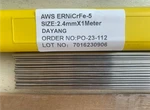
Tungsten Electrode
How to Select High-Performance Tungsten Electrodes for Precision Welding?
Tungsten Electrodes are critical non-consumable electrodes used in Tungsten Inert Gas (TIG) welding, relying on their high melting point (3422°C) and excellent electrical conductivity to generate and maintain arcs. High-performance Tungsten Electrodes are often alloyed with rare earth elements (e.g., thorium, cerium, lanthanum) to enhance arc stability, current-carrying capacity, and service life. They are indispensable in precision welding scenarios such as aerospace, medical devices, and electronics, where clean, high-quality welds on materials like stainless steel, aluminum, and titanium are required.


Product Categories and Models
Based on alloying elements and application scenarios, common models include:
Pure Tungsten (WP)
Unalloyed tungsten, suitable for AC welding of aluminum and magnesium. Features low cost but requires higher arc voltage; ideal for low-current, non-critical applications.
Thoriated Tungsten (WT20)
Tungsten with 2% thorium oxide, offering stable arcs and high current capacity. Used for DC welding of stainless steel and carbon steel (e.g., automotive parts, machinery).
Ceriated Tungsten (WC20)
Tungsten with 2% cerium oxide, eco-friendly (no radioactive elements) and suitable for both AC and DC welding. Ideal for precision welding of thin sheets (e.g., medical instruments, electronics).
Lanthanated Tungsten (WL15)
Tungsten with 1.5% lanthanum oxide, balancing arc stability and current range. Used for welding titanium alloys and high-temperature alloys in aerospace.
Performance Characteristics
High Melting Point
Withstands extreme arc temperatures without melting, ensuring consistent performance in long welding sessions.
Arc Stability
Alloyed tungsten electrodes (e.g., ceriated, lanthanated) produce stable, concentrated arcs, reducing spatter and ensuring uniform weld bead formation.
Current Adaptability
Different alloys support varying current ranges—thoriated and lanthanated electrodes handle higher currents (up to 400A), while ceriated ones excel at low currents (≤100A) for precision work.
Erosion Resistance
Alloying elements reduce electrode tip erosion, extending service life and reducing the need for frequent tip grinding.
Application Areas
Aerospace
Welding of titanium alloy aircraft components and nickel-based superalloy engine parts (using WL15 for arc stability).
01
Medical Devices
Precision welding of stainless steel surgical instruments and titanium implants (using WC20 for clean, spatter-free welds).
02
Electronics
Welding of thin copper and aluminum wires in sensors and connectors (using WC20 for low-current control).
03
Automotive
Welding of stainless steel exhaust systems and aluminum alloy parts (using WT20 for high-current efficiency).
04
FAQ
Q1: What is a Tungsten Electrode, and why is it used in TIG welding?
A1: A Tungsten Electrode is a non-consumable electrode made of tungsten (pure or alloyed with rare earth oxides) used in TIG welding. Its high melting point (3422°C) allows it to withstand the intense heat of the arc without melting, while its electrical conductivity enables arc generation. Unlike consumable electrodes (e.g., welding wires), it doesn’t melt into the weld pool, ensuring clean, precise welds—critical for materials like aluminum and titanium.
Q2: How do different Tungsten Electrode types (WP, WT20, WC20, WL15) differ in performance?
A2: Pure tungsten (WP) is economical but has poor arc stability, suitable for low-current AC welding. Thoriated (WT20) offers stable arcs and high current capacity (DC) but contains low-level radiation. Ceriated (WC20) is eco-friendly, works for both AC/DC, and excels at low currents (precision welding). Lanthanated (WL15) balances arc stability and current range, ideal for high-temperature alloys. Example: Use WC20 for medical implants (no radiation); WL15 for aerospace titanium welding.
Q3: How to choose a Tungsten Electrode based on the base material?
A3: Match the electrode to the material and welding current:
• Aluminum/magnesium (AC welding): Pure tungsten (WP) or ceriated (WC20) — WP is cost-effective; WC20 offers better arc stability.
• Stainless steel/carbon steel (DC welding): Thoriated (WT20) for high currents; ceriated (WC20) for precision.
• Titanium/high-temperature alloys: Lanthanated (WL15) — resists erosion and maintains arc focus.
• Thin sheets/electronics: Ceriated (WC20) — stable at low currents (≤50A) to avoid burn-through.
Q4: What is the ideal tip shape for a Tungsten Electrode, and how does it affect welding?
A4: Tip shape depends on material and current:
• Pointed tip (60° angle): For low currents (≤150A) and thin materials (e.g., electronics), concentrates the arc for precision.
• Blunt tip (120° angle or rounded): For high currents (≥200A) and thick materials, reduces tip erosion and distributes heat evenly.
• Ball-shaped tip: For AC welding of aluminum (prevents arc wandering).
A mismatched tip (e.g., pointed for high current) causes overheating and tip melting; a blunt tip for low current leads to unstable arcs.
Q5: How to prepare a Tungsten Electrode for welding?
A5: Key steps include:
• Grinding: Use a diamond grinder (to avoid contamination) to shape the tip—grind along the electrode axis (not crosswise) to prevent chipping.
• Cleaning: Wipe the electrode with acetone to remove oil or grinding dust (contamination causes weld porosity).
• Cutting (if needed): Use a dedicated tungsten cutter to avoid crushing the electrode (crushed ends cause unstable arcs).
Q6: What causes Tungsten Electrode erosion, and how to prevent it?
A6: Erosion (tip wear) is caused by excessive current, arc instability, or contamination. Prevention:
• Match current to electrode diameter (e.g., 3.2mm electrode → max 250A for WT20).
• Avoid touching the electrode to the weld pool (causes tungsten inclusions in the weld).
• Use alloyed electrodes (WC20, WL15) instead of pure tungsten—they resist erosion better.
Q7: Can Tungsten Electrodes be reused, and how to maintain them?
A7: Yes, they can be reused if properly maintained. After welding:
• Remove tip deposits (e.g., tungsten oxides) with a grinder.
• Reshape the tip to the desired angle (based on next use).
• Store in a dry, clean container to avoid contamination (e.g., oil, metal dust).
Discard electrodes with cracks or excessive erosion (they cause unstable arcs).
Q8: How to choose Tungsten Electrode diameter based on welding current?
A8: Follow this guideline:
• 1.6mm diameter: 10–150A (thin sheets, electronics).
• 2.4mm diameter: 50–250A (medium-thickness materials like 3–6mm stainless steel).
• 3.2mm diameter: 150–400A (thick materials like 6–12mm carbon steel).
• 4.0mm diameter: 250–500A (heavy-duty welding).
Example: A 2.4mm WC20 electrode works for 100A welding of 4mm aluminum.
Q9: What is the difference between AC and DC Tungsten Electrode applications?
A9: AC is used for aluminum/magnesium (requires oxide film removal); pure tungsten (WP) or ceriated (WC20) with a ball-shaped tip works best. DC (straight polarity) is for steel, titanium, and copper; thoriated (WT20) or lanthanated (WL15) with a pointed/blunt tip ensures stable arcs. DC offers higher precision; AC is better for oxide-rich materials.
Q10: How to troubleshoot arc instability in Tungsten Electrodes?
A10: Arc instability (flickering, wandering) is caused by:
• Contaminated tip: Grind and clean the tip with acetone.
• Wrong tip shape: Reshape to match current/material (e.g., ball tip for AC aluminum).
• Low-quality electrode: Switch to alloyed electrodes (WC20, WL15) for better stability.
• Incorrect current: Adjust to the electrode’s recommended range.
Q11: Are there safety concerns with Tungsten Electrodes, especially thoriated ones?
A11: Thoriated electrodes (WT20) contain low-level radioactive thorium—avoid grinding without ventilation (dust is hazardous). Wear a respirator during grinding and ensure good airflow. Ceriated (WC20) and lanthanated (WL15) are non-radioactive, safer for indoor use. Always handle electrodes with clean gloves to avoid oil contamination.
Q12: How to prevent tungsten inclusions in welds (tungsten spatter)?
A12: Tungsten inclusions (hard particles in the weld) are caused by touching the electrode to the weld pool or excessive current (melting the tip). Prevention:
• Maintain a 1–3mm gap between the electrode tip and weld pool.
• Use the correct current (avoid overloading the electrode).
• Grind the tip to a smooth finish (no burrs that can break off into the weld).
Q13: What is the shelf life of Tungsten Electrodes?
A13: Pure and alloyed tungsten electrodes have an indefinite shelf life if stored properly:
• Keep in a dry, dust-free container (moisture doesn’t affect tungsten, but dust causes contamination).
• Avoid contact with oils or corrosive substances (can degrade surface conductivity).
• Thoriated electrodes (WT20) have no expiration for radiation safety (thorium’s half-life is 14 billion years), but grinding dust must be handled as radioactive waste.
Q14: How does electrode length affect Tungsten Electrode performance?
A14: Standard length is 150–200mm. A longer electrode (200mm) is better for deep, hard-to-reach areas (e.g., pipe welding) but may flex under high currents (causing arc wandering). A shorter electrode (100mm) offers better control for precision work (e.g., electronics) but requires more frequent reinsertion into the torch.
Q15: Can Tungsten Electrodes be used for welding dissimilar metals (e.g., steel to aluminum)?
A15: Yes, but choose an electrode suitable for the dominant material. For steel-to-aluminum welding (AC/DC), use ceriated (WC20) — it works for both AC (aluminum) and DC (steel). Ensure the tip is shaped for AC (balled) to handle aluminum’s oxide film, and adjust current to avoid overheating either material.
Q16: How to test the quality of a Tungsten Electrode?
A16: Quality tests include:
• Arc stability: A good electrode produces a steady, focused arc without flickering at recommended currents.
• Erosion resistance: After 1 hour of welding, the tip should show minimal wear (no melting or chipping).
• Contamination resistance: Welds should be free of tungsten inclusions or porosity caused by electrode impurities.
Q17: What is the difference between 1% and 2% ceriated Tungsten Electrodes?
A17: 2% ceriated (WC20) has higher oxide content than 1% (WC10), offering better arc stability at high currents (up to 300A) and longer life. WC10 is more cost-effective and works well at low currents (≤150A) for precision tasks like electronics welding. Choose WC20 for heavy-duty AC/DC applications; WC10 for low-current DC work.
Q18: How to handle a broken Tungsten Electrode tip?
A18: A broken tip (chipped or crushed) causes unstable arcs. Stop welding, remove the electrode, and grind the broken end to a smooth, flat surface. Reshape the tip to the desired angle (e.g., 60° for DC) and clean with acetone before reuse. If the electrode is too short (≤50mm), replace it to avoid poor torch grip.
Q19: What is the impact of shielding gas on Tungsten Electrode performance?
A19: Shielding gas (argon, argon-helium mixtures) protects the electrode tip from oxidation, reducing erosion. Argon is standard for most materials; adding helium (25–50%) increases arc temperature, suitable for thick aluminum or copper (requires more heat). A gas flow rate that’s too low causes oxidation and tip wear; too high wastes gas and cools the tip excessively.
Q20: How to choose Tungsten Electrodes for automated TIG welding?
A20: Automated welding requires consistent electrode performance—choose lanthanated (WL15) or 2% ceriated (WC20) for their long life and stable arcs. Opt for larger diameters (3.2mm+) to handle continuous high currents. Ensure tips are precision-ground (uniform angle) to maintain consistent arc length—automated systems are less tolerant of tip irregularities than manual welding.
Q21: Can Tungsten Electrodes be used with pulsed TIG welding?
A21: Yes, and alloyed electrodes (WC20, WL15) are preferred. Pulsed TIG (alternating high/low current) reduces heat input, making it ideal for thin materials. Ceriated electrodes handle the current fluctuations well, maintaining arc stability during pulses. Use a pointed tip (60°) to focus the arc, and match the electrode diameter to the peak current (e.g., 2.4mm for 200A peak).
Q22: How to prevent oxidation of Tungsten Electrode tips?
A22: Oxidation (a blue/black film on the tip) weakens arc stability and increases erosion. Prevention:
• Ensure sufficient shielding gas flow (10–20 L/min for argon).
• Avoid welding in drafty areas (gas shield is disrupted).
• Use alloyed electrodes (they resist oxidation better than pure tungsten).
• Keep the electrode tip within the gas cup (extends shielding coverage).
Q23: What is the maximum current a Tungsten Electrode can handle?
A23: Maximum current depends on diameter and type:
• 1.6mm: 150A (WP), 200A (WC20), 250A (WT20/WL15).
• 2.4mm: 200A (WP), 300A (WC20), 350A (WT20/WL15).
• 3.2mm: 300A (WP), 400A (WC20), 500A (WT20/WL15).
Exceeding these limits causes tip melting and tungsten inclusions in the weld.
Q24: How to grind a Tungsten Electrode correctly?
A24: Use a dedicated tungsten grinder (not a steel grinder, which contaminates the tip). Grind along the electrode’s axis (longitudinal) to create a smooth, conical tip—crosswise grinding causes uneven wear and arc instability. For pointed tips, aim for a 30–60° angle (sharper for low current). For balled tips (AC aluminum), melt the tip slightly with low current to form a smooth ball.
Q25: Why do Tungsten Electrodes “stick” to the weld pool, and how to avoid it?
A25: Sticking occurs when the tip touches the molten pool (causing tungsten to melt and fuse with the base material). Avoid by:
• Maintaining a steady arc length (1–3mm) — use a foot pedal to control current and distance.
• Increasing travel speed slightly to prevent the pool from expanding too much.
• Using a slightly larger electrode diameter to reduce tip temperature.
Q26: How to select Tungsten Electrodes for low-amperage welding (≤50A)?
A26: For low currents (e.g., welding 0.5–2mm sheets), use 1.6mm ceriated (WC20) — it ignites easily and maintains stable arcs at low power. Pure tungsten (WP) is less reliable here, as it requires higher voltage to sustain the arc, risking burn-through. A pointed tip (60°) concentrates the arc for precision.
Q27: What is the role of rare earth oxides in Tungsten Electrodes?
A27: Rare earth oxides (thorium, cerium, lanthanum) improve electron emission from the tungsten surface, making arc ignition easier and reducing arc voltage. They also refine the grain structure of tungsten, increasing erosion resistance. Example: Cerium oxide (in WC20) enhances arc stability at both low and high currents, while lanthanum oxide (WL15) boosts current capacity.
Q28: How to store Tungsten Electrodes to avoid contamination?
A28: Store in a sealed plastic or metal container with separate compartments for different types (to avoid mixing). Keep away from oil, grease, or metal dust (use a lint-free cloth to line the container). For thoriated electrodes, store in a labeled container to alert users to low-level radiation and ensure grinding dust is disposed of properly.
Q29: Can Tungsten Electrodes be used for plasma arc welding (PAW)?
A29: Yes, but they must be designed for PAW’s higher arc temperatures. Plasma welding uses smaller-diameter tungsten electrodes (0.8–2.4mm) with sharp tips to focus the plasma jet. Lanthanated (WL15) or thoriated (WT20) electrodes are preferred for their erosion resistance—pure tungsten (WP) wears too quickly in plasma arcs.
Q30: How to identify worn-out Tungsten Electrodes that need replacement?
A30: Signs of wear include:
• Excessive tip erosion (rounded or flattened beyond the desired shape).
• Cracks or chips in the tip (cause arc instability).
• Tungsten inclusions in recent welds (indicates tip melting).
• Reduced arc stability (flickering or difficulty igniting the arc).
Q31: How does welding position affect Tungsten Electrode selection?
A31: For flat/horizontal welding, larger diameters (2.4–3.2mm) and blunt tips work well. For vertical/overhead welding, use smaller diameters (1.6–2.4mm) with pointed tips to control the weld pool and avoid sagging. Ceriated (WC20) is versatile for all positions due to its stable arc.
Q32: What is the difference between unground and pre-ground Tungsten Electrodes?
A32: Pre-ground electrodes come with factory-shaped tips (e.g., 60° pointed), saving time and ensuring consistency (critical for automated welding). Unground electrodes require on-site grinding, allowing customization of tip shape for specific tasks (e.g., balled tips for aluminum). Pre-ground is ideal for high-volume production; unground for custom or low-volume work.
Q33: How to prevent arc “wandering” in AC welding with Tungsten Electrodes?
A33: Arc wandering (unstable arc path) in AC aluminum welding is caused by a dirty tip, improper ball shape, or low gas flow. Prevention:
• Use a properly balled tip (diameter 1.5x electrode diameter) — a misshapen ball causes uneven arc distribution.
• Clean the tip with acetone to remove oxide buildup.
• Increase argon flow by 2–5 L/min to strengthen the gas shield.
Q34: How to choose Tungsten Electrodes for high-frequency TIG welding?
A34: High-frequency TIG (used for arc ignition) works best with ceriated (WC20) or lanthanated (WL15) electrodes—their oxide coatings enhance high-frequency conductivity, ensuring reliable ignition. Pure tungsten (WP) may struggle with high-frequency arcs, leading to inconsistent starts. Use a sharp tip to focus the high-frequency energy.
Q35: What is the environmental impact of Tungsten Electrodes, and how to dispose of them?
A35: Pure and ceriated/lanthanated electrodes are inert and can be recycled as scrap tungsten. Thoriated electrodes (WT20) are considered low-level radioactive waste—contact local waste management for disposal guidelines (do not throw in regular trash). Grinding dust from thoriated electrodes must be collected in sealed containers and disposed of as radioactive waste.