




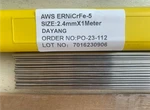
Nickel Base Alloy Covered Welding Wire

Nickel alloy welding wire is a high-performance welding material used for welding nickel-based alloys, stainless steel and other metal materials.
It has excellent corrosion resistance, high temperature performance and crack resistance. It is widely used in high-demand industrial fields such as chemical industry, marine engineering, aerospace, nuclear power plants, etc.


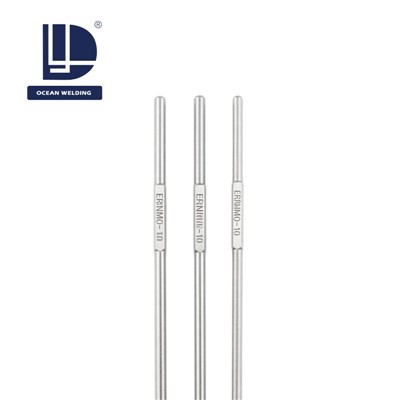

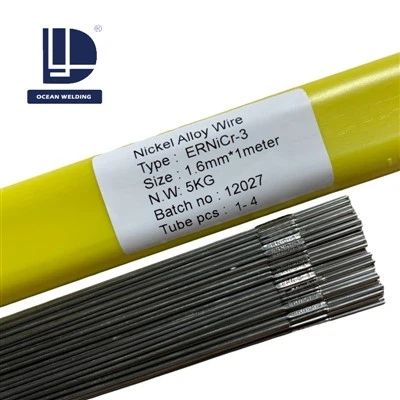


Product categories and models
According to different chemical compositions and uses, nickel alloy welding wires can be divided into many types, such as ERNiCrMo, ERNiCu, ERNiFe, etc. Specific models include but are not limited to:
ERNi-1
Suitable for welding of pure nickel forgings and castings, and welding of steel and nickel dissimilar materials.
ERNiCrFe-3
Used for welding of nickel-chromium-iron alloys, suitable for creep-resistant joints and dissimilar metal welding.
ERNiCu-7
Used for welding of monel alloys, suitable for welding of copper alloy steels and steel surface surfacing.
ERNiCrMo-4
Suitable for welding nickel-chromium-molybdenum alloys, with good high temperature resistance.
Performance characteristics
Corrosion resistance
Nickel-based alloy welding wire has extremely strong corrosion resistance and is suitable for welding in harsh environments, such as chemical equipment, marine engineering, etc.
Mechanical properties
The welding wire has high strength, high ductility and toughness, and is not prone to cracks and pores during welding, ensuring welding quality.
Applicability
Suitable for a variety of welding processes, including gas shielded welding, tungsten inert gas welding, plasma arc welding, etc.
Application areas
Chemical industry
Used for welding of chemical equipment, pipelines and storage tanks, especially in corrosive media environments.
Marine engineering
Suitable for offshore platforms, shipbuilding, etc., because of its excellent resistance to seawater corrosion.
Aerospace
Used for welding of key components such as aircraft engines and satellite components, because of its outstanding high temperature resistance.
Nuclear power plant
Used for welding of key structures such as nuclear power plant reactor vessels and pipelines to ensure safety and reliability.
FAQ
Q1: What is nickel-based alloy welding wire?
A1: Nickel-based alloy welding wire is a welding wire made of nickel as the matrix and alloy elements such as chromium, molybdenum, niobium, and titanium. It has excellent high temperature resistance, corrosion resistance, oxidation resistance and high strength, and is often used for high-demand welding in aerospace, energy and chemical industries.
Q2: What is the difference between nickel-based alloy welding wire and stainless steel welding wire?
A2: In terms of composition, nickel-based alloy welding wire is based on nickel, and the types and contents of alloy elements are higher; in terms of performance, the stability of nickel-based alloy welding wire in high temperature and strong corrosion environment is far superior to stainless steel welding wire; in different application fields, nickel-based alloy welding wire is used in extreme working conditions, and stainless steel welding wire is mostly used for conventional corrosion resistance and structural welding.
Q3: How to choose nickel-based alloy welding wire according to the use environment?
A3: In high temperature environment, choose welding wire containing antioxidant elements such as chromium, aluminum, and titanium; in strong corrosive media (such as acid, alkali, and salt solutions), give priority to welding wire containing corrosion-resistant elements such as molybdenum and tungsten; for parts subjected to mechanical stress, the strength and toughness matching of the welding wire needs to be considered.
Q4: What welding methods are suitable for nickel-based alloy welding wire?
A4: Common welding methods include tungsten inert gas welding (TIG), metal arc welding (MIG), plasma arc welding, and can also be used for submerged arc welding and flux-cored arc welding, depending on the thickness of the workpiece, welding position and production efficiency requirements.
Q5: What pretreatment is required for the base material before welding with nickel-based alloy welding wire?
A5: The oil, rust, moisture and oxide scale on the surface of the base material must be thoroughly removed. Mechanical grinding or chemical cleaning can be used; for thick plates or structures with high restraint, preheating may be required to prevent cold cracks.
Q6: What defects are prone to occur when welding nickel-based alloy welding wire?
A6: Common defects include thermal cracks (such as weld center cracks, arc crater cracks), pores, lack of fusion and slag inclusions. Thermal cracks are mainly caused by segregation of alloy elements and low melting point eutectics, and pores are mostly caused by poor gas protection or incomplete cleaning of the base material.
Q7: How to prevent thermal cracks when welding nickel-based alloy wire?
A7: Choose welding wire with good crack resistance, control the content of impurities such as sulfur and phosphorus; use small heat input welding process to reduce the constraint of the weld; reasonably design the groove to avoid excessive concentration of weld metal; and perform stress relief treatment in time after welding.
Q8: How to choose gas protection when welding nickel-based alloy wire?
A8: Argon with a purity of ≥99.99% is usually used as the shielding gas. For some highly alloyed nickel-based alloys, a small amount of helium (5% - 25%) can be added to improve the arc thermal efficiency and penetration depth.
Q9: What are the storage conditions for nickel-based alloy wire?
A9: It should be stored in a dry and ventilated environment, with room temperature maintained at 10 - 30℃ and relative humidity not exceeding 60%; the welding wire packaging needs to be sealed to avoid moisture and oxidation, and the unused welding wire should be returned to the drying box or moisture-proof cabinet in time.
Q10: Is post-weld heat treatment required after welding nickel-based alloy wire?
A10: In most cases, post-weld heat treatment (such as solution treatment and aging treatment) can eliminate residual stress, improve weld structure, and improve the corrosion resistance and mechanical properties of the joint, but the specific needs to be determined according to the alloy type and usage requirements.
Q11: Can different types of nickel-based alloy welding wires be mixed?
A11: In principle, it is not recommended to mix them. There are differences in the alloy composition and performance of different types of welding wires. Mixing may result in substandard weld performance. Special cases require welding process assessment to verify its feasibility.
Q12: When welding nickel-based alloy welding wires, what is the effect of the welding gun angle on the welding quality?
A12: Improper welding gun angle will affect the gas shielding effect, molten pool morphology and weld formation. For example, too large an angle can easily cause the shielding gas to deviate and increase the risk of pores; too small an angle may result in insufficient penetration or lack of fusion.
Q13: When welding nickel-based alloy welding wires, how to control welding deformation?
A13: Use reasonable welding sequences such as symmetrical welding and segmented back-welding; control welding heat input, use low current and fast welding speed; rigidly fix or reverse deformation treatment of the workpiece; use fixtures to assist in controlling deformation when necessary.
Q14: How to test the performance of the deposited metal of nickel-based alloy welding wire?
A14: Tensile test to determine strength and plasticity, impact test to detect toughness, hardness test to evaluate material hardness; metallographic analysis is also required to observe the state of the organization, as well as corrosion resistance test (such as intergranular corrosion and pitting test).
Q15: How to select nickel-based alloy welding wire when welding dissimilar metals?
A15: It is necessary to comprehensively consider the composition and performance of the two base materials, and select welding wire with a composition between the two, or that can meet the performance requirements of the two base materials at the same time; you can also use a nickel-based alloy welding wire with strong versatility and formulate a special welding process.
Q16: Can nickel-based alloy welding wire still be used after being damp?
A16: Slightly damp welding wire can be used after drying at 200-250℃ for 1-2 hours; severely damp welding wire may cause defects such as pores and cracks, and it is recommended to scrap it to avoid affecting the welding quality.
Q17: When welding nickel-based alloy wire, how to choose welding current and voltage?
A17: The welding current is mainly determined by the wire diameter, plate thickness and welding position, and is generally 10%-20% lower than the welding current of carbon steel of the same specification; the voltage needs to match the current. Too high will lead to excessive weld width and increased spatter, and too low will lead to insufficient weld depth.
Q18: How to deal with the oxidation color on the weld surface after welding nickel-based alloy wire?
A18: Mechanical grinding (such as sandpaper, polishing wheel) can be used to remove the oxide layer; pickling and passivation treatment can also be performed, and a special nickel-based alloy pickling solution can be used to restore the surface finish and corrosion resistance of the weld.
Q19: What is the reason for wire breakage during nickel-based alloy welding?
A19: It may be that the wire feed wheel pressure is too high or too low, the wire feed hose is blocked, or the conductive nozzle is worn; it may also be that the welding current is too high, causing the welding wire to overheat and become brittle, or the welding wire itself has quality problems (such as cracks and impurities on the surface).
Q20: When welding nickel-based alloy wire, how to improve the corrosion resistance of the weld?
A20: Select highly alloyed and corrosion-resistant welding wire; control welding heat input to avoid overheating and coarse grains; perform appropriate heat treatment after welding; pickle and passivate or coat the weld surface to enhance protection.
Q21: How to perform non-destructive testing after welding nickel-based alloy wire?
A21: Commonly used non-destructive testing methods include X-ray flaw detection and ultrasonic flaw detection to detect internal defects; penetration testing and magnetic particle testing are used to detect surface opening defects, and the testing standards must comply with relevant industry specifications and design requirements.
Q22: What should be paid attention to when welding nickel-based alloy wire in a low temperature environment?
A22: The base material needs to be preheated to prevent cold cracks; improve the gas protection effect to avoid the failure of the protective gas due to low temperature liquefaction; appropriately reduce the welding speed to ensure that the weld is fully fused; welders need to take warming measures to ensure operational stability.
Q23: What is the difference between nickel-based alloy flux-cored welding wire and solid welding wire in use?
A23: Flux-cored welding wire has high deposition efficiency and good adaptability to welding in various positions. The welding performance can be improved by adjusting the flux core composition; solid welding wire has good arc stability and high weld quality purity, and is often used for welding with high quality requirements.
Q24: When welding nickel-based alloy welding wire, how to reduce the harm of welding smoke to the human body?
A24: Keep the welding site well ventilated and use local smoke exhaust equipment; wear protective masks and dust masks; try to use low-smoke welding wire; avoid long-term exposure to welding smoke environment, and conduct regular occupational health examinations.
Q25: How to repair pores in the weld after welding nickel-based alloy welding wire?
A25: First, use mechanical methods (such as grinding) to thoroughly remove the porosity defects, and then clean the welding area again; select appropriate welding parameters and gas protection conditions, and use low current, multi-layer and multi-pass welding for repair welding; after repair welding, non-destructive testing is required again.
Q26: How to choose the groove form when welding nickel-based alloy wire?
A26: Select the groove form according to the plate thickness, welding position and welding method. Commonly used grooves are V-shaped, U-shaped, X-shaped and double U-shaped grooves. U-shaped or double U-shaped grooves should be used for thick plate welding to reduce the amount of filler metal and welding deformation.
Q27: After welding nickel-based alloy wire, how to evaluate the high-temperature durability of the weld?
A27: Through high-temperature durability test, record the time when the weld metal breaks under certain temperature and stress; analyze the microstructural changes of the weld, and evaluate the structural stability and creep performance at high temperature.
Q28: When welding nickel-based alloy wire, what is the effect of wire feeding speed on welding quality?
A28: If the wire feeding speed is too fast, the welding wire will not be fully melted, resulting in incomplete fusion and poor weld formation; if the wire feeding speed is too slow, the deposition efficiency will be low, and excessive heat input will easily cause deformation and structural deterioration, which needs to be matched with the welding current and voltage.
Q29: What are the key points when welding dissimilar materials (such as nickel-based alloys and stainless steel) with nickel-based alloy wire?
A29: Select welding wire that can match the properties of both materials at the same time; control welding heat input to prevent thermal cracks on one side of the stainless steel; clean the parent material before welding to avoid impurities; perform appropriate heat treatment according to the material properties after welding.
Q30: How to perform visual inspection of the weld after welding with nickel-based alloy wire?
A30: Check whether the weld surface is flat, whether there are defects such as pores, cracks, undercuts, slag inclusions, etc.; measure whether the weld excess height and width meet the design requirements; observe the weld color, silvery white or golden yellow indicates good protection, blue or black may have oxidation problems.
The above 30 FAQs cover many aspects of nickel-based alloy welding wire. If you want to know more about a certain issue, or have other questions, please feel free to ask.