




Welding Holder
What You Need to Know About Durable Welding Holders?
Welding holders, also known as electrode holders, are critical tools that clamp welding electrodes, transmit welding current, and ensure stable arc generation during manual arc welding. They act as a bridge between the welding machine and the electrode, directly affecting current transmission efficiency, operational safety, and welding stability. With compact structures, heat resistance, and strong clamping force, they are widely used in construction, machinery repair, metal fabrication, and on-site emergency welding—from light-duty thin plate welding to heavy-duty thick steel joining.



Product Categories and Models
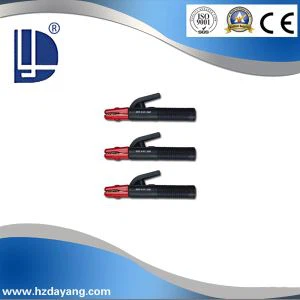
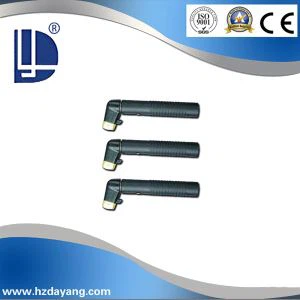
Welding holders are classified by current capacity, structural design, and material, with typical models including:
By Current Capacity
• Low-Current Welding Holders (≤300A): Suitable for light welding tasks such as thin steel plate (≤5mm) welding and household repairs.
◦ Example: 200A Insulated Welding Holder (lightweight, 0.5-0.8kg, ideal for DIY and small-scale maintenance).
• Medium-Current Welding Holders (300-500A): Used for medium-thickness material (5-10mm) welding in industrial manufacturing and construction.
◦ Example: 400A Copper Alloy Welding Holder (balanced clamping force and conductivity, widely used in steel structure welding).
• High-Current Welding Holders (≥500A): Designed for heavy-duty welding of thick plates (≥10mm) and high-current operations.
◦ Example: 600A Heavy-Duty Welding Holder (reinforced structure, heat-resistant handles, suitable for shipbuilding and bridge construction).
By Structural Design
• Pliers-Type Welding Holders: Feature a pliers-like opening and closing structure, easy to operate with one hand.
◦ Example: Standard Pliers-Type 300A Holder (simple design, low cost, suitable for general welding).
• Screw-Type Welding Holders: Use a screw to tighten the electrode, providing stronger clamping force for large-diameter electrodes.
◦ Example: 500A Screw-Type Holder (clamps 4-8mm electrodes firmly, used for heavy welding with thick electrodes).
Performance Characteristics
• Excellent Conductivity: Made of high-purity copper or copper alloy (conductivity ≥80% IACS) to minimize current loss and ensure stable arc.
• Strong Clamping Force: The jaw design (serrated or grooved) and spring mechanism provide sufficient clamping force (≥30N) to prevent electrode slipping during welding.
• Heat Resistance: The handle is made of heat-resistant materials (phenolic plastic, rubber) that can withstand temperatures up to 150℃, avoiding burns to operators.
• Durability: Key components (jaws, springs) are wear-resistant and corrosion-resistant; the overall structure is impact-resistant to withstand long-term use and accidental drops.
Application Areas
Construction Engineering
Welding steel bars, steel structures, and prefabricated parts (medium/high-current holders for thick material welding).
01
Machinery Repair
Maintenance of agricultural machinery, industrial equipment, and vehicle parts (low/medium-current holders for flexible operation).
02
Metal Fabrication
Production of steel frames, guardrails, and metal containers (medium-current holders for stable batch welding).
03
On-Site Emergency Welding
Temporary repairs of pipelines, bridges, and power facilities (portable holders with reliable performance).
04
FAQ
Q1: What factors should be considered when choosing a welding holder?
A1: Focus on three core factors: ① Current capacity (match the welding machine’s output current, e.g., 400A machine needs a ≥400A holder). ② Electrode diameter (holders for 2.5-4mm electrodes are suitable for general use; 5-8mm electrodes require larger holders). ③ Working environment (heavy-duty holders for industrial sites, lightweight ones for on-site repair). Also, check clamping force and handle heat resistance.
Q2: How to match the welding holder with the welding machine’s current?
A2: The holder’s rated current must be ≥ the welding machine’s maximum output current. For example: A 315A welding machine needs a 400A holder (to avoid overheating during peak current). Using a low-current holder (e.g., 300A for a 400A machine) will cause poor conductivity, overheating, and even melting of the holder.
Q3: What causes the welding holder to get hot quickly, and how to solve it?
A3: Common causes: ① Current exceeds the holder’s rating (replace with a higher-current holder). ② Poor contact between the holder and electrode (clean the jaws to remove oxide and debris). ③ Loose cable connection (tighten the cable terminal with a wrench). ④ Internal copper parts are oxidized (replace the holder if aging is severe).
Q4: How to maintain the clamping force of a welding holder?
A4: ① Regularly clean the jaws: Remove spatter and rust with a wire brush to ensure a tight grip on the electrode. ② Check the spring: If the clamping force weakens (electrode slips easily), replace the spring with a new one of the same specification. ③ Avoid over-opening the jaws: Excessive force can damage the spring and reduce elasticity.
Q5: Can a welding holder be used for different types of electrodes (e.g., acid, alkaline)?
A5: Yes, but pay attention to cleaning. Alkaline electrodes are sensitive to moisture and oil; after use, wipe the holder’s jaws with a dry cloth to avoid contaminating the next electrode. Acid electrodes produce more spatter; clean the jaws promptly to prevent spatter buildup from affecting clamping.
Q6: What safety precautions should be taken when using a welding holder?
A6: ① Wear heat-resistant gloves to avoid touching the metal parts (which get hot during welding). ② Do not hang the holder on the welding cable or place it on conductive surfaces (prevents short circuits). ③ Inspect the handle for cracks before use (replace if damaged to avoid electric shock). ④ Turn off the welding machine when replacing electrodes.
Q7: How to judge if a welding holder is of good quality?
A7: ① Conductivity: Copper parts should be bright (no oxidation); the resistance between the cable terminal and jaws should be ≤5mΩ. ② Clamping force: After clamping a 4mm electrode, it should not slip when lifted vertically. ③ Heat resistance: The handle should not soften or deform after 10 minutes of 300A current. ④ Structure: The jaw connection should be firm (no looseness when shaken).
Q8: What is the difference between pliers-type and screw-type welding holders?
A8: Pliers-type holders are easy to operate (one-hand clamping) and suitable for small electrodes (2.5-5mm), with fast electrode replacement—ideal for frequent electrode changes. Screw-type holders use a screw to tighten, providing stronger clamping for large electrodes (5-8mm) and are more stable for heavy welding but take longer to replace electrodes.
Q9: How to clean and maintain a welding holder daily?
A9: ① After use, remove spatter on the jaws with a hammer or wire brush (avoid damaging the serrations). ② Wipe the handle with a dry cloth to remove oil and dust. ③ Check the cable connection: If there is oxidation, clean it with sandpaper and apply anti-rust oil. ④ Store in a dry place (avoid moisture causing copper parts to rust).
Q10: What causes poor arc stability related to the welding holder?
A10: ① Loose electrode clamping (the holder can’t transmit current stably—tighten the jaws). ② Oxidized or dirty jaws (increase contact resistance—clean with sandpaper). ③ Damaged internal conductive parts (replace the holder if current transmission is intermittent). ④ Mismatched holder and electrode (small holder with large electrode causes poor contact).
Q11: How long is the service life of a welding holder, and when should it be replaced?
A11: With proper maintenance, a high-quality holder can last 1-2 years (heavy use) or 2-3 years (light use). Replace it when: ① The jaws are severely worn (can’t clamp electrodes firmly). ② The handle is cracked (risk of electric shock). ③ The internal copper parts are oxidized/melted (poor conductivity, overheating). ④ The spring fails (clamping force is lost).
Q12: Can a welding holder with a broken handle be repaired?
A12: It is not recommended. The handle is a key insulation component; repairing it (e.g., wrapping with tape) can’t guarantee insulation performance (risk of electric shock). Replace it with a new holder of the same model—qualified handles have passed insulation tests (≥500V AC for 1 minute without breakdown).
Q13: How to choose a welding holder for overhead welding?
A13: Choose a lightweight holder (≤0.8kg) to reduce arm fatigue. Opt for a pliers-type design with a non-slip handle (easy to grip with one hand). Ensure strong clamping force (≥40N) to prevent the electrode from falling during overhead operation. A heat-resistant handle (withstand 150℃) is also essential, as overhead welding causes more heat buildup.
Q14: What is the impact of electrode clamping position on welding holder performance?
A14: Clamping too close to the electrode tip (<20mm) causes the holder to overheat (close to the arc). Clamping too far (>50mm) leads to unstable current transmission (the electrode heats up and bends). The optimal position is 25-40mm from the tip—balances heat resistance and current stability.
Q15: How to prevent the welding holder from short-circuiting?
A15: ① Do not place the holder on metal workbenches, steel plates, or other conductive surfaces when not in use. ② Keep the holder away from water, oil, and dust (avoid insulation damage). ③ Check the cable insulation regularly (replace if cracked to prevent leakage). ④ Do not use the holder to clamp metal debris (avoids accidental contact with the workpiece).
Q16: What are the differences between copper and copper-alloy welding holders?
A16: Pure copper holders have better conductivity (≥90% IACS) but are softer and wear faster—suitable for low-current, light use. Copper-alloy holders (copper + tin/zinc) have slightly lower conductivity (70-80% IACS) but higher hardness and wear resistance—ideal for high-current, heavy use (e.g., industrial welding).
Q17: How to test the clamping force of a welding holder?
A17: Clamp a 4mm diameter electrode vertically, then hang a 500g weight on the electrode tip. If the electrode doesn’t slip within 1 minute, the clamping force is qualified. For large holders (clamping 6mm electrodes), use a 1000g weight—no slipping indicates sufficient force.
Q18: Can a welding holder be used for cutting operations (e.g., arc cutting)?
A18: It is not recommended. Arc cutting generates higher temperatures and more spatter than welding, which can damage the holder’s jaws and handle. Use a dedicated cutting holder (with thicker copper parts and heat-resistant handles) for cutting to avoid premature failure of the welding holder.
Q19: What causes the welding holder’s cable to loosen, and how to fix it?
A19: Causes: ① Long-term vibration during welding (loosens the fixing screw). ② The cable terminal is oxidized (expands and loosens). Fixes: ① Tighten the screw with a wrench (add a spring washer to prevent loosening). ② Clean the terminal with sandpaper, apply anti-rust oil, and re-crimp if necessary.
Q20: How to choose a welding holder for low-temperature environments (e.g., winter construction)?
A20: Choose a holder with a cold-resistant handle (rubber or plastic that remains flexible at -10℃). The internal spring should be anti-rust (to avoid freezing and jamming). A lightweight design (reduces operator fatigue in cold weather) and strong clamping force (electrodes are less likely to slip in cold, dry conditions) are also important.
Q21: What is the role of the jaw serrations in a welding holder?
A21: The serrated design increases friction between the jaws and the electrode, preventing slipping during welding. It also breaks the oxide layer on the electrode surface, ensuring good electrical contact. Damaged serrations (flattened or worn) reduce clamping force and conductivity—replace the jaws or the entire holder if this occurs.
Q22: How to avoid electrode sticking to the welding holder?
A22: ① Clean the jaws regularly (remove spatter and oxide to prevent adhesion). ② Do not overheat the holder (high temperature causes the electrode to melt and stick—reduce current or replace with a higher-current holder). ③ Use the correct electrode type (moisture-absorbing electrodes are more likely to stick—dry them before use).
Q23: What are the consequences of using an undersized welding holder?
A23: An undersized holder (e.g., 300A for 500A welding) will: ① Overheat quickly, melting the handle or internal parts. ② Transmit current unstably, causing arc flickering and spatter. ③ Have insufficient clamping force, leading to electrode slipping and poor weld quality. ④ Shorten service life due to overload.
Q24: How to store welding holders for long-term non-use (>1 month)?
A24: ① Clean thoroughly: Remove spatter, wipe with a dry cloth, and apply anti-rust oil to copper parts. ② Wrap the jaws with oiled paper to prevent rust. ③ Store in a dry, ventilated box (avoid moisture and dust). ④ Disconnect the cable from the welding machine to prevent accidental current conduction.
Q25: What is the difference between industrial-grade and civilian-grade welding holders?
A25: Industrial-grade holders have higher current ratings (400A+), use thicker copper parts, and have heat-resistant handles (withstand 150℃ for 1 hour). They are designed for continuous heavy use. Civilian-grade holders (200-300A) are lighter, cheaper, and suitable for intermittent light use (e.g., home repair), with simpler structures.
Q26: How to troubleshoot when the welding holder doesn’t transmit current?
A26: Check step-by-step: ① Is the electrode clamped tightly? (Loose clamping = no current—re-clamp). ② Are the jaws clean? (Oxide/rust blocks current—clean with sandpaper). ③ Is the cable connected? (Loose terminal = no current—tighten). ④ Is the holder internally damaged? (Broken copper parts—replace the holder).
Q27: Can welding holders be customized for special electrodes (e.g., extra-long or extra-thick)?
A27: Yes. Manufacturers can customize jaws with larger openings (for 10mm+ thick electrodes) or extended clamping parts (for extra-long electrodes). Custom holders may have reinforced springs and thicker copper parts to match special electrode requirements, but they are more expensive than standard models.
Q28: How to prevent the welding holder from falling during use?
A28: ① Use a holder with a lanyard hole (attach a lanyard to the wrist or workbench). ② Choose a non-slip handle (rubber or textured surface) to improve grip. ③ Avoid overextending the arm when welding (keep the holder within a safe range). ④ Place the holder in a dedicated bracket when not in use.
Q29: What is the impact of humidity on welding holder performance?
A29: High humidity (>80%) causes copper parts to rust, increasing contact resistance and reducing conductivity. It also weakens the handle’s insulation (risk of electric shock). Solutions: Store the holder in a moisture-proof cabinet, wipe it dry before use, and apply anti-rust oil to copper parts regularly.
Q30: How to choose a welding holder for high-altitude welding (e.g., bridge maintenance)?
A30: Choose a lightweight, compact holder (≤0.7kg) to reduce arm strain during high-altitude operation. It should have a strong, impact-resistant structure (to withstand accidental drops). A reliable clamping mechanism (no electrode slipping) and heat-resistant handle are essential—high altitude winds can intensify arc heat.
Q31: What causes the welding holder’s spring to fail, and how to prevent it?
A31: Causes: ① Fatigue from long-term use (spring loses elasticity). ② High temperature (weakens the spring material). ③ Rust (jams the spring). Prevention: ① Avoid over-opening the jaws (reduces spring stress). ② Clean the spring regularly and apply anti-rust oil. ③ Replace the spring every 6-12 months (depending on use frequency).
Q32: How to check the insulation performance of a welding holder?
A32: Use a megohmmeter to test the insulation resistance between the metal parts and the handle—should be ≥100MΩ at 500V DC. If the resistance is too low (<10MΩ), the handle is damaged (moisture or cracks)—replace the holder to avoid electric shock.
Q33: Can a welding holder be used with a DC welding machine?
A33: Yes. Welding holders are compatible with both AC and DC machines, but DC welding may generate more heat at the holder (due to continuous current). For DC machines, choose a holder with a 20-30% higher current rating than the machine (e.g., 500A holder for a 400A DC machine) to avoid overheating.
Q34: What is the difference between a 300A and 500A welding holder in terms of structure?
A34: 500A holders have thicker copper jaws (≥5mm) and larger contact areas to reduce current density. They use stronger springs (clamping force ≥50N) and heat-resistant handles (thicker insulation). The cable connection is larger (accepts 35mm² cables) compared to 300A holders (25mm² cables).
Q35: How to dispose of a damaged welding holder?
A35: Disassemble it first: Recycle copper parts (jaws, terminals) as scrap metal. The plastic handle can be recycled if it’s undamaged; otherwise, dispose of it as non-hazardous waste. Do not throw it away directly—recycling reduces environmental impact and recovers valuable materials.