




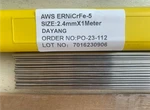
CO2 Gas-Shielded Flux Cored Welding Wire
Efficient CO₂ Gas-Shielded Flux Cored Welding Wire: Selection, Application and Expert Tips
Efficient CO₂ gas-shielded flux cored welding wire is a high-performance welding material designed for automated and semi-automated welding. It consists of a metal sheath (mild steel or low-alloy steel) and a flux core (containing deoxidizers, slag formers, and alloying elements). Unlike solid wires, it relies on both CO₂ gas and flux for protection, enabling strong penetration, high deposition efficiency, and adaptability to harsh environments (e.g., rusty base metals or windy conditions). It is widely used in construction steel structures, heavy machinery, shipbuilding, and bridge engineering.
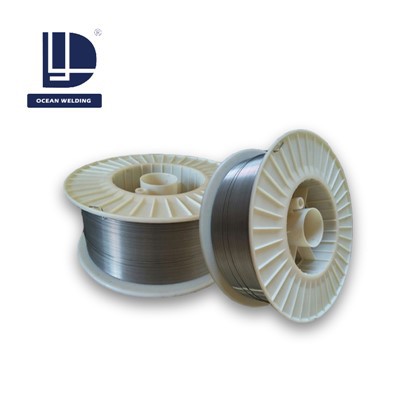
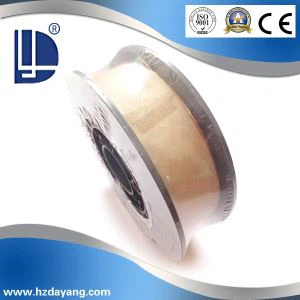

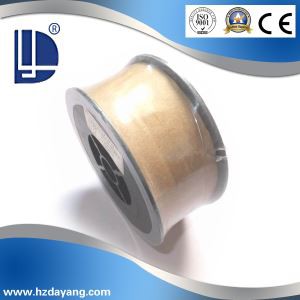




Product Categories and Models
Classified by strength level and application scenarios, common models include:
E71T-8: A low-alloy flux cored wire with tensile strength ≥490MPa. Suitable for all-position welding of mild steel and 500MPa-grade low-alloy steel, with excellent crack resistance.
E81T1-Ni1: A high-strength wire (≥550MPa) containing nickel. Resists low-temperature impact (-40℃) and is used for low-temperature pressure vessels and engineering machinery.
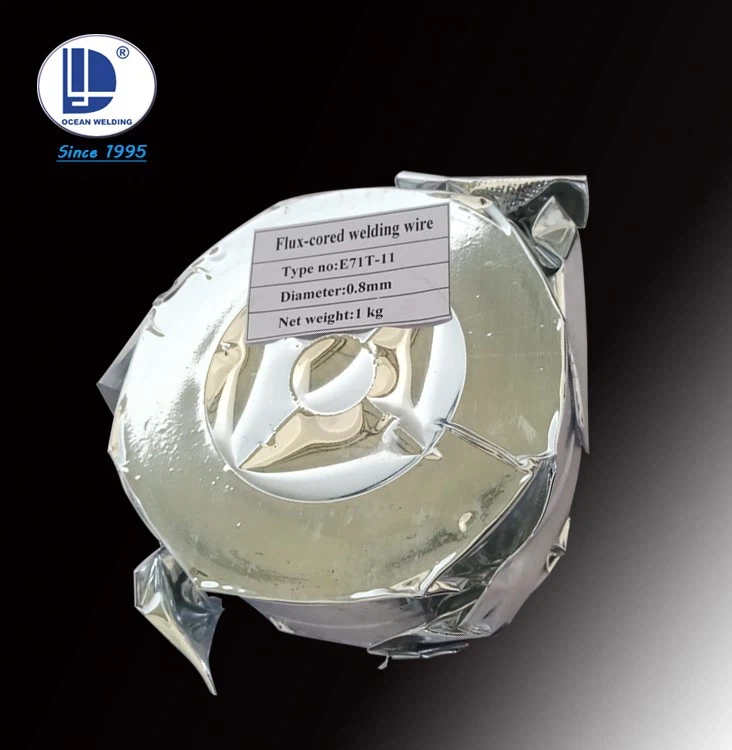
E71T-11: A general-purpose wire for mild steel. Has strong tolerance to rust and oil, ideal for outdoor construction (e.g., steel structure workshops).
E91T1-K2: A high-strength low-alloy wire (≥620MPa) with chromium and molybdenum. For high-pressure pipelines and heavy-duty machinery.
Performance Characteristics
Dual protection
CO₂ gas isolates air, while flux removes oxides and forms slag to cover the weld, reducing porosity and oxidation.
High efficiency
Deposition rate is 30-50% higher than solid wires, shortening welding time for large structures.
Rust tolerance
Flux can reduce the impact of rust, oil, or scale on the base metal, lowering pre-weld cleaning requirements.
All-position adaptability
Wires like E71T-8 support flat, horizontal, vertical, and overhead welding, suitable for complex structural parts.
Application Areas
Construction steel structures
Welding of steel beams, columns, and node plates in high-rise buildings and bridges.
01
Heavy machinery
Welding of excavator arms, crane booms, and machine tool beds (requires high strength).
02
Shipbuilding
Welding of hull plates and deck structures (resists moisture and salt spray).
03
Pipelines
Welding of oil and gas pipelines and water supply pipelines (airtightness and pressure resistance).
04
Industry Selection Cases
Case 1: High-Rise Building Steel Structure (Q355B Steel)
• Requirement: Tensile strength ≥490MPa, all-position welding (including vertical joints), and fast construction.
• Selection: E71T-8 flux cored welding wire.
• Reason: Matches Q355B’s strength; supports vertical upward welding (critical for column-beam joints); high deposition efficiency meets the project’s tight schedule.
Case 2: Low-Temperature LPG Tank (16MnDR Steel)
• Requirement: -40℃ impact energy ≥27J, pressure resistance ≥1.6MPa, and no cold cracks.
• Selection: E81T1-Ni1 flux cored welding wire.
• Reason: Nickel improves low-temperature toughness; low hydrogen content (≤8ml/100g) prevents hydrogen-induced cracks; flux core’s deoxidizing ability ensures weld density.
Case 3: Outdoor Steel Pipe Pile (Q235B Steel with Rust)
• Requirement: Tolerance to surface rust (no strict pre-cleaning), and weather resistance.
• Selection: E71T-11 flux cored welding wire.
• Reason: Strong rust tolerance (flux neutralizes oxides); CO₂ + slag dual protection resists wind interference; low cost fits large-volume pipe pile projects.
FAQ
Q1: What makes CO₂ gas-shielded flux cored welding wire "efficient"?
A1: Its flux core eliminates the need for separate flux, enabling continuous wire feeding. The deposition rate (10-15kg/h) is much higher than solid wires or manual electrodes, and it tolerates rusty base metals—reducing pre-weld cleaning time.
Q2: How does it differ from solid CO₂ gas-shielded welding wire?
A2: Flux cored wire has a flux core (deoxidizes, forms slag) and relies on dual protection (gas + slag), while solid wire only uses gas. Flux cored wire is more adaptable to rusty surfaces and windy conditions but may leave slag (needs cleaning). Solid wire is cleaner but requires stricter base metal cleaning.
Q3: Can it be used without CO₂ gas?
A3: No. The flux core alone can’t fully prevent oxidation—CO₂ is necessary to isolate air and stabilize the arc. Without gas, the weld will have severe porosity, oxidation, and spatter. Some "self-shielded" flux cored wires exist, but they’re not CO₂-dependent and have different performance.
Q4: What causes excessive slag in flux cored wire welds, and how to reduce it?
A4: Excessive slag is caused by high flux content, slow welding speed (slag accumulates), or low current (incomplete slag fusion). Reduce it by: increasing current (promote slag melting); speeding up travel (avoid accumulation); choosing low-slag wires (e.g., E71T-8) for thin plates.
Q5: How to choose between E71T-8 and E71T-11?
A5: E71T-8 is for low-alloy steel, all-position welding, and requires better base metal cleanliness (suitable for structural parts). E71T-11 is for mild steel, tolerates rust/oil, and is cheaper (ideal for outdoor rough welding like pipe piles).
Q6: What’s the optimal CO₂ gas flow rate for flux cored welding wire?
A6: Generally 20-25L/min. For thin plates (<5mm) or indoor welding: 15-20L/min. For thick plates (>10mm) or outdoor/windy conditions: 25-30L/min (prevent air intrusion). Too low: porosity; too high: turbulent gas flow (also causes porosity).
Q7: How to prevent "slag entrapment" in multi-layer welding?
A7: Slag entrapment occurs when slag from the previous layer isn’t cleaned. Prevent it by: using a chisel or wire brush to remove slag between layers; ensuring the next layer’s arc melts the previous layer’s edge (1-2mm overlap); tilting the gun forward to push slag ahead.
Q8: What’s the impact of wire feed speed on flux cored wire welding?
A8: Too fast: wire jams or doesn’t melt, causing incomplete fusion. Too slow: insufficient filler, leading to concave welds. Match speed to current (e.g., 1.2mm wire + 200A = 5-7m/min). Stable wire feeding is critical—use a well-maintained wire feeder.
Q9: Can it weld high-strength steel (e.g., Q690)?
A9: Yes, but choose matching wires. For Q690 (tensile strength ≥690MPa), use E91T1-K2 (≥620MPa) or E111T1-K3 (≥760MPa). Ensure the wire’s alloy elements (Cr, Mo) match the base metal to avoid strength mismatch.
Q10: What causes "hydrogen-induced cracks" and how to avoid them?
A10: Cracks are caused by hydrogen from moisture (flux absorbs water, rust, or oil). Avoid them by: using low-hydrogen wires (E81T1-Ni1, hydrogen ≤8ml/100g); storing wires in dry cabinets (humidity ≤60%); preheating rusty base metals (100-150℃ to remove moisture).
Q11: How to handle "porosity" in flux cored wire welds?
A11: Grind out porous areas, then re-weld. To prevent recurrence: check gas flow and purity (≥99.5%); ensure flux core isn’t damp (bake damp wires at 250℃ for 2h); clean heavy oil/rust (flux can’t handle excessive contaminants).
Q12: What’s the best preheating temperature for thick plates (>20mm)?
A12: Preheat to 150-250℃. For low-alloy steel (Q355): 150-200℃. For high-alloy steel (Q690): 200-250℃. Preheating reduces cooling rate, avoids martensite formation (brittle) and hydrogen-induced cracks. Use a temperature gun to monitor.
Q13: Can flux cored wire be used for overhead welding?
A13: Yes, choose all-position wires like E71T-8. Key tips: use small-diameter wire (1.2mm); lower current (180-220A) to control molten pool; keep short arc length; tilt the gun slightly upward to prevent slag falling into the pool.
Q14: How to store flux cored welding wire to prevent dampness?
A14: Store in airtight packaging in a dry cabinet (temperature 10-30℃, humidity ≤60%); after opening, use within 48 hours (flux absorbs moisture quickly); unused wire must be sealed in a moisture-proof bag with desiccant; damp wire needs baking (250℃ for 2-3h) before use.
Q15: What’s the difference between "gas-shielded" and "self-shielded" flux cored wires?
A15: Gas-shielded (e.g., E71T-8) requires CO₂/argon-CO₂ gas, with better weld quality (low spatter, smooth surface) for structural parts. Self-shielded (e.g., E71T-8NS) has flux that generates shielding gas, no need for external gas—used for outdoor field welding but with more spatter.
Q16: How to adjust parameters when welding in windy conditions (>3m/s)?
A16: Increase gas flow by 5-10L/min (to 25-30L/min); use a wind shield (blocks crosswinds); choose larger-diameter nozzles (20-25mm) for broader gas coverage; slow travel speed to ensure fusion—wind disrupts gas protection, so prioritize stability over speed.
Q17: What causes "undercut" and how to fix it?
A17: Undercut is due to excessive current (melts base metal edges) or high voltage (arc blows to edges). Fix by: reducing current/voltage by 10%; increasing wire feed speed (adds more filler); tilting the gun 5-10° toward the weld (focuses arc on the pool).
Q18: How to test the mechanical properties of flux cored wire welds?
A18: Tensile test (strength, elongation); impact test (low-temperature toughness for LPG tanks); bending test (180° bend to check plasticity); hardness test (avoids brittle heat-affected zones). For pipelines, add pressure tests (leak detection).
Q19: Can it weld dissimilar metals (e.g., mild steel and low-alloy steel)?
A19: Yes. Choose a wire with intermediate strength, e.g., E71T-8 (matches mild steel) or E81T1-Ni1 (for low-alloy). Control heat input to avoid overheating the low-alloy side (prevents grain coarsening); preheat to 100℃ if the thickness difference is large.
Q20: What’s the impact of flux core composition on performance?
A20: Deoxidizers (Mn, Si) reduce porosity; slag formers (TiO₂) control slag flow; alloying elements (Ni, Cr) improve strength/toughness; hydrogen binders (F, Ca) reduce hydrogen content. For example, E81T1-Ni1’s nickel enhances low-temperature toughness.
Q21: How to choose wire diameter for different plate thicknesses?
A21: 0.8-1.2mm for thin plates (3-8mm); 1.2-1.6mm for medium plates (8-20mm); 1.6-2.0mm for thick plates (>20mm). Larger diameters require higher current but increase deposition efficiency—match to the welding machine’s capacity.
Q22: What’s the service life of opened flux cored wire?
A22: 48 hours in dry conditions (≤60% humidity); 24 hours in high humidity (>60%); 12 hours if exposed to rain/fog. Flux absorbs moisture quickly, leading to hydrogen cracks—don’t use expired wire even if stored sealed.
Q23: How to reduce spatter when using flux cored wire?
A23: Adjust current/voltage to optimal range (stable arc, quiet pool); use anti-spatter spray on the base metal; ensure wire feeding is smooth (no jams); choose low-spatter wires (E71T-8 is better than E71T-11).
Q24: What causes "incomplete fusion" at the groove root?
A24: Causes: insufficient heat input (low current/speed), rust/oil at the root, or small groove angle. Fix by: increasing current by 10-15%; cleaning the root thoroughly; using a 60° groove angle (for thick plates) to improve access.
Q25: Can flux cored wire be used for repair welding?
A25: Yes, it’s ideal for repairs due to high efficiency and rust tolerance. For small defects: use 1.2mm wire, low current (150-180A) to avoid burning through. For large defects: multi-layer welding (clean slag between layers) to ensure strength.
Q26: How to handle "slag peeling difficulty"?
A26: Slag sticks if cooling is too slow (slag fuses with weld) or flux is damp. Fix by: increasing travel speed (faster cooling); using a wire brush while the weld is warm (slag is brittle); ensuring wire is dry (damp flux changes slag properties).
Q27: What’s the best welding sequence for large structures (e.g., steel beams)?
A27: Weld from the center to both ends (reduces stress); use symmetrical welding (e.g., weld left and right of the beam alternately); skip weld (weld 50mm, skip 100mm, then fill) to avoid heat accumulation; finish with continuous weld to close gaps.
Q28: How to prevent "weld cracking" in low-temperature environments (<0℃)?
A28: Preheat base metal to 100-150℃ (raises cooling temperature); use low-hydrogen wire (E81T1-Ni1); avoid high current (prevents excessive heat input); post-weld wrap in insulation blankets (slow cooling to reduce stress).
Q29: What’s the difference between "T-8" and "T-11" in flux cored wire models?
A29: "T-8" indicates rutile flux (good slag detachability, low spatter) for all-position welding, suitable for structural parts. "T-11" indicates high-titania flux (tolerates rust, low cost) for flat/horizontal welding, ideal for rough welding.
Q30: How to check if flux cored wire is damp before use?
A30: Bend a 300mm wire—dry wire bends smoothly; damp wire is brittle (may crack). Trial weld: damp wire produces excessive smoke, porous welds, or "pop" sounds (hydrogen escaping). Bake damp wire at 250℃ for 2h before use.
Q31: Can it weld galvanized steel?
A31: Yes, but take precautions. Zinc evaporates at 907℃ (causes porosity and fumes). Use E71T-11 (flux absorbs zinc vapor); reduce heat input (low current + fast speed); ventilate well (zinc fumes are toxic); grind galvanized layer 5-10mm from the groove.
Q32: How to control weld reinforcement (excess height)?
A32: Too much reinforcement: reduces fatigue strength. Control by: matching wire feed speed to travel speed (avoid over-filling); adjusting gun angle (10° forward tilt to spread filler); using a straight edge to check—reinforcement should be ≤3mm.
Q33: What’s the impact of contact tip wear on welding?
A33: Worn tips (enlarged aperture) cause unstable wire feeding and arc deviation, leading to uneven welds or undercut. Replace tips when: wire feeding is jerky; arc sparks are irregular; tip has visible wear (replace every 8-10 hours of use).
Q34: How to choose flux cored wire for marine environments?
A34: Choose wires with corrosion-resistant elements, e.g., E81T1-Ni1 (nickel improves seawater resistance) or E91T1-K2 (chromium/molybdenum). Post-weld: remove slag and paint (or galvanize) to enhance corrosion resistance.
Q35: What’s the cost comparison between flux cored wire and solid wire?
A35: Flux cored wire has a higher unit price but lower overall cost: it reduces pre-cleaning labor (rust tolerance), increases deposition efficiency (faster welding), and requires less skilled labor. For large projects, flux cored wire saves 15-20% in total costs.