




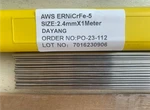
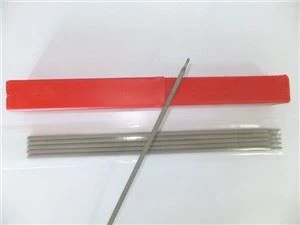
Heat Resistant Steel Electrode
How to Select High-Quality Heat Resistant Steel Electrodes for High-Temperature Welding?
Heat Resistant Steel Electrodes are specialized welding consumables designed for welding heat resistant steels—steels that retain strength, oxidation resistance, and creep resistance at 300°C to 1000°C (e.g., 12Cr1MoV, 304H, 25Cr2MoVA). With a core blended with heat-resistant alloy elements (chromium, molybdenum, nickel, vanadium) and low-hydrogen coatings, these electrodes ensure welds match the base material’s high-temperature performance. They are critical in industries like power generation, petrochemicals, and metallurgy, where equipment operates under sustained high temperatures and pressure.



Product Categories and Models
Based on high-temperature performance and base material types, common models include:
E5515-B2 (R207)
Chromium-molybdenum (Cr-Mo) electrode, suitable for welding 12CrMo steel (works at ≤510°C). Features good oxidation resistance, ideal for low-pressure boiler pipes and steam lines.
E5515-B3 (R307)
High-chromium-molybdenum electrode, designed for 15CrMo steel (≤550°C). Resists high-temperature creep, used in medium-pressure steam pipelines and petrochemical reactors.
E309Mo-15
Austenitic heat resistant electrode, for welding 304H stainless steel (≤800°C). Contains nickel and molybdenum to prevent carbide precipitation, suitable for furnace parts and heat exchangers.
E410NiMo-15
Martensitic heat resistant electrode, for 1Cr13 steel (≤450°C). Offers good mechanical strength at moderate temperatures, used in turbine blades and valve bodies.
Performance Characteristics
High-Temperature Strength
Welds retain tensile strength ≥490MPa at operating temperatures (e.g., 500°C for R307), resisting deformation under load.
Oxidation Resistance
Alloy elements (Cr ≥5%, Mo ≥0.5%) form a dense oxide film on the weld surface, preventing scaling at high temperatures.
Creep Resistance
Resists slow plastic deformation (creep) under long-term high temperature and pressure—critical for boiler pipes and reactor vessels.
Low Hydrogen Content
Coatings with hydrogen ≤5mL/100g reduce cold cracks, which are risky in thick-walled high-temperature equipment.
Application Areas
Power Generation
Welding of boiler water walls, superheater pipes, and turbine casings (using R307 for 15CrMo steel at 550°C).
01
Petrochemicals
Welding of catalytic reactors, hydrogenation furnaces, and high-temperature oil pipelines (using E309Mo-15 for 800°C environments).
02
Metallurgy
Welding of rolling mill rolls, furnace linings, and heat treatment equipment (using E410NiMo-15 for 450°C mechanical parts).
03
Aerospace
Welding of aircraft engine exhaust systems and rocket nozzle components (using high-nickel heat resistant electrodes for 1000°C+).
04
FAQ
Q1: What is a Heat Resistant Steel Electrode?
A1: A Heat Resistant Steel Electrode is a welding electrode designed for heat resistant steels, with a core containing heat-resistant alloys (Cr, Mo, Ni) and a low-hydrogen coating. It ensures welds retain strength, oxidation resistance, and creep resistance at high temperatures (300°C–1000°C). Unlike general steel electrodes, it prioritizes high-temperature stability over room-temperature toughness, making it essential for boilers, furnaces, and reactors.
Q2: How does a Heat Resistant Steel Electrode differ from a regular Low Alloy Steel Electrode?
A2: In composition, Heat Resistant Steel Electrodes have higher chromium (≥5%) and molybdenum (≥0.5%) to resist oxidation and creep; regular low alloy electrodes focus on room-temperature strength with lower alloy content. In performance, Heat Resistant Steel Electrodes maintain properties at 500°C+, while regular low alloy electrodes soften above 300°C. Applications: Heat Resistant Steel Electrodes for boiler pipes; regular low alloy electrodes for bridges.
Q3: How to choose a Heat Resistant Steel Electrode based on operating temperature?
A3: Match the electrode to the maximum service temperature:
●≤510°C (e.g., low-pressure boilers): E5515-B2 (R207) with Cr-Mo alloy.
●510–550°C (e.g., medium-pressure steam pipes): E5515-B3 (R307) with higher Cr-Mo.
●550–800°C (e.g., furnace parts): E309Mo-15 (austenitic, Ni-Cr-Mo).
●800–1000°C (e.g., aerospace components): High-nickel electrodes (Ni ≥20%).
Q4: Why are Cr and Mo critical in Heat Resistant Steel Electrodes?
A4: Chromium (Cr) forms a protective chromium oxide film on the weld surface, preventing oxidation and scaling at high temperatures—without Cr, welds would corrode rapidly at 500°C+. Molybdenum (Mo) enhances creep resistance by strengthening the grain structure, reducing slow deformation under long-term high temperature and pressure. Together, they ensure welds survive in high-temperature, high-stress environments like boiler pipes.
Q5: What pre-weld precautions are unique to Heat Resistant Steel Electrodes?
A5: Key precautions include:
●Strict cleaning: Remove oil, scale, and oxides (use a wire brush + pickling for stubborn scale) to prevent high-temperature corrosion caused by contaminants.
●Controlled preheating: For Cr-Mo steels >10mm thick, preheat to 250–350°C (higher than low alloy steel) to avoid cold cracks and ensure alloy diffusion.
●Electrode baking: Bake low-hydrogen heat resistant electrodes at 350–400°C for 2 hours (longer than regular electrodes) to remove all moisture, which causes hydrogen embrittlement at high temperatures.
Q6: What welding parameters are suitable for Heat Resistant Steel Electrodes?
A6: Parameters depend on alloy type and thickness:
●R207/R307 (Cr-Mo): 3.2mm electrode → 90–120A; 4.0mm → 140–180A (DC reverse polarity).
●E309Mo-15 (austenitic): 3.2mm → 80–110A; 4.0mm → 120–160A (lower current to avoid carbide precipitation).
●Control interpass temperature: 250–350°C for Cr-Mo; ≤150°C for austenitic (prevents grain coarsening).
Q7: What defects are common in Heat Resistant Steel Electrode welds, and how to prevent them?
A7: Common defects include:
●High-temperature cracking: Caused by carbide precipitation (Cr-Mo steels) or grain coarsening. Prevent by controlling interpass temperature and post-weld heat treatment.
●Oxidation porosity: From inadequate shielding or surface contaminants. Prevent by strict cleaning and using dry electrodes.
●Creep failure: Due to improper alloy matching. Prevent by choosing electrodes with Cr/Mo content matching the base steel.
Q8: How to store Heat Resistant Steel Electrodes to maintain performance?
A8: Store unopened electrodes in a dry, sealed container (≤50% humidity) for up to 2 years. After opening:
●Bake at 350°C for 2 hours, then store in a 100–150°C holding oven.
●Use within 2 hours of removal from the oven (moisture absorption ruins high-temperature performance).
●Never store near corrosive gases (e.g., sulfur dioxide), which react with Cr/Mo in the core.
Q9: What post-weld heat treatment is required for Heat Resistant Steel Electrode welds?
A9: It’s critical for high-temperature performance:
●Cr-Mo steels (R207/R307): Temper at 720–760°C for 1–2 hours to relieve stress and restore creep resistance.
●Austenitic steels (E309Mo-15): Solution annealing at 1050–1100°C (then water cooling) to dissolve carbides, preventing intergranular corrosion.
●Martensitic steels (E410NiMo-15): Temper at 600–650°C to reduce brittleness.
Q10: Can Heat Resistant Steel Electrodes weld heat resistant steel to carbon steel?
A10: Yes, but use a transition electrode (e.g., Ni-Cr-Mo) to avoid carbon migration (which causes embrittlement at high temperatures). Preheat to 200–300°C, weld with low current, and post-weld temper at 650°C. This is common in boiler tube-to-header joints, where carbon steel headers connect to Cr-Mo steel tubes.
Q11: How to test the high-temperature performance of Heat Resistant Steel Electrode welds?
A11: Key tests include:
●Creep test: Measure deformation under constant load at operating temperature (e.g., 550°C for 1000 hours—creep rate ≤0.1%/1000h).
●Oxidation test: Expose welds to 800°C air for 100 hours—weight loss due to scaling should be ≤0.5g/m².
●Tensile test at high temperature: Weld strength at 500°C should be ≥80% of room-temperature strength.
Q12: What is the impact of welding speed on Heat Resistant Steel Electrode welds?
A12: Too fast a speed leads to incomplete fusion (risky for pressure-tight joints). Too slow a speed causes overheating, leading to:
Carbide precipitation in Cr-Mo steels (reducing creep resistance).
Grain coarsening in austenitic steels (lowering toughness).
For 3.2mm R307 electrodes, a speed of 8–12 cm/min is optimal—balances fusion and heat input.
Q13: How to handle moisture-absorbed Heat Resistant Steel Electrodes?
A13: Even slightly damp electrodes (exposed to 50–60% humidity for 1 hour) must be re-baked at 400°C for 2 hours (longer than initial baking). Severely damp electrodes (coating caking) are unusable—moisture causes hydrogen-induced cracks that expand under high temperatures, leading to catastrophic failure in boilers or reactors.
Q14: What is the difference between R207 and R307 Heat Resistant Steel Electrodes?
A14: R207 (E5515-B2) has 1.0–1.5% Cr and 0.4–0.6% Mo, suitable for ≤510°C (e.g., low-pressure steam pipes). R307 (E5515-B3) has 2.0–2.5% Cr and 0.9–1.2% Mo, with higher creep resistance for ≤550°C (e.g., medium-pressure boiler superheaters). R307’s higher Cr/Mo content forms a more stable oxide film at elevated temperatures.
Q15: How to choose electrode diameter for Heat Resistant Steel Electrode welding?
A15: Match diameter to thickness and temperature:
●Thin-walled pipes (3–8mm, ≤500°C): 2.5–3.2mm electrodes (precise heat control).
●Thick-walled vessels (8–20mm, 500–600°C): 4.0mm electrodes (balance efficiency and alloy retention).
●Heavy-duty parts (>20mm, >600°C): 5.0mm for root passes, then 4.0mm (minimize heat input in filling layers).
Q16: What safety precautions are specific to Heat Resistant Steel Electrodes?
A16: High-temperature welding produces intense arcs and fumes (containing Cr and Mo oxides, which are toxic). Wear a respirator with a high-efficiency filter and ensure forced ventilation. Baking electrodes at 400°C requires heat-resistant gloves and eye protection. Post-weld, avoid contact with hot parts (risk of burns) and allow proper cooling before handling.
Q17: How to prevent carbide precipitation in Heat Resistant Steel Electrode welds?
A17: Carbide precipitation (Cr-rich carbides) weakens grain boundaries, reducing creep resistance. Prevention:
●For Cr-Mo steels: Control interpass temperature ≤350°C and perform post-weld tempering to dissolve carbides.
●For austenitic steels: Use low heat input (avoid overheating) and solution annealing to redissolve carbides.
●Choose electrodes with niobium (Nb) or titanium (Ti), which “trap” carbon to prevent Cr carbide formation.
Q18: How to evaluate the quality of Heat Resistant Steel Electrode welds?
A18: Key criteria include:
●High-temperature creep resistance: Passes 1000-hour creep test at operating temperature.
●Oxidation resistance: No visible scaling after high-temperature exposure.
●Pressure integrity: Hydrostatic test at 1.5x working pressure (no leaks for 30 minutes).
●Microstructure: No excessive carbide precipitation (verified via metallographic analysis).
Q19: Can Heat Resistant Steel Electrodes be used for cold welding (no preheating)?
A19: No, even for thin heat resistant steel. Preheating is critical to:
●Reduce cooling rate (prevents martensite formation in Cr-Mo steels, which causes cracks).
●Promote alloy diffusion between the electrode and base material.
●Avoid hydrogen trapping in the weld (risky for high-temperature service).
Q20: How to handle weld cracks in Heat Resistant Steel Electrode welds?
A20: Grind the crack to a U-shape (to reduce stress concentration) and clean with a wire brush + acetone. Bake a new electrode at 400°C for 2 hours. Preheat the repair area to 350°C (higher than normal) and weld with low current. After welding, perform local tempering at 750°C and test with ultrasonic flaw detection to confirm no residual cracks.
Q21: What is the maximum thickness Heat Resistant Steel Electrodes can weld?
A21: With proper preheating and multi-layer welding, they can weld up to 50mm thick heat resistant steel. For thick plates:
●Use 5.0mm electrodes for root passes (current 180–220A) with preheat to 350°C.
●Fill with 4.0mm electrodes, keeping interpass temperature 300–350°C.
●Post-weld temper at 760°C for 2 hours to ensure uniform microstructure.
Q22: How does nickel content affect Heat Resistant Steel Electrode performance?
A22: Nickel (Ni) stabilizes austenitic structures, improving high-temperature toughness and oxidation resistance. Electrodes with 10–20% Ni (e.g., E309Mo-15) work at 800°C+, while low-Ni Cr-Mo electrodes (R207/R307) are limited to 550°C. High-Ni electrodes also resist thermal fatigue (cyclic heating/cooling), making them ideal for furnace doors and exhaust systems.
Q23: What post-weld cleaning is needed for Heat Resistant Steel Electrode welds?
A23: Remove slag with a stainless steel wire brush (avoid carbon steel brushes, which contaminate the weld with iron). For austenitic steels, pickle with a nitric acid-hydrofluoric acid solution to remove heat tint (a oxide layer that reduces corrosion resistance). Rinse thoroughly and dry before heat treatment.
Q24: Can Heat Resistant Steel Electrodes be used with AC current?
A24: No, they require DC reverse polarity. AC current causes arc instability, uneven coating melting, and increased hydrogen absorption—all critical issues for high-temperature welds. DC ensures stable arcs, proper alloy transfer, and low hydrogen content, which is essential for creep resistance and crack prevention.
Q25: How to prevent intergranular corrosion in austenitic Heat Resistant Steel Electrode welds?
A25: Intergranular corrosion (along grain boundaries) is caused by chromium carbide precipitation. Prevention:
●Use electrodes with molybdenum and niobium (e.g., E309Mo-15) to stabilize carbon.
●Perform solution annealing after welding (1050°C, water-cooled) to dissolve carbides.
●Control heat input to avoid prolonged exposure to 450–850°C (the “sensitization range” for carbides).
Q26: What is the shelf life of Heat Resistant Steel Electrodes?
A26: Unopened electrodes have a 2-year shelf life in dry storage. Opened electrodes must be used within 2 hours of baking (even in dry conditions) due to their sensitivity to moisture. Re-baking more than 3 times degrades the coating, reducing high-temperature performance—discard such electrodes for critical applications.
Q27: How to choose Heat Resistant Steel Electrodes for cyclic high-temperature environments?
A27: Choose austenitic electrodes (e.g., E309Mo-15) with high nickel (12–20%)—they resist thermal fatigue better than ferritic Cr-Mo electrodes. Nickel improves ductility, allowing the weld to expand and contract without cracking during heating/cooling cycles. For example, furnace doors (which cycle between 800°C and room temperature) use E309Mo-15 for durability.
Q28: How to test for hydrogen-induced cracks in Heat Resistant Steel Electrode welds?
A28: Perform a hydrogen test: measure weld hydrogen content (must be ≤5mL/100g). For critical parts, use a 48-hour delayed crack test—store the weldment at 25°C, then check with liquid penetrant testing. Hydrogen cracks in heat resistant steel are especially dangerous, as they expand under high temperature and pressure.
Q29: What is the impact of interpass temperature on Heat Resistant Steel Electrode welds?
A29: For Cr-Mo steels, interpass temperature must be 250–350°C: too low causes cold cracks; too high leads to grain coarsening. For austenitic steels, keep it ≤150°C to avoid carbide precipitation. Use a temperature-indicating stick to monitor—never weld if the temperature is outside the recommended range.
Q30: How to ensure welds made with Heat Resistant Steel Electrodes are pressure-tight?
A30: For high-pressure equipment (e.g., boiler pipes), ensure full penetration by using a proper groove design (e.g., U-groove for thick walls). Perform a radiographic test to detect root defects. After welding, hydrostatically test at 1.5x working pressure for 1 hour—no leaks or deformation indicates a tight joint.
Q31: Can Heat Resistant Steel Electrodes be used for overlay welding?
A31: Yes, they overlay heat resistant alloys on carbon steel to enhance high-temperature performance (e.g., boiler tube ends). Use E309Mo-15 for 800°C overlay or R307 for 550°C. Weld in thin layers (≤3mm) with low current to avoid diluting the alloy with carbon steel.
Q32: How to handle oxide scale on heat resistant steel before welding with Heat Resistant Steel Electrodes?
A32: Oxide scale (a hard, brittle layer) prevents fusion and causes porosity. Remove it by:
●Grinding with a wire brush (for light scale).
●Pickling with a 10% sulfuric acid solution (for heavy scale, 5–10 minutes).
●Sandblasting (for large surfaces like furnace walls).
●Ensure the surface is bright metal before preheating—residual scale leads to high-temperature corrosion.
Q33: What is the difference between ferritic and austenitic Heat Resistant Steel Electrodes?
A33: Ferritic (R207/R307): Cr-Mo alloys, magnetic, work at 300–550°C, good for pressure pipes. They require post-weld tempering but are cost-effective.
Austenitic (E309Mo-15): Ni-Cr-Mo alloys, non-magnetic, work at 550–1000°C, resist oxidation and thermal fatigue. They need solution annealing but offer better high-temperature performance.
Q34: How to prevent thermal fatigue in Heat Resistant Steel Electrode welds?
A34: Thermal fatigue (cracks from cyclic heating/cooling) is prevented by:
●Using austenitic electrodes with high nickel (improves ductility).
●Designing welds with smooth transitions (no sharp corners) to reduce stress concentration.
●Controlling weld bead size (small, uniform beads resist fatigue better than large ones).
Q35: How to select Heat Resistant Steel Electrodes for sulfur-containing environments?
A35: In sulfur-rich environments (e.g., petrochemical reactors), choose electrodes with high chromium (≥12%) and molybdenum (≥2%)—they form a sulfide-resistant film. Austenitic electrodes with nickel (≥15%) also resist sulfur corrosion. Avoid low-Cr electrodes (R207), as sulfur reacts with iron to form brittle iron sulfide, causing cracking.