




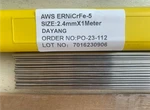
Low Temperature Steel Electrode
How to Choose Reliable Low Temperature Steel Electrodes for Cryogenic Welding?
Low Temperature Steel Electrodes are specialized welding consumables designed for welding low-temperature steel (a type of steel that retains toughness at -40°C to -196°C, such as 09MnNiD, 16MnDR). With a low-carbon steel core and low-hydrogen coating (hydrogen content ≤5mL/100g), they prevent cold cracks and ensure welds maintain high toughness in extreme low-temperature environments. These electrodes are critical in industries like cryogenic storage, liquefied natural gas (LNG) engineering, and refrigeration, where welds must resist brittle fracture at sub-zero temperatures.


Product Categories and Models
Based on applicable temperature ranges and steel grades, common models include:
E5015-G (W707Ni)
Suitable for welding low-temperature steel working at -40°C to -60°C (e.g., 09MnNiD steel). Features nickel addition (2–3%) to enhance low-temperature toughness, ideal for refrigeration equipment.
E5515-G (W907Ni)
Designed for -70°C to -90°C environments (e.g., LNG storage tank inner walls). Contains 3–4% nickel, ensuring weld impact toughness ≥27J at -90°C.
E6015-G (W107Ni)
Used for ultra-low-temperature steel (-100°C to -196°C, such as 3.5Ni steel in liquid nitrogen tanks). Nickel content 4–5%, with weld toughness ≥27J at -196°C.
Performance Characteristics
Low-Temperature Toughness
Welds retain high impact toughness (≥27J) at their designed low temperatures (e.g., -196°C for E6015-G), avoiding brittle fracture.
Low Hydrogen Content
Coating is specially formulated to reduce hydrogen (≤5mL/100g), preventing hydrogen-induced cold cracks (critical for thick-walled low-temperature steel).
Crack Resistance
Low carbon content (≤0.12%) and alloy elements (nickel, manganese) reduce segregation, minimizing hot crack risks during welding.
Weldability
Compatible with DC reverse polarity, ensuring stable arcs and easy slag removal, even in multi-layer welding of thick plates.
Application Areas
LNG Engineering
Welding of LNG storage tanks, transport pipelines, and loading arms (operating at -162°C).
01
Cryogenic Storage
Welding of liquid nitrogen (-196°C), liquid oxygen (-183°C) storage tanks and transfer pipes.
02
Refrigeration Industry
Welding of low-temperature refrigeration compressors, evaporators, and cold storage steel structures (-40°C to -80°C).
03
Aerospace
Welding of rocket fuel tanks (liquid hydrogen/oxygen storage, -253°C to -183°C).
04
FAQ
Q1: What is a Low Temperature Steel Electrode?
A1: A Low Temperature Steel Electrode is a welding electrode designed for low-temperature steel (steel that works at ≤-40°C), with a low-carbon core and low-hydrogen coating. It contains alloy elements like nickel to ensure welds retain toughness at sub-zero temperatures (e.g., -196°C for liquid nitrogen environments). Unlike ordinary steel electrodes, it prioritizes low-temperature impact resistance over high strength, making it essential for cryogenic equipment.
Q2: How does a Low Temperature Steel Electrode differ from a regular structural steel electrode?
A2: In composition, Low Temperature Steel Electrodes have lower carbon (≤0.12%) and added nickel (2–5%) to enhance low-temperature toughness; regular electrodes (e.g., E4303) have higher carbon and no nickel. In performance, Low Temperature Steel Electrodes ensure weld impact toughness ≥27J at -40°C to -196°C, while regular electrodes become brittle below -20°C. Applications: Low Temperature Steel Electrodes for LNG tanks; regular electrodes for building steel structures.
Q3: How to choose a Low Temperature Steel Electrode based on the working temperature?
A3: Match the electrode to the minimum service temperature:
• For -40°C to -60°C (e.g., cold storage): E5015-G (W707Ni) with 2–3% nickel.
• For -70°C to -90°C (e.g., refrigerated trucks): E5515-G (W907Ni) with 3–4% nickel.
• For -100°C to -196°C (e.g., liquid nitrogen tanks): E6015-G (W107Ni) with 4–5% nickel.
Always check the electrode’s certified impact toughness at the target temperature (e.g., ≥27J at -196°C for ultra-low temperatures).
Q4: Why is low hydrogen content critical for Low Temperature Steel Electrodes?
A4: Low-temperature steel is often thick-walled (e.g., LNG tank walls ≥20mm) and prone to hydrogen-induced cold cracks—hydrogen trapped in the weld can expand under low temperatures, causing brittle fracture. Low Temperature Steel Electrodes have hydrogen content ≤5mL/100g (vs. 15–20mL/100g for regular electrodes), reducing this risk. Additionally, their low-hydrogen coating prevents moisture absorption, which is critical for maintaining toughness in cryogenic environments.
Q5: What pre-weld precautions are needed for Low Temperature Steel Electrodes?
A5: Key precautions include:
• Base material cleaning: Remove oil, rust, and moisture with a wire brush + acetone (contaminants introduce hydrogen or cause porosity).
• Preheating: For steel >12mm thick, preheat to 80–120°C to reduce cooling rate (prevents hardening of the heat-affected zone).
• Electrode baking: Bake low-hydrogen electrodes at 350–400°C for 1–2 hours, then store in a 100–150°C holding oven (prevents moisture absorption).
Q6: What welding parameters are suitable for Low Temperature Steel Electrodes?
A6: Parameters depend on electrode diameter and steel thickness:
• 3.2mm electrode: Current 90–120A, voltage 22–26V (for 6–12mm steel).
• 4.0mm electrode: Current 140–180A, voltage 24–28V (for 12–20mm steel).
• 5.0mm electrode: Current 180–220A, voltage 26–30V (for >20mm steel).
Use DC reverse polarity for stable arcs; control interpass temperature ≤250°C to avoid grain coarsening (which reduces toughness).
Q7: What defects are common in Low Temperature Steel Electrode welds, and how to prevent them?
A7: Common defects include:
• Cold cracks: Caused by hydrogen or high stress. Prevent by baking electrodes, preheating, and post-weld stress relief.
• Low toughness: Due to overheating (grain coarsening). Prevent by controlling current and interpass temperature.
• Porosity: From moisture or oil. Prevent by strict cleaning and using dry electrodes.
Example: Welding a 16mm LNG tank wall requires preheating to 100°C, using a 4.0mm electrode at 160A, and stress relief after welding.
Q8: How to store Low Temperature Steel Electrodes to maintain performance?
A8: Store unopened electrodes in a dry warehouse (≤60% humidity) for up to 2 years. After opening:
• Bake at 350–400°C for 1–2 hours to remove moisture.
• Store in a holding oven at 100–150°C (never leave at room temperature for >4 hours).
• Unused electrodes from the oven must be re-baked if exposed to air for >2 hours (but avoid re-baking more than 3 times, as it degrades the coating).
Q9: Is post-weld heat treatment required for Low Temperature Steel Electrode welds?
A9: Yes, for thick-walled or high-stress parts. Stress relief annealing at 600–650°C for 1–2 hours (depending on thickness) reduces residual stress, which is critical—unrelieved stress can cause cracks at low temperatures. For thin steel (<10mm) in non-critical applications, post-weld heat treatment may be skipped, but slow cooling (covering with heat-insulating cotton) is still recommended.
Q10: Can Low Temperature Steel Electrodes weld low-temperature steel to regular carbon steel?
A10: Yes, but use an electrode suitable for the lower temperature of the two materials. For example, if low-temperature steel works at -60°C and regular steel at 0°C, use E5015-G (rated for -60°C). Preheat to 100°C to reduce stress; weld with low current to avoid diluting the low-temperature steel’s alloy elements. Post-weld, stress relief at 600°C to prevent cracking at the joint.
Q11: How to test the low-temperature toughness of welds made with Low Temperature Steel Electrodes?
A11: Perform a Charpy V-notch impact test at the service temperature. For example:
• Welds for -196°C liquid nitrogen tanks must achieve ≥27J at -196°C.
• Welds for -60°C cold storage need ≥27J at -60°C.
Test specimens should be taken from the weld and heat-affected zone (HAZ), as the HAZ is often the weakest point in low-temperature performance.
Q12: What is the impact of welding speed on Low Temperature Steel Electrode welds?
A12: Too fast a speed leads to incomplete fusion or undercuts (risky for pressure vessels). Too slow a speed causes overheating, grain coarsening, and reduced low-temperature toughness. For a 4.0mm electrode, a speed of 10–15 cm/min is optimal—fast enough to avoid overheating, slow enough for full fusion. Adjust based on thickness: slower for thick steel (to ensure penetration).
Q13: How to prevent arc blow when using Low Temperature Steel Electrodes?
A13: Arc blow (unstable arc deviation) is common in thick low-temperature steel due to magnetic fields. Prevention:
• Use DC reverse polarity (reduces magnetic disturbance).
• Keep the arc short (arc length = electrode diameter).
• Weld away from edges or corners (where magnetic fields are strongest).
• Use a magnetic clamp to balance the magnetic field around the weld area.
Q14: What safety precautions are specific to Low Temperature Steel Electrodes?
A14: Low-hydrogen coatings may contain fluorides—wear chemical-resistant gloves and avoid inhaling fumes (use local exhaust ventilation). Baking electrodes generates high temperatures—use heat-resistant gloves when handling. Post-weld, low-temperature steel parts may remain cold (if pre-cooled), so wear insulated gloves to avoid frostbite.
Q15: How to handle moisture-absorbed Low Temperature Steel Electrodes?
A15: Slightly damp electrodes (exposed to 60–70% humidity for <2 hours) can be re-baked at 350°C for 1 hour. Severely damp electrodes (coating caking or visible moisture) must be discarded—moisture increases hydrogen content, risking cold cracks. Never use damp electrodes for critical parts like LNG tanks.
Q16: How to choose electrode diameter for Low Temperature Steel Electrode welding?
A16: Match diameter to steel thickness:
• 6–12mm steel: 3.2mm electrode (ensures precise control).
• 12–20mm steel: 4.0mm electrode (balances efficiency and toughness).
• 20mm steel: 5.0mm electrode for root passes, then 4.0mm for filling (reduces heat input in later layers).
Q17: What is the difference between E5015-G and E6015-G Low Temperature Steel Electrodes?
A17: E5015-G (W707Ni) is for -40°C to -60°C applications, with 2–3% nickel and tensile strength ≥490MPa—suitable for refrigeration pipes. E6015-G (W107Ni) is for -100°C to -196°C, with 4–5% nickel and higher toughness at ultra-low temperatures—used in liquid nitrogen tanks. E6015-G also has higher nickel content to resist brittle fracture at extreme cold.
Q18: How to ensure good slag removal for Low Temperature Steel Electrode welds?
A18: Low-hydrogen electrodes produce tight slag, so:
• Use a slight weaving motion during welding to help slag separate.
• Clean slag thoroughly between layers with a chisel or wire brush (critical for multi-layer welding, as residual slag causes defects).
• Avoid excessive current (prevents slag from fusing into the weld metal).
Q19: Can Low Temperature Steel Electrodes be used for welding in low ambient temperatures (e.g., winter construction)?
A19: Yes, but adjust preheating: in ambient temperatures <5°C, increase preheat temperature by 30–50°C (e.g., from 100°C to 130°C for 16mm steel). Keep the weld area free of snow/ice (dry with a torch before welding). Use a portable heater to maintain the base material temperature above 5°C during welding.
Q20: How to evaluate the quality of Low Temperature Steel Electrode welds?
A20: Key criteria include:
• Visual inspection: No cracks, pores, or undercuts (critical for pressure integrity).
• Impact test: ≥27J at the service temperature (e.g., -162°C for LNG applications).
• Non-destructive testing: Ultrasonic or X-ray to detect internal defects (required for pressure vessels).
• Hydrogen test: Weld hydrogen content ≤5mL/100g (verified via laboratory analysis).
Q21: What is the maximum thickness Low Temperature Steel Electrodes can weld?
A21: With proper preheating and multi-layer welding, they can weld up to 50mm thick low-temperature steel. For thick plates:
• Use 5.0mm electrodes for root and hot passes (current 180–220A).
• Fill with 4.0mm electrodes, keeping interpass temperature ≤250°C.
• Preheat to 120°C and perform post-weld stress relief to avoid cracks.
Q22: How to prevent undercuts in Low Temperature Steel Electrode welds?
A22: Undercuts weaken the weld and concentrate stress (risky for low temperatures). Prevention:
• Use moderate current (avoid excessive heat that melts the base metal edge).
• Maintain a 30–45° electrode angle (not too steep) to ensure molten metal fills the edge.
• Slow welding speed slightly to allow proper fusion at the weld toes.
Q23: How does nickel content affect Low Temperature Steel Electrode performance?
A23: Nickel improves low-temperature toughness by refining grain structure and reducing the ductile-brittle transition temperature. Higher nickel content extends the working temperature range: 2–3% nickel for -60°C, 4–5% nickel for -196°C. However, excessive nickel (≥6%) increases cost without significant benefits, so electrodes are formulated with precise nickel levels for their target temperature.
Q24: What post-weld cleaning is needed for Low Temperature Steel Electrode welds?
A24: Remove slag with a wire brush, then grind the weld surface to smoothness (reduces stress concentration). For pressure vessels, perform a liquid penetrant test to detect surface defects. For cryogenic parts, avoid painting or coating until after final testing—coatings can trap moisture, which freezes and causes cracks at low temperatures.
Q25: Can Low Temperature Steel Electrodes be used with AC current?
A25: No, they require DC reverse polarity. AC current causes arc instability and uneven coating melting, leading to hydrogen absorption or slag inclusions. DC reverse polarity ensures stable arcs, uniform fusion, and proper coating performance—critical for maintaining low hydrogen content and toughness.
Q26: How to handle weld cracks in Low Temperature Steel Electrode welds?
A26: Grind out the crack completely (1–2mm beyond the visible crack) and clean the area. Bake a new electrode at 350°C for 1 hour. Preheat the repair area to 150°C (higher than normal) and weld with low current (10–15% lower than standard). After welding, perform local stress relief (600°C for 30 minutes) and test with ultrasonic flaw detection to confirm no residual cracks.
Q27: What is the shelf life of Low Temperature Steel Electrode welds in service?
A27: In proper service conditions (no excessive stress or corrosion), welds can last 20+ years. However, factors like cyclic temperature changes (freeze-thaw cycles) or hydrogen embrittlement can reduce lifespan. Regular inspection (ultrasonic testing every 5 years) is recommended for critical equipment like LNG tanks.
Q28: How to choose shielding gas for Low Temperature Steel Electrodes in TIG welding?
A28: For TIG welding with low-temperature steel filler wires (equivalent to electrodes), use high-purity argon (≥99.999%) to prevent oxidation. Add 2–5% hydrogen for thick steel (improves penetration), but avoid hydrogen in ultra-low-temperature applications (risk of embrittlement). Ensure gas flow rate is 10–15 L/min to cover the weld pool until cooled.
Q29: What is the impact of interpass temperature on Low Temperature Steel Electrode welds?
A29: Interpass temperature (temperature of the weld area before the next layer) must be ≤250°C. Exceeding this causes grain coarsening in the heat-affected zone (HAZ), reducing low-temperature toughness. For ultra-low-temperature applications (-196°C), keep interpass temperature ≤200°C. Use a temperature-indicating pencil to monitor and wait for cooling if needed.
Q30: How to test for hydrogen-induced cracks in Low Temperature Steel Electrode welds?
A30: Perform a post-weld hydrogen test: collect hydrogen gas from the weld using a vacuum system and measure its volume (must be ≤5mL/100g). For critical parts, use a delayed crack test—store the weldment at 25°C for 48 hours, then check for cracks with liquid penetrant testing (hydrogen-induced cracks often appear within 48 hours).
Q31: Can Low Temperature Steel Electrodes weld low-temperature steel to stainless steel?
A31: Yes, but use a nickel-based electrode (e.g., ENiCrMo-3) instead of a low-temperature steel electrode. Nickel acts as a compatible transition between low-temperature steel (ferritic) and stainless steel (austenitic). Preheat to 100°C, use low current to avoid dilution, and post-weld stress relieve to prevent galvanic corrosion in cryogenic environments.
Q32: How to prevent grain coarsening in Low Temperature Steel Electrode welds?
A32: Grain coarsening reduces toughness, so:
• Use low heat input (moderate current and fast welding speed).
• Limit interpass temperature (≤250°C).
• Choose electrodes with grain-refining elements (e.g., titanium, niobium) that inhibit grain growth.
• Avoid excessive welding passes—design grooves to minimize filler metal (e.g., X-grooves for thick steel).
Q33: What is the difference between flux-cored and solid Low Temperature Steel Electrodes?
A33: Flux-cored electrodes have a hollow core with low-hydrogen flux, offering higher deposition efficiency (good for thick steel). They require no external shielding gas but may produce more slag. Solid electrodes (used in TIG) require argon shielding but produce cleaner welds with better low-temperature toughness—ideal for ultra-critical parts like rocket fuel tanks.
Q34: How to ensure welds made with Low Temperature Steel Electrodes are leak-tight?
A34: For pressure vessels, perform a hydrostatic test at 1.5x working pressure (no leaks for 30 minutes). For cryogenic tanks, conduct a helium leak test at operating temperature (detects micro-leaks that appear when cold). Ensure proper groove design (e.g., V-groove with 60° angle) and full penetration to avoid root porosity.
Q35: How to handle welding of low-temperature steel with surface rust using Low Temperature Steel Electrodes?
A35: Rust contains moisture and oxides, which introduce hydrogen and cause porosity. Remove rust with a wire brush or grinder (clean to bright metal, 20mm beyond the weld line). If rust is stubborn, etch with a 10% hydrochloric acid solution (neutralize with baking soda afterward) to remove oxides. Ensure the surface is dry before preheating and welding.