




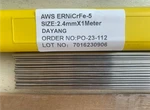
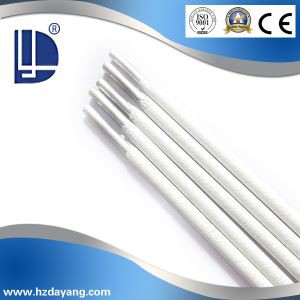
Aluminum Alloy Electrode
How to Choose Reliable Aluminum Alloy Electrodes for High-Quality Aluminum Welding?
Aluminum Alloy Electrodes are specialized welding consumables designed for welding aluminum alloys (such as 1060 pure aluminum, 6061, 5083, and 7075 aluminum alloys). With an aluminum alloy core (aluminum content ≥90%, blended with magnesium, silicon, or zinc) and flux coatings, they address aluminum’s unique challenges—high thermal conductivity, oxide film formation, and low melting point. These electrodes ensure stable arcs, strong metallurgical bonding, and welds that match the base material’s corrosion resistance and mechanical properties. They are widely used in automotive, aerospace, construction, and marine industries for joining aluminum parts like engine casings, structural frames, and boat hulls.




Product Categories and Models
Based on alloy composition and application scenarios, common models include:
E4043 (Al-Si)
Silicon-containing aluminum alloy electrode, suitable for welding 6061, 6063 (aluminum-silicon alloys). Features good fluidity and crack resistance, ideal for automotive parts and structural frames.
E5356 (Al-Mg)
Magnesium-containing aluminum alloy electrode, designed for 5052, 5083 (aluminum-magnesium alloys). Offers excellent corrosion resistance, used in marine equipment and pressure vessels.
E1100 (Al)
Pure aluminum electrode, for welding 1060, 1100 (pure aluminum). Suitable for low-strength, high-conductivity parts like heat exchangers and electrical enclosures.
Performance Characteristics
Oxide Film Removal
The flux coating contains fluorides and chlorides that dissolve aluminum’s dense oxide film (Al₂O₃), ensuring fusion between the weld and base material.
Corrosion Resistance
Welds retain the base alloy’s resistance to moisture, seawater, and atmospheric corrosion (e.g., E5356 matches 5083’s seawater resistance).
Mechanical Properties
Tensile strength of welds ranges from 120MPa (E1100) to 300MPa (E5356), matching the strength requirements of different aluminum alloys.
Weldability
Compatible with shielded metal arc welding (SMAW), with stable arcs and minimal spatter, even for thin aluminum sheets.
Application Areas
Automotive Industry
Welding of aluminum alloy wheels, engine brackets, and body frames (using E4043 for 6061 parts).
01
Marine Engineering
Welding of aluminum boat hulls, offshore platform components (using E5356 for 5083 aluminum, resisting seawater corrosion).
02
Construction
Welding of aluminum doors, windows, and curtain wall frames (using E4043 for 6063, ensuring structural stability).
03
Aerospace
Welding of aircraft fuel tanks, wing components (using high-purity E5356 for 5083, balancing strength and weight).
04
FAQ
Q1: What is an Aluminum Alloy Electrode?
A1: An Aluminum Alloy Electrode is a welding electrode with an aluminum alloy core (blended with silicon, magnesium, or other elements) and a flux coating. It is engineered to weld aluminum alloys by dissolving the oxide film, overcoming high thermal conductivity, and ensuring strong bonding. Unlike steel electrodes, it focuses on oxide removal and low-temperature fusion, making it essential for aluminum structural parts.
Q2: How does an Aluminum Alloy Electrode differ from a steel electrode?
A2: In composition, Aluminum Alloy Electrodes have an aluminum-based core with flux for oxide removal; steel electrodes use iron-based cores with coatings for strength or crack resistance. In performance, Aluminum Alloy Electrodes operate at lower temperatures (660°C vs. 1500°C for steel) and require oxide film removal; steel electrodes focus on avoiding cold cracks. Applications: Aluminum Alloy Electrodes for boat hulls; steel electrodes for bridges.
Q3: How to choose an Aluminum Alloy Electrode based on the aluminum alloy type?
A3: Match the electrode to the base alloy’s key elements:
• Aluminum-silicon alloys (6061, 6063): E4043 (Al-Si) — silicon improves fluidity and matches the base alloy’s strength.
• Aluminum-magnesium alloys (5052, 5083): E5356 (Al-Mg) — magnesium enhances corrosion resistance, critical for marine use.
• Pure aluminum (1060, 1100): E1100 (pure Al) — ensures conductivity and ductility for heat exchangers.
Q4: Why is oxide film removal critical for Aluminum Alloy Electrodes?
A4: Aluminum forms a dense, high-melting-point oxide film (Al₂O₃, melting point 2050°C) that prevents fusion if not removed. The flux in Aluminum Alloy Electrodes contains fluorides (e.g., NaF) and chlorides that react with Al₂O₃, dissolving the film and allowing the molten aluminum to bond. Without this, welds will have incomplete fusion, porosity, or weak bonding—common failures in aluminum structures.
Q5: What pre-weld preparations are needed for Aluminum Alloy Electrodes?
A5: Key preparations include:
• Cleaning: Remove oil, dirt, and oxide film with a stainless steel wire brush (for light oxide) or chemical etching (10% nitric acid for heavy oxide). Avoid carbon steel brushes (contamination causes corrosion).
• Preheating: For thick aluminum (>6mm) or cold environments, preheat to 100–150°C to reduce heat loss (aluminum’s high thermal conductivity cools the weld pool quickly).
• Drying electrodes: Bake at 120–150°C for 1 hour to remove moisture (moisture causes porosity in the weld).
Q6: What welding parameters are suitable for Aluminum Alloy Electrodes?
A6: Parameters depend on electrode diameter and alloy type:
• E4043/E5356 (3.2mm): Current 80–110A, voltage 20–24V (for 3–6mm aluminum).
• E4043/E5356 (4.0mm): Current 110–140A, voltage 22–26V (for 6–10mm aluminum).
• E1100 (3.2mm): Current 70–100A (lower current to avoid burn-through in pure aluminum).
Use AC current (preferred for oxide film removal) or DC reverse polarity; control travel speed to avoid undercutting (10–15 cm/min for 3.2mm electrodes).
Q7: What defects are common in Aluminum Alloy Electrode welds, and how to prevent them?
A7: Common defects include:
• Porosity: Caused by moisture (electrode or base material) or incomplete oxide removal. Prevent by baking electrodes, cleaning with acetone, and ensuring flux activity.
• Incomplete fusion: Due to fast welding speed or insufficient heat. Prevent by preheating thick aluminum and using moderate current.
• Cracks: In aluminum-magnesium welds (E5356) from hydrogen or stress. Prevent by avoiding excessive magnesium content and slow cooling.
Q8: How to store Aluminum Alloy Electrodes to maintain performance?
A8: Store in a dry, sealed container at 10–30°C with relative humidity ≤50%—moisture degrades flux (reducing oxide removal ability). After opening, use within 8 hours (flux absorbs moisture quickly); unused electrodes must be re-baked at 150°C for 1 hour. Unopened electrodes have a 1-year shelf life (shorter than steel electrodes due to flux sensitivity).
Q9: Can Aluminum Alloy Electrodes weld aluminum to other metals (e.g., steel)?
A9: Direct welding is not recommended—aluminum and steel form brittle intermetallic compounds (e.g., FeAl₃) that cause cracks. If necessary, use a transition joint: weld aluminum to an aluminum-clad steel plate with an Aluminum Alloy Electrode, then weld the steel side with a steel electrode. This is only suitable for low-stress applications (e.g., decorative parts).
Q10: What is the impact of welding current on Aluminum Alloy Electrode performance?
A10: Too high a current causes burn-through (especially in thin aluminum) and flux burnout (reducing oxide removal). Too low a current results in incomplete fusion and slag inclusions. For a 3.2mm E4043 electrode, 80–110A is optimal: enough to melt aluminum and activate flux, but not enough to damage the base material.
Q11: How to test the quality of Aluminum Alloy Electrode welds?
A11: Key tests include:
• Visual inspection: No porosity, cracks, or incomplete fusion; uniform weld bead.
• Tensile test: Weld strength should match the base alloy (e.g., ≥290MPa for E5356 welded 5083).
• Corrosion test: Salt spray test (5% NaCl, 500 hours) for marine parts—no pitting or white corrosion.
• Dye penetrant test: Detects surface cracks (critical for pressure vessels).
Q12: What is the difference between E4043, E5356, and E1100 Aluminum Alloy Electrodes?
A12: E4043 (Al-Si) has 5–6% silicon, offering good fluidity for 6000-series alloys (automotive parts). E5356 (Al-Mg) has 4–5% magnesium, resisting seawater for 5000-series alloys (boat hulls). E1100 (pure Al) is for 1000-series pure aluminum (heat exchangers), with high ductility but lower strength.
Q13: How to handle porosity in Aluminum Alloy Electrode welds?
A13: Porosity is caused by moisture, oil, or flux degradation. Solutions:
• Re-bake electrodes at 150°C for 1 hour and store in a moisture-proof container.
• Clean the base material with acetone to remove oil, then wire-brush to remove oxide.
• Reduce welding speed to allow gas to escape from the molten pool.
Q14: What safety precautions are specific to Aluminum Alloy Electrodes?
A14: Flux contains fluorides, which release toxic fumes when heated—ensure strong ventilation and wear a respirator with acid gas filters. Aluminum welding produces bright arcs—use a helmet with shade 10–12. Avoid skin contact with flux (causes irritation); wear chemical-resistant gloves.
Q15: Can Aluminum Alloy Electrodes be used for welding thin aluminum sheets (<3mm)?
A15: Yes, but use 2.5mm electrodes and low current (60–80A) to avoid burn-through. Preheat to 80–100°C (reduces heat loss) and weld with a short arc (arc length = 1–2mm). Use a “stitch welding” technique (short 10–15mm beads, cooled between passes) to prevent warping.
Q16: How to prevent warping of aluminum parts when using Aluminum Alloy Electrodes?
A16: Aluminum’s low melting point and high thermal conductivity make it prone to warping. Prevention:
• Use fixtures to clamp the part before welding.
• Weld in a symmetrical pattern (e.g., alternate sides of a sheet) to balance stress.
• Use small-diameter electrodes (2.5mm) and low current to minimize heat input.
• Allow slow cooling (avoid forced air) to reduce thermal stress.
Q17: What post-weld treatment is needed for Aluminum Alloy Electrode welds?
A17: For corrosion resistance: Remove flux residues with hot water + brush (flux is hygroscopic and causes corrosion if left). For structural parts: Grind the weld to smoothness (reduces stress concentration). For high-strength alloys (7075): Perform solution annealing + aging to restore strength (consult alloy specifications).
Q18: How to choose between AC and DC current for Aluminum Alloy Electrodes?
A18: AC is preferred because the “cleaning action” of the AC arc helps remove the oxide film—critical for aluminum welding. DC can be used but requires stricter pre-cleaning (oxide film removal relies solely on flux). For thick aluminum (>10mm), AC with high-frequency stabilization ensures better arc stability.
Q19: What is the maximum thickness Aluminum Alloy Electrodes can weld?
A19: With preheating and multi-layer welding, they can weld up to 20mm thick aluminum. For thick plates:
• Use 4.0mm electrodes for root passes (current 110–140A).
• Fill with 3.2mm electrodes, keeping interpass temperature ≤150°C.
• Preheat to 150°C to ensure fusion and reduce cooling rate.
Q20: How to evaluate the flux activity of Aluminum Alloy Electrodes?
A20: Flux activity (ability to remove oxide film) is critical. Test by welding a 5mm aluminum sheet:
• Good activity: Weld bead is smooth, with no black oxide spots at the edges.
• Poor activity: Weld has rough edges, incomplete fusion, or visible oxide inclusions.
Expired or damp electrodes have reduced activity and should be re-baked or discarded.
Q21: Can Aluminum Alloy Electrodes be used for repair of aluminum castings?
A21: Yes, but use E4043 (Al-Si) for aluminum-silicon castings (e.g., engine blocks). Preheat the casting to 150–200°C (reduces cracking from casting stress). Weld with low current (80–100A for 3.2mm electrodes) and fill cracks in thin layers. Post-weld, slow cool and grind to restore shape.
Q22: How to handle moisture-absorbed Aluminum Alloy Electrodes?
A22: Slightly damp electrodes (exposed to 50–60% humidity for <4 hours) can be re-baked at 150°C for 1 hour. Severely damp electrodes (flux caking or visible moisture) are unusable—moisture causes porosity, and re-baking cannot restore flux activity.
Q23: What is the impact of welding speed on Aluminum Alloy Electrode welds?
A23: Too fast a speed leads to incomplete fusion (flux doesn’t dissolve oxide film) and undercuts. Too slow a speed causes overheating, leading to grain coarsening (reducing strength) and warping. For 3.2mm electrodes, 10–12 cm/min is optimal—balances fusion and heat input.
Q24: How to prevent slag inclusions in Aluminum Alloy Electrode welds?
A24: Slag inclusions are caused by fast welding (slag doesn’t float) or excessive current (flux burns into the weld). Prevention:
• Weld at a moderate speed to allow slag to separate.
• Use a slight weaving motion to help slag rise to the surface.
• Clean slag between layers with a wire brush (critical for multi-layer welding).
Q25: Can Aluminum Alloy Electrodes be used in low-temperature environments (e.g., winter)?
A25: Yes, but adjust preheating: in temperatures <5°C, preheat to 150–200°C (higher than normal) to compensate for heat loss. Keep the workspace dry (moisture in cold air increases porosity risk). Use AC current with high-frequency start to ensure arc stability in cold conditions.
Q26: How to choose Aluminum Alloy Electrodes for high-strength applications?
A26: Choose E5356 (Al-Mg) for 5000-series alloys (tensile strength 290–350MPa) or E4145 (Al-Si-Cu) for 2000-series alloys (used in aerospace). Avoid pure aluminum electrodes (E1100) for high-strength needs—their welds have lower strength (≤140MPa).
Q27: What is the shelf life of Aluminum Alloy Electrodes?
A27: Unopened electrodes have a 1-year shelf life in dry storage. Opened electrodes must be used within 8 hours (flux absorbs moisture quickly). Re-baking can extend use but reduces flux activity—do not re-bake more than 2 times.
Q28: How to test the corrosion resistance of Aluminum Alloy Electrode welds?
A28: For marine parts, perform a seawater immersion test (30 days in natural seawater—no white corrosion or pitting). For industrial parts, use a salt spray test (5% NaCl solution, 35°C—no corrosion after 500 hours). For critical parts, measure weight loss (should be ≤0.1g/m² after testing).
Q29: How to repair cracks in aluminum welds made with Aluminum Alloy Electrodes?
A29: Grind the crack to a V-shape (depth 2mm beyond the crack) and clean with a wire brush + acetone. Preheat to 150°C (higher than initial preheat). Weld with a 2.5mm electrode (low current 60–80A) to fill the crack, then build up the weld. Post-weld, grind smooth and test with dye penetrant.
Q30: What is the difference between flux-cored and solid Aluminum Alloy Electrodes?
A30: Flux-cored Aluminum Alloy Electrodes have a hollow core with flux, offering higher deposition efficiency (good for thick aluminum). They require no external flux but produce more slag.
Solid Aluminum Alloy Electrodes have a solid core and rely on coating flux, offering better control for thin sheets (e.g., heat exchangers). They produce cleaner welds but have lower deposition rates.
Q31: How to ensure good arc stability with Aluminum Alloy Electrodes?
A31: Arc instability is caused by damp electrodes, dirty base material, or improper current. Prevention:
• Use freshly baked electrodes and store them in a moisture-proof container.
• Clean the base material thoroughly to remove oxide and oil.
• Match current to electrode diameter (e.g., 90A for 3.2mm E4043) and use AC with high-frequency start.
Q32: How to choose Aluminum Alloy Electrodes for electrical applications?
A32: Choose pure aluminum electrodes (E1100) for high conductivity (≥60% IACS) in electrical enclosures or busbars. Avoid magnesium-containing electrodes (E5356) for electrical parts—magnesium reduces conductivity. Ensure welds are smooth to minimize electrical resistance.
Q33: What is the impact of electrode diameter on Aluminum Alloy Electrode welds?
A33: Small-diameter electrodes (2.5mm) offer better control for thin aluminum (<3mm) and prevent burn-through. Larger diameters (4.0mm) are for thick aluminum (>6mm) but require higher current (risk of overheating thin parts). Choose 3.2mm as a versatile option for 3–6mm aluminum.
Q34: How to prevent hydrogen-induced cracks in Aluminum Alloy Electrode welds?
A34: Hydrogen-induced cracks are rare in aluminum but can occur in high-magnesium alloys (E5356). Prevention:
• Avoid moisture (bake electrodes, clean base material).
• Use low hydrogen-containing flux (check electrode specifications).
• Control heat input to allow hydrogen to escape (moderate current and speed).
Q35: How to handle flux residues after welding with Aluminum Alloy Electrodes?
A35: Flux residues are corrosive and must be removed:
• For small parts: Immerse in hot water (60–80°C) for 30 minutes, then brush.
• For large parts: Use a pressure washer with hot water + mild detergent.
• For critical parts (e.g., aerospace): Ultrasonic cleaning to remove residual flux in crevices.
Ensure no white flux residues remain—they cause pitting corrosion over time.