




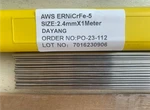
Nickel Alloy Electrode
How to Achieve High-Quality Welding with Nickel Alloy Electrodes?
Nickel Alloy Electrodes are high-performance welding consumables designed for welding nickel-based alloys, stainless steel, and dissimilar metals. With a nickel-based core and specialized coatings (e.g., low-hydrogen, rutile), they offer exceptional corrosion resistance, high-temperature stability, and crack resistance. Widely used in chemical, aerospace, and marine engineering, they ensure reliable welds in extreme environments.

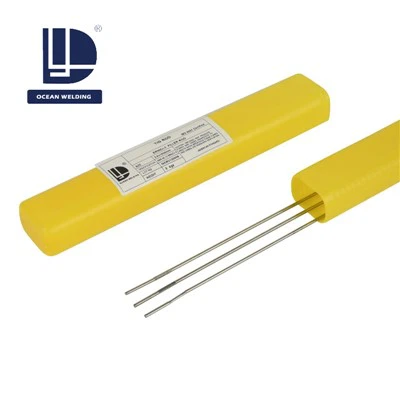


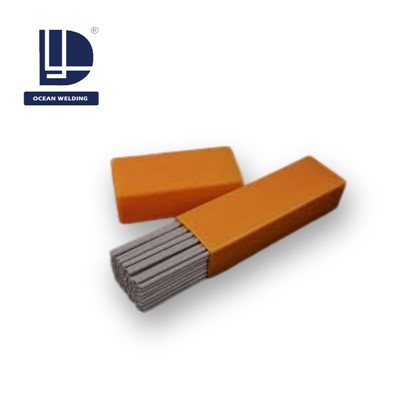

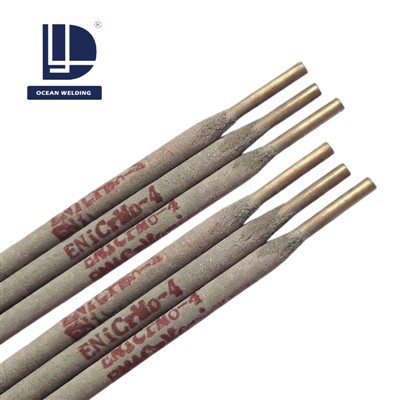

Product Categories and Models
Based on alloy composition and application, common models include:
ENiCrMo-3
For welding nickel-chromium-molybdenum alloys, ideal for corrosive environments (e.g., chemical reactors).
ENiCu-7
Suitable for Monel alloy welding, with excellent resistance to seawater and acid corrosion.
ENiCrFe-6
Used for high-temperature nickel-chromium-iron alloy welding (e.g., aerospace engine components).
Performance Characteristics
Corrosion Resistance
Resists acids, alkalis, and seawater, making them suitable for chemical and marine applications.
High-Temperature Stability
Maintains strength at 600–1000°C, suitable for high-temperature equipment (e.g., furnace parts).
Crack Resistance
Low hydrogen content in coatings reduces cold crack risks, critical for thick-walled components.
Application Areas
Chemical Industry
Welding of reactors, pipelines, and storage tanks handling corrosive media.
Aerospace
Welding of engine parts and turbine components (high-temperature resistance required).
Marine Engineering
Offshore platform structures and ship pipelines (resists seawater corrosion).
FAQ
Q1: What is a nickel alloy electrode?
A1: A nickel alloy electrode is a welding electrode with a nickel-based core (nickel content ≥50%) and alloying elements like chromium, molybdenum, or copper, combined with a functional coating. It is designed to match the performance of nickel-based alloys, ensuring welds have comparable corrosion resistance and high-temperature strength. For example, ENiCrMo-3 electrodes are formulated to weld nickel-chromium-molybdenum alloys used in chemical equipment.
Q2: How does a nickel alloy electrode differ from a stainless steel electrode?
A2: In composition, nickel alloy electrodes have a higher nickel content (≥50%) and more alloying elements (e.g., molybdenum for corrosion resistance), while stainless steel electrodes are iron-based with lower nickel (usually ≤30%). In performance, nickel alloy electrodes excel in extreme environments (e.g., 600°C+ temperatures or strong acids), whereas stainless steel electrodes are suitable for conventional corrosion resistance (e.g., food processing equipment). Applications: nickel alloy electrodes for nuclear power plant pipelines, stainless steel electrodes for kitchen utensils.
Q3: How to choose a nickel alloy electrode based on the welding environment?
A3: For high-temperature environments (e.g., furnace parts), choose electrodes with chromium and aluminum (e.g., ENiCrFe-6) to resist oxidation. For strong corrosive media (e.g., sulfuric acid), select molybdenum-containing electrodes (e.g., ENiCrMo-3) — molybdenum enhances acid resistance. For seawater environments, ENiCu-7 (copper-nickel) is ideal, as copper improves seawater corrosion resistance.
Q4: Do nickel alloy electrodes require preheating before welding?
A4: It depends on the base material thickness and rigidity. For thin sheets (<5mm) or low-restraint structures, preheating may not be needed. For thick plates (>10mm) or high-restraint parts (e.g., pipe elbows), preheat to 150–300°C to reduce cold cracks. For example, welding a 20mm thick nickel alloy reactor shell requires preheating to 250°C to avoid stress concentration.
Q5: What welding methods are suitable for nickel alloy electrodes?
A5: Shielded metal arc welding (SMAW) is most common, as the electrode coating provides slag protection. Tungsten inert gas (TIG) welding can also be used with nickel alloy electrodes for precision parts (e.g., aerospace components). Avoid oxy-fuel welding, as it may introduce impurities that reduce weld corrosion resistance.
Q6: What defects are common when using nickel alloy electrodes, and how to prevent them?
A6: Common defects include porosity (from moisture in the coating or oil on the base material) and hot cracks (from excessive heat input). To prevent porosity: store electrodes in a dry environment (humidity ≤60%) and clean the base material with acetone to remove oil. To avoid hot cracks: use low current (10–20% lower than for carbon steel of the same diameter) and control weld interpass temperature (≤250°C for thick plates).
Q7: How to store nickel alloy electrodes?
A7: Store in a dry, sealed container at 10–30°C with relative humidity ≤60%. Low-hydrogen nickel alloy electrodes (e.g., ENiCrMo-3) are sensitive to moisture — if the package is opened, store them in a moisture-proof cabinet. Unused electrodes exposed to humid air for >48 hours should be baked at 350°C for 1 hour before use to remove moisture.
Q8: Can nickel alloy electrodes weld dissimilar metals (e.g., nickel alloy to stainless steel)?
A8: Yes. Choose a nickel alloy electrode with a composition between the two materials (e.g., ENiCrFe-3 for nickel alloy to 316 stainless steel). Preheat to 150–200°C to reduce thermal stress, and use low current to avoid excessive dilution of alloying elements. After welding, cool slowly to prevent cracks at the joint.
Q9: What is the impact of welding current on nickel alloy electrode performance?
A9: Too high a current causes coating burnout, reducing protection and leading to slag inclusions. It also overheats the weld, coarsening grains and reducing toughness. Too low a current results in insufficient fusion and incomplete penetration. For a 3.2mm diameter electrode, a current of 90–120A is recommended — this range ensures stable arc and proper fusion.
Q10: How to handle weld porosity when using nickel alloy electrodes?
A10: Porosity is usually caused by moisture in the coating, oil on the base material, or poor shielding. Solutions: Bake electrodes at 350°C for 1 hour to remove moisture; clean the base material with a wire brush and acetone to remove oil; ensure the welding area is well-ventilated (avoid drafts that disrupt arc shielding). For example, if porosity appears in a chemical pipeline weld, check if the electrode was stored in a humid environment and re-bake before re-welding.
Q11: What post-weld heat treatment is needed for nickel alloy electrodes?
A11: For high-stress parts (e.g., pressure vessels), stress relief annealing (600–700°C for 1–2 hours) reduces residual stress. For corrosion-resistant parts, solution treatment (heating to 1000–1100°C, then water cooling) may be required to restore the weld’s corrosion resistance — this process dissolves harmful precipitates. For aerospace components, aging treatment (450–550°C) enhances strength by precipitating fine alloy particles.
Q12: Can nickel alloy electrodes be used with AC or DC current?
A12: Most nickel alloy electrodes are DC-compatible (DC reverse polarity is preferred for stable arcs and better coating performance). Some rutile-coated nickel alloy electrodes can be used with AC, but arc stability may be lower. Check the electrode label: “DC” indicates DC-only, while “AC/DC” allows both. For critical welds (e.g., nuclear parts), use DC to ensure consistency.
Q13: How to prevent hot cracks when welding with nickel alloy electrodes?
A13: Hot cracks are caused by low-melting-point eutectics (e.g., sulfur or phosphorus segregation). Preventive measures: Choose low-sulfur/phosphorus electrodes (≤0.01% sulfur); control heat input (use small-diameter electrodes and low current); design grooves to avoid excessive weld metal accumulation (e.g., use X-grooves for thick plates to reduce filler metal); clean the base material to remove sulfur-containing contaminants (e.g., paint with sulfur).
Q14: What is the shelf life of nickel alloy electrodes?
A14: Unopened nickel alloy electrodes can be stored for 2 years in dry conditions (≤60% humidity). Opened low-hydrogen nickel alloy electrodes must be used within 48 hours (moisture absorption degrades performance). If stored beyond the shelf life, check the coating for caking or moisture — if caked, they cannot be used for critical parts (e.g., pressure vessels) but may be used for non-load-bearing components after baking.
Q15: How to choose the electrode diameter for nickel alloy welding?
A15: Match the diameter to the base material thickness: 2.5mm for 1–3mm thick materials, 3.2mm for 3–8mm, and 4.0mm for 8mm+. For example, welding a 6mm thick nickel alloy plate requires a 3.2mm electrode — it balances heat input and fusion without overheating.
Q16: How to ensure good slag removal when using nickel alloy electrodes?
A16: Slag removal depends on coating type and welding parameters. Rutile-coated electrodes (e.g., some ENiCrFe models) have better slag detachability than low-hydrogen types. To improve slag removal: Use a slight weaving motion during welding (helps slag separate); avoid excessive current (prevents slag from melting into the weld); clean slag between layers with a hammer or wire brush (critical for multi-layer welding).
Q17: Can nickel alloy electrodes be used for overlay welding (surfacing)?
A17: Yes, they are ideal for surfacing parts needing corrosion or wear resistance (e.g., valve seats). Use 3.2–4.0mm electrodes, low current (80–120A), and thin layers (each layer ≤3mm) to avoid dilution of the base material. After surfacing, machine the layer to the required thickness — the overlay will retain the electrode’s corrosion resistance.
Q18: What causes undercuts in nickel alloy welds, and how to prevent them?
A18: Undercuts (grooves at the weld edge) are caused by excessive current, overly fast welding, or steep electrode angles. Prevention: Reduce current to avoid melting the edge; slow welding speed to allow molten metal to fill the edge; keep the electrode angle at 20–30° (not perpendicular to the workpiece). For example, if undercuts appear in a pipe weld, lower the current by 10% and adjust the angle.
Q19: How to choose shielding gas when using nickel alloy electrodes?
A19: Most nickel alloy electrodes rely on their coating for protection (no additional shielding gas needed for SMAW). For TIG welding with nickel alloy electrodes, use high-purity argon (≥99.99%) — argon prevents oxidation of the weld pool. For thick plates, add 5–10% helium to argon to increase arc temperature and penetration.
Q20: What safety precautions are needed when using nickel alloy electrodes?
A20: Nickel fumes can be harmful — wear a respirator with a dust filter and ensure good ventilation. The coating may contain fluorides (irritating to skin) — wear chemical-resistant gloves. Post-weld, avoid inhaling grinding dust (contains nickel particles). For example, when welding in a confined space (e.g., a tank), use a fume extractor and limit exposure time.
Q21: How to test the corrosion resistance of nickel alloy welds?
A21: For chemical industry parts, perform a immersion test: submerge the weld in the service medium (e.g., 5% sulfuric acid) for 100 hours, then check for corrosion (e.g., pitting). For marine applications, use a salt spray test (5% NaCl solution, 35°C) — no red rust should form after 500 hours. For critical parts, conduct electrochemical tests to measure corrosion rates.
Q22: What is the effect of welding position on nickel alloy electrode performance?
A22: Vertical and overhead positions require more control than flat positions. Use smaller diameter electrodes (2.5–3.2mm) for vertical/overhead welding — they have better pool control. Lower current by 10–15% than flat positions to prevent molten metal from dripping. Use a short arc to ensure fusion without sagging.
Q23: How to handle weld cracks in nickel alloy joints?
A23: Grind out the crack completely (grind 2–3mm beyond the visible crack) and clean the area. Preheat the repair area to 200–300°C, then weld with the same electrode (use multi-layer welding for deep cracks). After welding, stress-relieve the area (600°C for 1 hour) to prevent new cracks. Test with penetration testing to confirm the repair is sound.
Q24: Can different types of nickel alloy electrodes be mixed in welding?
A24: No, mixing is not recommended. Different nickel alloy electrodes have varying compositions — e.g., ENiCrMo-3 (high molybdenum) and ENiCu-7 (high copper) will form a weld with inconsistent performance (poor corrosion resistance). Mixing may cause cracks or reduced strength. Use the same electrode type for a single weld; if switching is necessary, test the joint for performance first.
Q25: How to choose welding parameters for nickel alloy electrodes?
A25: Current is determined by electrode diameter: 2.5mm → 60–80A; 3.2mm → 90–120A; 4.0mm → 140–180A. Voltage should match current (too high causes spatter, too low causes unstable arcs). Welding speed: 10–15 cm/min for 3.2mm electrodes — fast enough to avoid overheating, slow enough for fusion. Adjust based on material: higher current for thick plates, lower for thin.
Q26: What is the impact of base material cleanliness on nickel alloy welding?
A26: Even small amounts of oil, rust, or paint on the base material can cause pores, cracks, or reduced corrosion resistance. Oil burns into gas (porosity); rust introduces oxygen (oxidation); paint may contain sulfur (hot cracks). Cleanliness steps: Degrease with acetone, remove rust with a wire brush, and grind off paint — ensure the surface is bright metal before welding.
Q27: How to prevent arc instability when using nickel alloy electrodes?
A27: Arc instability is caused by moisture in the coating, worn electrodes, or improper current. Solutions: Bake electrodes to remove moisture; use fresh electrodes (avoid worn ones with damaged coatings); match current to diameter (e.g., 3.2mm electrodes need 90–120A — too low causes sputtering). For AC welding, use a stabilizer if needed to reduce arc flicker.
Q28: What post-weld cleaning is needed for nickel alloy welds?
A28: Remove slag with a wire brush, then grind to smooth the surface (reduces stress concentration). For corrosion-resistant parts, pickle with a nickel alloy-specific solution (e.g., nitric acid + hydrofluoric acid) to remove oxidation and restore passivity. Rinse thoroughly with water to remove acid residues — this ensures the weld retains its corrosion resistance.
Q29: Can nickel alloy electrodes weld nickel-plated steel?
A29: Yes, but the nickel plating must be removed from the weld area first (plating is thin and will burn away, leaving voids). Grind off plating 5–10mm from the weld line, then preheat to 150°C. Use ENiCrFe-3 electrodes (compatible with both steel and nickel) and low current to avoid melting too much steel (which dilutes the weld).
Q30: How to evaluate the quality of a nickel alloy weld?
A30: Visual inspection: No cracks, pores, or undercuts on the surface. Dimensional check: Weld width and reinforcement meet design requirements. Non-destructive testing: Ultrasonic or X-ray for internal defects (critical for pressure vessels). Mechanical testing: Tensile strength (should match the base material) and impact toughness (≥20J at room temperature).
Q31: What is the difference between low-hydrogen and rutile nickel alloy electrodes?
A31: Low-hydrogen electrodes (e.g., ENiCrMo-3) have a coating with ≤6% moisture, reducing hydrogen-induced cracks — ideal for thick plates or high-stress parts. They require strict storage (moisture-proof) but offer high strength. Rutile electrodes have a titanium dioxide coating, better arc stability, and easier slag removal — suitable for thin sheets or general welding. They are less sensitive to moisture but have lower crack resistance than low-hydrogen types.
Q32: How to handle moisture-absorbed nickel alloy electrodes?
A32: Slightly damp electrodes (stored in 60–70% humidity for <48 hours) can be baked at 350°C for 1–2 hours. Severely damp electrodes (caked coating or visible moisture) should be discarded — baking cannot restore their performance, and they may cause pores or cracks. For low-hydrogen electrodes, always store opened ones in a moisture-proof cabinet to avoid absorption.
Q33: What welding position is most suitable for nickel alloy electrodes?
A33: Flat and horizontal positions are most suitable, as they allow better control of the molten pool and reduce defects like sagging or incomplete fusion. Vertical and overhead positions are possible but require more skill — use smaller electrodes and lower current. For critical parts (e.g., aerospace components), prioritize flat/horizontal welding if possible, or use fixtures to position the part for easier welding.
Q34: How to prevent oxidation in nickel alloy welds?
A34: Oxidation (blue/black weld surfaces) reduces corrosion resistance. Prevention: Use a short arc (minimizes air contact); avoid excessive current (reduces heat input); protect the weld with a shielding gas (if using TIG) until cooled to <300°C. For SMAW, the electrode coating should provide sufficient shielding — avoid drafts that disrupt the coating’s gas shield.
Q35: What is the maximum thickness that nickel alloy electrodes can weld?
A35: With proper techniques, nickel alloy electrodes can weld thicknesses up to 50mm. For thick plates, use multi-layer welding (each layer 3–5mm thick), clean slag between layers, and preheat to 200–300°C. Use larger diameter electrodes (4.0–5.0mm) for the root pass, then switch to 3.2mm for filling layers to control heat. Post-weld stress relief is critical for thick welds to avoid cracks.