




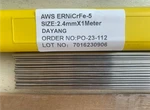
Welding DISC
How to Use Welding Discs?
Welding discs are flat, disc-shaped tools designed to shield workpieces, control spatter, and stabilize arcs during welding. Unlike welding nozzles that focus on gas shielding, welding discs prioritize blocking spatter, isolating heat, and protecting non-welded areas (e.g., painted surfaces or plastic components near welds). They are typically made of heat-resistant materials (ceramic, copper, or composite alloys) and vary in thickness, diameter, and surface treatment to adapt to different welding methods (MIG, TIG) and scenarios (indoor production, outdoor repair). Their core function is to reduce damage to surrounding components from spatter and high temperatures, while ensuring the weld area receives sufficient heat.


Product Categories and Models
By Material
• Ceramic Welding Discs: Made of high-purity alumina ceramic, they resist high temperatures (up to 1600℃) and spatter adhesion. Suitable for high-temperature welding (e.g., stainless steel arc welding) and scenarios with heavy spatter.
◦ Example: 50mm Ceramic Welding Disc (used for boiler pipe welding, isolating spatter from heat-insulating layers).
• Copper Welding Discs: Good thermal conductivity, with a thin (1-2mm) structure to quickly dissipate local heat. Suitable for low-temperature welding (e.g., thin aluminum sheet welding) to avoid overheating of non-welded areas.
◦ Example: 30mm Copper Disc (used for precision welding of electronic components).
• Composite Welding Discs: Ceramic outer layer + copper inner layer, combining high-temperature resistance and thermal conductivity. Suitable for hybrid processes (welding + grinding).
◦ Example: 40mm Composite Disc (used for automotive body welding, resisting spatter while conducting heat).
By Function
• Spatter-Shielding Discs: Smooth surface with anti-spatter coating, allowing spatter to slide off. Suitable for MIG welding with heavy spatter.
◦ Example: 60mm Spatter-Shield Disc (used for steel structure welding, reducing post-weld cleaning).
• Heat-Isolating Discs: Thick (≥5mm) with heat-insulating layers, blocking heat transfer to non-welded areas (e.g., plastic parts near welds).
◦ Example: Heat-Isolating Disc with Asbestos Lining (used for refrigeration pipeline welding, protecting foam insulation).
• Grind-Resistant Discs: Surface coated with tungsten carbide, resisting grinding wheel impact. Used for post-weld grinding and cleaning.
◦ Example: 50mm Grind-Resistant Disc (used for cleaning weld seams of ship plates).
By Application Scenario
• Industrial-Grade Discs: Large diameter (80-100mm), wear-resistant materials, and quick-change designs. Suitable for automated production lines.
◦ Example: 100mm Industrial Disc (used for automotive welding lines, with replaceable spatter shields).
• Manual Repair Discs: Small diameter (30-50mm), lightweight, and easy to carry. Suitable for on-site repair (e.g., agricultural machinery welding).
◦ Example: 40mm Portable Disc (used for tractor chassis welding, isolating spatter from rubber seals).
Performance Characteristics
High-Temperature Resistance
Withstand instantaneous spatter temperatures (800-1200℃) without melting or deformation.
01
Spatter Resistance
Surface treated to reduce spatter adhesion, reducing post-weld cleaning.
02
Heat Isolation
Reduce heat transfer to non-welded areas by 30-50%, protecting heat-sensitive components (plastics, rubber).
03
Wear Resistance
Resist spatter impact and grinding friction, with a service life of ≥500 welding cycles.
04
Compatibility
Match with welding torches of various models, with adjustable installation sizes.
05
Application Areas
Automotive Manufacturing: Protect car body paint and rubber seals from spatter during welding.
Pipeline Engineering: Shield anti-corrosion layers of oil/gas pipelines from spatter damage.
Precision Machinery: Protect electronic components near welds (e.g., sensors) from heat.
Outdoor Welding: Block wind-blown spatter from damaging surrounding materials (e.g., bridge steel structure welding).
Household Appliance Repair: Prevent spatter from damaging plastic casings of refrigerators/washing machines during repair welding.
FAQ
Q1: What factors should be considered when choosing a welding disc?
A1: Focus on ① welding method (MIG needs spatter-shielding; TIG needs heat-isolating), ② material of surrounding components (plastics need strong heat isolation), ③ spatter amount (more spatter needs wear-resistant discs), and ④ scenario (indoor/outdoor). These determine the disc’s material, size, and coating.
Q2: How does the material of a welding disc affect its performance?
A2: Ceramic discs resist high temperatures (1600℃) and spatter, suitable for heavy welding. Copper discs conduct heat, avoiding overheating of precision welds but wear faster. Composite discs balance both—choose based on temperature and durability needs.
Q3: What is the difference between a welding disc and a welding nozzle?
A3: Welding discs block spatter and isolate heat, with smooth, thick structures. Nozzles conduct current and shield arcs, with small, conductive channels. Discs protect surroundings; nozzles focus on arcs—never interchange.
Q4: How to choose the right size of welding disc?
A4: Size depends on ① weld width (disc diameter = 2-3 times weld width), ② surrounding components (cover all vulnerable areas), ③ spatter range (larger spatter needs larger discs). For 10mm welds, 30mm discs work; for 20mm welds, 50mm discs.
Q5: Can a welding disc be used for brazing?
A5: Yes, but choose ① heat-isolating discs (avoid melting flux), ② smooth surfaces (flux slides off), ③ small sizes (fit brazing joints). Brazing discs focus on flux protection; welding discs on arc stability—different designs.
Q6: How to prevent a welding disc from being damaged by spatter?
A6: ① Apply anti-spatter spray (spatter slides off). ② Replace outer protective layers when scratched (cheaper than discs). ③ Choose discs with "spatter shields" (sacrificial layers). ④ Clean spatter promptly after use.
Q7: What is the service life of a welding disc, and when to replace it?
A7: Ceramic discs last 500+ cycles; copper discs 200+ cycles. Replace when ① surface is covered in spatter (can’t be cleaned), ② cracks (heat isolation fails), ③ edges are worn (can’t cover welds).
Q8: How to install a welding disc correctly?
A8: ① Align with weld center (cover weld and 5mm around). ② Fix with clamps (no shaking). ③ Keep 10-15mm from workpiece (avoid blocking arc). ④ Test: Weld a short seam—disc should block all spatter.
Q9: What causes a welding disc to fail to protect surrounding components?
A9: ① Size too small (doesn’t cover vulnerable areas). ② Misalignment (spatter bypasses disc). ③ Poor fixation (shakes during welding). ④ No anti-spatter treatment (spatter sticks and falls off later).
Q10: How to choose a welding disc for outdoor welding?
A10: Outdoor needs ① wind-resistant (curved edges block wind-blown spatter), ② wear-resistant (resist gravel impact), ③ large size (60-80mm, cover more area). Have spares—replace if scratched by debris.
Q11: What is the difference between a welding disc and a spatter shield?
A11: Welding discs are fixed near welds, isolating heat and spatter. Spatter shields are portable, covering larger areas (e.g., entire workpieces). Discs focus on precise protection; shields on extensive coverage.
Q12: How to clean a welding disc after use?
A12: ① Cool first (avoid burns). ② Remove spatter with a brass brush (ceramic discs) or soft cloth (copper discs). ③ Apply anti-spatter spray (prep for next use). ④ For stubborn spatter, soak in warm water then scrub.
Q13: Can a welding disc be used for grinding?
A13: Only "grind-resistant discs" (tungsten carbide coated) can. Ordinary discs will scratch. Grind-resistant discs avoid damage from grinding sparks and maintain surface smoothness.
Q14: How does the thickness of a welding disc affect its performance?
A14: Thick (≥5mm) discs insulate heat, protecting plastics. Thin (2-3mm) discs conduct heat, suitable for metal near welds. Choose based on heat sensitivity—thick for plastics, thin for metals.
Q15: What features make a welding disc suitable for automated welding?
A15: ① Quick-change design (swap in seconds). ② Compatible with robots (precise positioning). ③ Large size (cover weld paths). ④ Wear-resistant (no frequent replacement). ⑤ Anti-spatter coating (reduce cleaning).
Q16: How to test if a welding disc is functioning properly?
A16: ① Spatter test: Weld—spatter on disc should be minimal, easy to clean. ② Protection test: Surrounding components (e.g., plastic) should be unharmed (no spatter burns). ③ Fit test: Disc stays fixed, no shaking during welding.
Q17: What is the impact of welding disc material on flux in brazing?
A17: Flux needs low heat loss—ceramic discs (heat-insulating) preserve flux. Copper discs (conductive) may overheat flux. Brazing needs ceramic discs; welding uses copper—different materials for different goals.
Q18: How to choose a welding disc for thin material welding?
A18: Thin materials (<3mm) need ① small discs (30-40mm, avoid blocking view), ② copper discs (conduct heat, prevent overheating), ③ smooth surfaces (no spatter adhesion). Protect delicate materials without hiding welds.
Q19: What causes a welding disc to shift during welding, and how to fix it?
A19: Shifting comes from ① loose clamps (tighten), ② excessive spatter (use anti-spatter spray), ③ uneven welding force (hold torch steady). Use fixtures to secure discs—no movement ensures protection.
Q20: Can a welding disc be used with a welding nozzle?
A20: Yes, but ① align disc with nozzle (cover weld), ② leave gap for gas flow (nozzle function), ③ choose compatible sizes (disc ≥ nozzle). Discs protect surroundings; nozzles shield arcs—cooperate for safety.
Q21: What is the difference between a welding disc and a heat shield?
A21: Welding discs block spatter, small size. Heat shields block radiant heat, large size. Discs focus on spatter; shields on heat—different functions, not interchangeable.
Q22: How to choose a welding disc for high-spatter welding?
A22: High spatter needs ① anti-spatter coating (spatter slides off), ② thick materials (ceramic), ③ large size (cover spatter range), ④ replaceable layers (cheap to replace). These reduce cleaning and extend use.
Q23: What is the role of a welding disc in preventing weld defects?
A23: Discs block spatter from hitting non-weld areas, avoiding ① spatter burns, ② flux contamination (keep flux active), ③ uneven cooling (shield from wind). No disc may cause defects—discs are critical.
Q24: How to store a welding disc properly?
A24: ① Keep dry (avoid moisture rusting metal parts). ② Store in a box (no collision). ③ Separate by type (ceramic/copper, avoid scratches). ④ Label (don’t mix with other discs).
Q25: What features make a welding disc suitable for precision welding?
A25: Precision needs ① small size (30-40mm), ② smooth surface (no spatter adhesion), ③ thin (lightweight, no blocking view), ④ copper (conduct heat, avoid overheating). These ensure accuracy without hiding welds.
Q26: How to handle a welding disc that doesn’t fit the torch?
A26: ① Use adapters (match disc and torch sizes). ② Choose universal discs (fit multiple torches). ③ Modify (e.g., drill holes for fixation) if safe. Avoid forcing—poor fit risks disc falling.
Q27: What is the impact of welding disc color on performance?
A27: Color doesn’t affect performance. Dark colors hide spatter (less visible dirt); light colors show wear early. Choose by preference—no functional difference.
Q28: Can a welding disc be reused after being damaged?
A28: Small scratches can be reused (grind smooth). Cracks or large holes—replace. Damaged discs risk spatter leakage—don’t reuse if protection fails.
Q29: How to choose a welding disc for different metals (steel vs. aluminum)?
A29: Steel welding needs ① wear-resistant ceramic discs (spatter is hard). Aluminum needs ② copper discs (avoid spatter sticking). Steel discs focus on durability; aluminum on cleanliness.
Q30: What is the maximum temperature a welding disc can withstand?
A30: Ceramic discs 1600℃; copper discs 800℃; composite 1200℃. Choose based on welding temp—high temp needs ceramic.
Q31: How to match a welding disc with a welding method (MIG vs. TIG)?
A31: MIG has more spatter—needs ① large, anti-spatter discs. TIG has less spatter—needs ② small, heat-conductive discs. Methods determine disc design.
Q32: What causes a welding disc to lose heat isolation, and how to fix it?
A32: ① Cracks (heat leaks—replace). ② Thin material (heat transfers—use thicker discs). ③ Dirt (insulation fails—clean). Check for damage; fix or replace.
Q33: What is the service life of different welding disc materials?
A33: Ceramic: 500+ cycles. Copper: 200+ cycles. Composite: 300+ cycles. Material determines life—ceramic lasts longest.
Q34: How to prevent welding disc from affecting weld quality?
A34: ① Ensure disc covers entire weld (size matches), ② fix firmly (no shaking), ③ clean spatter promptly (avoid adhesion). These prevent spatter from missing protection areas.
Q35: What should I do if the welding disc is missing during use?
A35: ① Stop welding (risk of spatter damaging surroundings). ② Use temporary shields (e.g., metal plates) if urgent. ③ Replace with a new disc before continuing. Never weld without a disc—spatter may ruin components or cause burns.