




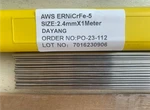
Phos Copper Welding Wires
What are the key points for choosing and applying phos copper welding wires effectively?
Phos copper welding wires (also called copper-phosphorus brazing wires) are core materials for brazing copper and copper alloys, with copper as the base (70%-95%) and phosphorus as the core functional element (5%-15%). Phosphorus not only lowers the melting point of the alloy but also acts as an internal deoxidizer—reacting with copper oxides to form low-melting-point compounds, eliminating the need for additional flux in most cases. They have excellent fluidity and electrical conductivity, making them indispensable in refrigeration pipeline brazing, electrical terminal connection, and plumbing system installation.


Product Categories and Models
Divided by phosphorus content and applicable scenarios, common models include:
BCuP-2
Phosphorus content 6.8%-7.5%, with the best fluidity. Suitable for brazing pure copper (such as T2 copper pipes in air conditioners) and high-purity copper components.
BCuP-5
Phosphorus content 5.0%-6.0%, with balanced strength and toughness. Ideal for brazing brass (copper-zinc alloys) and copper-plated parts, widely used in plumbing fittings.
BCuP-6
Contains 6.0%-7.0% phosphorus and trace silver (0.2%-0.5%). Improves wettability on brass surfaces, suitable for electrical terminals requiring both conductivity and strength.
BCuP-7
High-phosphorus type (7.0%-8.0%) with strong deoxidation. Used for thick copper plates (such as transformer copper bars) and high-demand pure copper brazing.
Performance Characteristics
Self-fluxing capability
Phosphorus reacts with copper oxides (CuO) to form slag, replacing external flux and avoiding flux residue contamination (critical for refrigeration systems).
Low melting range
Melts at 645-810℃, which is much lower than copper’s melting point (1083℃), ensuring the base metal doesn’t melt during brazing.
Good spreadability
The molten alloy can quickly wet and spread on copper surfaces, filling even narrow gaps (0.05-0.2mm) to ensure joint tightness.
Electrical conductivity
Brazed joints retain about 85% of pure copper’s conductivity, meeting the needs of electrical connection scenarios.
Application Areas
Refrigeration and air conditioning industry
Brazing of copper pipelines, evaporator cores, and condenser headers—airtightness prevents refrigerant leakage, and no flux residue avoids system blockage.
01
Electrical engineering
Welding of copper busbars, motor windings, and switch cabinet terminals—low resistance ensures stable current transmission.
02
Plumbing and water supply
Brazing of copper water pipes and fittings—resists water corrosion and maintains pressure resistance (≥1.6MPa for household water pipes).
03
Precision hardware
Brazing of copper valves, heat sinks, and sensor casings—small heat-affected zone avoids component deformation.
04
Industry Selection Cases
Case 1: Brazing of Air Conditioner Refrigeration Pipes (T2 Pure Copper)
• Requirements: Airtightness (no R32/R410A refrigerant leakage), thin-walled pipe protection (0.8-1.2mm thickness, no burning through), and no internal contamination.
• Selection: BCuP-2 phos copper welding wire.
• Reason: High phosphorus content enhances fluidity, ensuring full filling of pipeline joints; self-fluxing property avoids flux residue (which could block capillary tubes); low melting point (645-710℃) prevents pipe deformation.
Case 2: Brazing of Brass Faucet Fittings (HPb59-1 Brass)
• Requirements: Resistance to tap water corrosion, good appearance (no blackening), and compatibility with brass (no zinc evaporation).
• Selection: BCuP-5 phos copper welding wire.
• Reason: Low phosphorus content reduces reaction with zinc in brass (avoids brittle phases and blackening); moderate fluidity adapts to the complex shape of faucet internal channels; joint toughness resists frequent switch vibration.
Case 3: Brazing of Transformer Copper Busbars (TMY-3 Copper Bars)
• Requirements: High conductivity (resistance ≤0.01Ω), high strength (withstands busbar weight), and thick material fusion (3-5mm thickness).
• Selection: BCuP-7 phos copper welding wire.
• Reason: High phosphorus content strengthens deoxidation, ensuring deep fusion of thick copper bars; the joint’s conductivity meets transformer operation needs; slow cooling after brazing reduces residual stress.
FAQ
Q1: What makes phos copper welding wires unique compared to other copper brazing materials?
A1: Their biggest advantage is the "self-fluxing" property—phosphorus replaces external flux by reacting with copper oxides, simplifying operations and avoiding flux contamination. Additionally, they have low melting points, good fluidity, and high cost-effectiveness, making them the first choice for copper-copper alloy brazing.
Q2: Can phos copper welding wires be used for brazing aluminum-copper dissimilar metals?
A2: Not recommended. Phosphorus has almost no wettability on aluminum surfaces, and aluminum and copper will form brittle intermetallic compounds (Al₂Cu) at brazing temperatures, leading to joint cracking. For aluminum-copper brazing, use aluminum-silicon or special dissimilar metal brazing wires instead.
Q3: Why do phos copper brazed joints sometimes turn black, and how to prevent it?
A3: Blackening is caused by: 1) excessive phosphorus reacting with copper to form black Cu₃P; 2) incomplete protection (air oxidation during cooling); 3) reaction with zinc in brass (forming Zn₃P₂). Prevent it by: choosing low-phosphorus wires (BCuP-5) for brass; cooling in argon or dry air; avoiding overheating.
Q4: What’s the suitable brazing gap for phos copper welding wires?
A4: The optimal gap is 0.05-0.2mm. For thin copper (<1mm), 0.05-0.1mm (prevents excessive filler); for thick copper (1-3mm), 0.1-0.2mm (ensures full filling). Too small a gap will block the flow of molten alloy; too large will cause slag inclusions due to excessive filler.
Q5: Can phos copper welding wires be used without any protective gas?
A5: Yes, for general copper brazing (e.g., plumbing pipes). But for high-quality joints (e.g., refrigeration pipelines), argon protection is recommended—it prevents oxidation of the joint surface during cooling, avoids blackening, and reduces porosity caused by air intrusion.
Q6: How to choose phos copper welding wires based on the copper alloy type?
A6: For pure copper (T1/T2): BCuP-2 or BCuP-7 (high phosphorus, strong deoxidation). For brass (copper-zinc): BCuP-5 or BCuP-6 (low phosphorus, avoids zinc reaction). For copper-nickel alloy: BCuP-6 (trace silver improves wettability).
Q7: What causes "incomplete fusion" in phos copper brazing, and how to solve it?
A7: Incomplete fusion is due to: 1) thick oxide film on the base metal (phosphorus can’t fully react); 2) low brazing temperature (molten alloy can’t spread); 3) too small a gap. Solve it by: wire-brushing to remove oxides; increasing temperature by 20-30℃; adjusting the gap to 0.1-0.15mm.
Q8: What’s the maximum working temperature of phos copper brazed joints?
A8: Generally, it’s ≤150℃. Above 200℃, the phosphorus-containing phase (Cu₃P) in the joint will soften, reducing strength and toughness. For high-temperature scenarios (e.g., boiler copper pipes), use silver-copper brazing wires (working temperature up to 300℃) instead.
Q9: How to store phos copper welding wires to maintain performance?
A9: Store in a dry, ventilated environment (humidity ≤60%, temperature 10-30℃); keep the original sealed packaging (unopened wires have a 1-year shelf life); after opening, use within 1 month (phosphorus is prone to absorbing moisture and oxidizing); avoid contact with water and corrosive gases.
Q10: What’s the difference between BCuP-5 and BCuP-6 phos copper welding wires?
A10: BCuP-5 is a pure copper-phosphorus wire (no silver), suitable for general brass brazing with low cost. BCuP-6 contains 0.2-0.5% silver, which improves wettability on brass and copper-nickel alloys, and slightly enhances joint conductivity—ideal for electrical components with higher requirements.
Q11: Can phos copper welding wires braze copper-plated iron parts?
A11: Yes, but the copper plating must meet requirements: plating thickness ≥5μm, no peeling or pores. Brazing tips: preheat the part to 200-300℃ (remove moisture); use BCuP-6 (silver improves bonding); control temperature below 850℃ (avoid iron exposure and oxidation).
Q12: How to control brazing temperature when using phos copper welding wires?
A12: Use a temperature-indicating pen or infrared thermometer to monitor. For BCuP-2: 680-750℃ (no more than 750℃ to avoid phosphorus volatilization). For BCuP-5/6: 740-820℃. Heat evenly—local overheating will cause grain coarsening, while insufficient temperature leads to poor fluidity.
Q13: What causes "porosity" in phos copper brazed joints, and how to eliminate it?
A13: Porosity comes from: 1) moisture/oil on the base metal (producing hydrogen gas); 2) phosphorus volatilization (forming gas bubbles); 3) rapid cooling (trapping gas). Eliminate it by: degreasing with acetone; controlling temperature (avoid overheating); cooling the joint slowly (cover with heat-insulating cotton).
Q14: Are phos copper welding wires suitable for automated brazing production lines?
A14: Yes, they are ideal for automation. Their stable composition ensures consistent melting and fluidity; self-fluxing property simplifies the process (no need for flux spraying equipment); and they can be cut into fixed lengths or used in wire feeding systems, matching the rhythm of assembly lines (e.g., air conditioner pipeline production).
Q15: How to handle "slag adhesion" on the joint surface after brazing?
A15: Slag is a phosphate compound (Cu₃(PO₄)₂) with low adhesion. For general parts: wipe with a stainless steel wire brush while the joint is warm (slag is brittle when hot). For precision parts: use 5-10% dilute nitric acid to pickle (remove slag), then rinse with water and dry.
Q16: What’s the impact of phosphorus content on joint strength?
A16: Low phosphorus (5-6%, BCuP-5): joint elongation is higher (≥15%), suitable for parts with vibration (e.g., faucet handles). High phosphorus (7-8%, BCuP-2): tensile strength is higher (≥300MPa) but elongation is lower (≈10%), suitable for static load parts (e.g., copper busbars).
Q17: Can phos copper welding wires be used for brazing food-grade copper equipment (e.g., beer brewing tanks)?
A17: Yes, but choose wires with low impurity content (lead ≤0.01%, arsenic ≤0.005%). After brazing, thoroughly clean slag (use food-grade pickling solution) to avoid phosphorus residue; the joint material is non-toxic and meets food contact standards.
Q18: Why is preheating sometimes needed for thick copper brazing with phos copper welding wires?
A18: Thick copper (>3mm) has strong heat dissipation. Preheating (150-250℃) ensures the entire joint reaches the brazing temperature, avoiding "cold spots" (local low temperature causing incomplete fusion). Preheating also reduces thermal stress, preventing post-brazing cracks.
Q19: What’s the difference between phos copper welding wires and copper-silver brazing wires in terms of cost?
A19: Phos copper wires are much cheaper (about 1/3-1/5 the price of copper-silver wires) because they contain no silver. For pure copper or brass brazing, phos copper wires are more cost-effective; copper-silver wires are only necessary for dissimilar metal brazing or high-strength requirements.
Q20: How to test the conductivity of phos copper brazed joints?
A20: Use a four-probe conductivity meter to measure the resistivity of the joint—qualified joints have resistivity ≤0.025Ω·mm²/m (equivalent to 80% of pure copper’s conductivity). For critical parts (e.g., transformer busbars), conduct a current-carrying test (pass rated current for 1h, no abnormal heating).
Q21: Can phos copper welding wires be reused after being bent or deformed?
A21: Slightly bent wires can be straightened manually (avoid sharp kinks) and used for non-critical parts. Severely deformed wires (kinked, cracked, or with surface scratches) may cause uneven feeding or local overheating during brazing—discard them to avoid affecting joint quality.
Q22: What’s the effect of brazing time on phos copper joint quality?
A22: Too short (<3s for thin copper): insufficient wetting, incomplete gap filling. Too long (>10s for thick copper): phosphorus volatilization (reduces deoxidation), base metal oxidation, and grain coarsening. The optimal time is 3-5s for thin copper and 5-8s for thick copper.
Q23: How to prevent "joint corrosion" in humid environments (e.g., bathroom copper pipes)?
A23: Corrosion is mainly caused by residual slag (hygroscopic) or galvanic corrosion (between copper and other metals). Prevent it by: thoroughly removing slag after brazing; painting or electroplating the joint surface (e.g., nickel plating); avoiding direct contact between copper joints and steel parts (use insulation gaskets).
Q24: What types of brazing methods are suitable for phos copper welding wires?
A24: Torch brazing (most common, suitable for small batches and on-site operations); induction brazing (high efficiency, suitable for automated production lines like air conditioner pipelines); furnace brazing (uniform heating, suitable for complex parts with multiple joints).
Q25: Why do phos copper brazed joints sometimes crack during bending tests?
A25: Cracks are caused by: 1) excessive phosphorus (brittle Cu₃P phase); 2) reaction with brass zinc (forming Zn₃P₂); 3) high residual stress (from uneven cooling). Solve by: choosing BCuP-5 for brass; annealing after brazing (250-300℃ for 1h); controlling cooling rate.
Q26: What’s the maximum thickness of copper that phos copper welding wires can braze?
A26: Generally, up to 8mm. For thicker copper (>8mm), it’s difficult for the molten alloy to penetrate the entire thickness, leading to incomplete fusion. In such cases, use a "step brazing" method (brazing in layers) or switch to high-phosphorus BCuP-7 with stronger fluidity.
Q27: Can phos copper welding wires be used for brazing copper in low-temperature environments (<5℃)?
A27: Yes, but take precautions: preheat the base metal to 50-100℃ (offset low-temperature heat loss); use a larger flame (increase heat input); avoid wind (use a wind shield to prevent uneven cooling). Low temperatures accelerate cooling, so extend the heat preservation time appropriately.
Q28: How to judge if phos copper welding wires have expired?
A28: Expired wires show: 1) surface oxidation (dark gray or black spots); 2) brittle texture (breaks when bent); 3) uneven diameter (due to corrosion). Trial brazing will reveal unstable fluidity, excessive slag, or porosity—expired wires must be discarded.
Q29: What’s the impact of wire diameter on brazing with phos copper welding wires?
A29: Small diameter (0.8-1.2mm): suitable for thin copper and narrow gaps (precise control, no excess filler). Large diameter (1.6-2.4mm): suitable for thick copper and large gaps (high deposition efficiency). Choose diameter based on gap size (wire diameter ≈ 1.5× gap width).
Q30: How to avoid "over-filling" (excessive brazing alloy) when using phos copper welding wires?
A30: Over-filling wastes material and causes slag accumulation. Avoid it by: choosing the right wire diameter (not too large); controlling brazing time (stop feeding when the alloy overflows slightly from the gap); using fixtures to fix the workpiece (preventing position deviation during brazing).
Q31: Can phos copper welding wires braze copper with plastic-coated surfaces?
A31: Yes, but the plastic coating near the joint must be removed first (at least 5mm away from the brazing area) to avoid burning and producing toxic fumes. After brazing, cool the joint to below 100℃ before reapplying the coating (to prevent plastic melting).
Q32: What’s the difference between solid phos copper wires and flux-cored phos copper wires?
A32: Solid wires rely entirely on phosphorus for deoxidation (self-fluxing), suitable for clean copper. Flux-cored wires have additional flux in the core, which enhances deoxidation ability—suitable for copper with light rust or oxidation, but may leave more slag.
Q33: How to handle "leakage" in phos copper brazed pipeline joints?
A33: First, locate the leak (use soapy water to check for bubbles); grind the leak area to remove old brazing alloy and slag; re-clean and braze with BCuP-2 (good fluidity); after cooling, re-test airtightness (pressure test) to confirm no leakage.
Q34: What safety precautions are needed when using phos copper welding wires?
A34: Wear heat-resistant gloves and goggles (prevent burns); ensure ventilation (phosphorus fumes are irritating); avoid direct contact with molten alloy (high temperature ≥645℃); store wires away from food and drinks (phosphorus compounds are toxic if ingested).
Q35: When is it necessary to replace phos copper welding wires with other brazing materials?
A35: Replace them when: 1) brazing dissimilar metals (copper to steel/aluminum); 2) working in high-temperature environments (>200℃); 3) requiring ultra-high strength (tensile strength ≥400MPa); 4) brazing copper-nickel alloys with high nickel content (>30%). In these cases, use silver-copper or nickel-based brazing wires instead.