




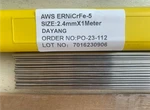


ER2594 Super Duplex Stainless Wire
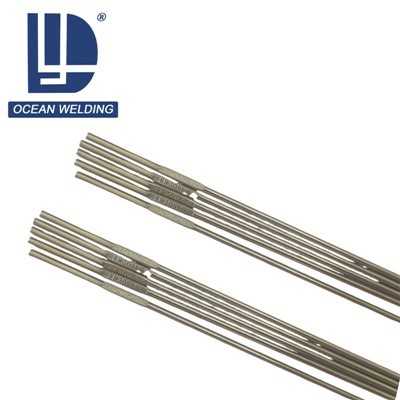
ER2594 Super Duplex Stainless Steel Welding Wire
ER2594 is an austenitic-ferritic super duplex stainless steel TIG/MIG welding wire conforming to AWS A5.9. Engineered for joining super duplex grades such as UNS S32750 (SAF 2507) and UNS S32760, this wire delivers a weld deposit with a balanced austenite-ferrite microstructure, providing the combined advantages of austenitic stainless steel toughness and ferritic stainless steel stress corrosion cracking resistance.
With a nominal composition of 25% Cr, 9.5% Ni, and 3.6% Mo plus controlled nitrogen addition, ER2594 achieves a Pitting Resistance Equivalent Number (PREN) exceeding 40 - the threshold that defines "super duplex" performance - making it the standard filler metal for the most demanding seawater, chemical, and oil & gas environments.

Key Features of ER2594 Wire
- PREN > 40: Exhibits exceptional resistance to pitting and crevice corrosion in chloride-containing environments.
- Balanced Duplex Structure: Contains 40–60% ferrite, combining high strength with excellent resistance to stress corrosion cracking (SCC).
- High Mechanical Strength: Features a tensile strength of approximately 870 MPa-roughly double that of standard austenitic stainless steels.
- Low Impurity Content: Strict control over Sulfur (S ≤ 0.010%) and Phosphorus (P ≤ 0.020%) levels ensures a clean, crack-free weld metal.
- Nitrogen Strengthening: Controlled addition of nitrogen (N)-at approximately 0.25%-stabilizes the austenitic phase and enhances pitting corrosion resistance within the weld zone.
- Copper-Bearing Composition: Contains approximately 0.7% copper (Cu), which enhances corrosion resistance in sulfuric acid environments.
ER2594 Chemical Composition
| Element | Typical Deposit (%) |
|---|---|
|
C |
0.02 |
|
Cr |
24.55 |
|
Ni |
9.35 |
|
Mo |
3.65 |
|
N |
0.25 |
|
Cu |
0.70 |
|
Mn |
0.64 |
|
Si |
0.42 |
|
P |
0.014 |
|
S |
0.006 |
Mechanical Properties of Deposited Metal
| Property | Typical Value |
|---|---|
|
Tensile Strength (σb) |
870 MPa |
|
Yield Strength (σ0.2) |
≥550 MPa |
|
Elongation (δ5) |
≥25% |
|
Impact Toughness (−40°C) |
≥125 J |
|
Hardness |
~28–32 HRC |
ER2594 Product Specifications
| Property | Value |
|---|---|
|
AWS Classification |
A5.9 ER2594 |
|
EN/ISO Designation |
ISO 14343-A: W 25 9 4 N L |
|
UNS Number |
S32750-type deposit |
|
Welding Processes |
GTAW (TIG), GMAW (MIG) |
|
Shielding Gas |
Pure Argon (Ar ≥ 99.99%) or Ar + 2% N₂ |
|
Base Metal Match |
UNS S32750, S32760, S32550 (SAF 2507, Zeron 100) |
Recommended Welding Parameters
Polarity: DCEP (DC Electrode Positive).
GTAW (TIG)
| Wire Diameter | Current (A) | Shielding Gas | Gas Flow |
|---|---|---|---|
|
1.6 mm |
80–140 A |
Ar or Ar + 2% N₂ |
10–14 L/min |
|
2.0 mm |
100–170 A |
Ar or Ar + 2% N₂ |
10–14 L/min |
|
2.4 mm |
120–200 A |
Ar or Ar + 2% N₂ |
12–16 L/min |
GMAW (MIG)
| Wire Diameter | Current (A) | Voltage (V) | Shielding Gas |
|---|---|---|---|
|
0.8 mm |
100–180 A |
18–24 V |
Ar + 2% N₂ |
|
1.0 mm |
120–220 A |
20–26 V |
Ar + 2% N₂ |
|
1.2 mm |
150–280 A |
22–28 V |
Ar + 2% N₂ |
Welding Process Guidelines
Welding of super duplex stainless steel requires strict process control to ensure that the weld zone achieves an appropriate balance between austenite and ferrite phases. Improper welding techniques can result in excessive ferrite content (thereby reducing toughness) or excessive austenite content (thereby reducing resistance to stress corrosion cracking).
Pre-weld Cleaning: All rust, oil, moisture, and surface contaminants must be removed from the weld bevels and adjacent areas. Contaminants can lead to porosity in the weld seam and compromise the material's corrosion resistance.
Interpass Temperature:Must be strictly controlled below 150°C (302°F). Excessive heat input promotes the precipitation of the sigma (σ) phase and disrupts the austenite-ferrite balance.
Arc Length: A short-arc welding technique should be employed. For TIG (Tungsten Inert Gas) welding, the arc length should be maintained within the range of 1–3 mm. A short arc helps minimize nitrogen depletion in the weld pool and minimizes the degree of oxidation.
Heat Input Control:The target heat input should be controlled between 0.5 and 2.5 kJ/mm. Heat input that is either too low or too high will adversely affect weld quality:
- Too Low → Leads to excessive ferrite content, thereby reducing toughness and corrosion resistance.
- Too High → Leads to the precipitation of sigma (σ) or chi (χ) phases, resulting in sensitization.
Shielding Gas: Pure argon, or a mixture of argon with 2% nitrogen, should be selected. Adding nitrogen to the shielding gas helps compensate for nitrogen depletion during the welding process and assists in maintaining the proper austenite phase content. The use of shielding gas mixtures containing CO₂ is strictly prohibited.
Back Purging (Back-blowing):For all root passes in pipes and enclosed structural components, back purging with inert gas is a mandatory process requirement. Pure argon or an argon/nitrogen mixture should be used for back purging. Back purging must be maintained continuously until the root pass is completely covered by at least two subsequent weld layers.
Post-weld Heat Treatment: For super duplex stainless steel, post-weld heat treatment is typically not required and is generally not recommended. If relevant specifications or standards mandate heat treatment, the sole acceptable treatment procedure is solution annealing at a temperature of 1050–1125°C, immediately followed by water quenching.
Applications
ER2594 is specified wherever the combination of high strength, pitting resistance, and SCC immunity is required in aggressive chloride environments:
Oil & Gas
•Subsea manifolds, flowlines, and Christmas tree components
•Topside seawater piping and fire water systems
•Downhole equipment and umbilical tubing
•FPSO process piping
Chemical and Petrochemical
•Chloride-containing process vessels and reactors
•Sulfuric acid handling equipment (with Cu-bearing deposit)
•Chlor-alkali plant components
•Pulp and paper bleach plant washers and towers


Desalination
•Reverse osmosis high-pressure piping
•Multi-stage flash evaporator tubing
•Brine handling systems
Marine and Naval
•Seawater heat exchangers and condensers
•Ballast and bilge piping systems
•Propeller shafts and marine fasteners
Infrastructure
•Bridges and tunnels in coastal/de-icing salt environments
•Wastewater treatment plant structures
Storage and Handling
•Store ER2594 in original sealed packaging in a dry environment (RH < 50%)
•Protect from carbon steel contamination - use dedicated stainless steel tools, clamps, and grinding discs
•Opened TIG rod tubes should be resealed after each use
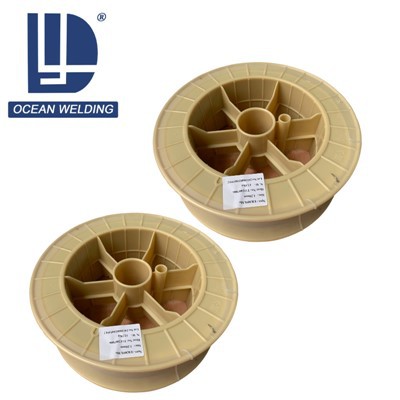
•MIG spools should be stored in a rod oven or climate-controlled cabinet if ambient humidity exceeds 60%
•Never use carbon steel wire brushes on super duplex weld surfaces - use stainless steel or nylon brushes only
FAQ
Q: What are the primary applications for ER2594 welding wire?
A: ER2594 is primarily used for TIG (Tungsten Inert Gas) and MIG (Metal Inert Gas) welding of super duplex stainless steels, such as UNS S32750 (SAF 2507) and S32760 (Zeron 100). Its main application areas include offshore oil and gas pipelines, seawater desalination equipment, chemical processing vessels, and any environments involving highly corrosive chlorides.
Q: What is the difference between ER2594 and ER2209?
A: ER2594 is classified as a super duplex filler material (PREN > 40), featuring higher levels of Chromium (Cr), Molybdenum (Mo), and Nitrogen (N) compared to ER2209 (a standard duplex material with a PREN of approximately 35). ER2594 offers superior pitting corrosion resistance in environments characterized by higher temperatures and elevated chloride concentrations; consequently, for the welding of S32750/S32760 base materials, the use of ER2594 is typically mandatory.
Q: Which shielding gas should be used when welding with ER2594?
A: Pure argon (purity ≥ 99.99%) or a mixture of argon and 2% nitrogen should be used. The addition of nitrogen helps compensate for nitrogen loss during the welding process, thereby maintaining the phase balance between austenite and ferrite within the weld metal. Carbon dioxide (CO₂) or argon-CO₂ mixtures must never be used.
Q: Why must the interpass temperature be limited to below 150°C when welding super duplex stainless steels?
A: If the interpass temperature exceeds 150°C, it promotes the formation of harmful intermetallic phases (such as sigma [σ] and chi [χ] phases) within the ferrite phase, which severely compromises the material's toughness and corrosion resistance. Therefore, strict temperature monitoring between weld passes is critical.
Q: Can ER2594 be used for welding dissimilar metals?
A: Yes, it can. ER2594 is commonly used for joining super duplex stainless steels to austenitic stainless steels (such as 316L and 317L); it may also be employed for transition joint welding when joining super duplex stainless steels to carbon steels (provided an appropriate joint design is utilized). Due to the "over-alloyed" composition of its weld metal, it ensures that sufficient corrosion resistance is maintained even within the weld dilution zone.
Q: Is Post-Weld Heat Treatment (PWHT) required after welding with ER2594?
A: No. For super duplex stainless steel welds, post-weld heat treatment (PWHT) is typically not required; in fact, industry practice generally advises against subjecting such welds to heat treatment. If specific codes or specifications mandate post-weld heat treatment (PWHT), only a full solution annealing process (1050–1125°C followed by water quenching) is permissible; performing stress-relieving treatments at intermediate temperatures will result in sigma phase embrittlement.
Hot Tags: er2594 super duplex stainless wire, China, manufacturers, suppliers, factory, company, wholesale, discount, buy, low price, high quality, products
Previous
No InformationYou Might Also Like




Send Inquiry