




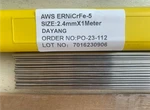


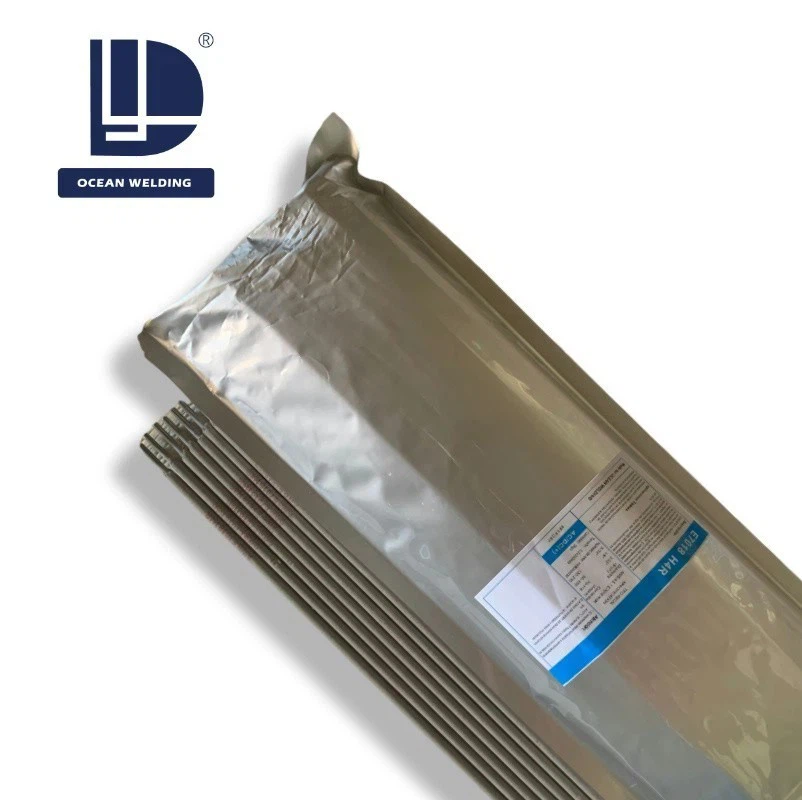


7018 H4r
Model: 7018 H4R Welding Rod (E7018-H4R)
Origin: China
Payment: 30% down payment, 70% due before shipment
Packing Specifications: 5kg/inner box, 20kg/carton, 1000kg/pallet
Production Lead Time: Within 25 days after receiving down payment
Product core features and advantages
The E7018-H4R is a low-hydrogen, all-position, high-strength electrode designed for welding medium- and high-strength mild steel/low-alloy steel structures. It is particularly suitable for thick plates and high-constraint applications. Its core advantages are as follows:

Low-hydrogen crack resistance, outstanding safety
Using a low-hydrogen coating ("8" in the model number represents low-hydrogen type), this type boasts a hydrogen content reaching H4 level (≤4mL/100g). This minimizes hydrogen accumulation during welding and effectively prevents "cold cracking" (cracks caused by hydrogen and restraint stress during the cooling process after welding). Therefore, it is widely used in safety-critical structures such as pressure vessels and bridges.
Stable weld performance, combining strength and toughness
The weld metal strength is ≥483MPa, and the room-temperature impact energy is ≥27J. This meets the strength requirements of low-carbon and low-alloy steels such as Q235 and Q345 while maintaining excellent toughness, making it suitable for most industrial structural welding needs.

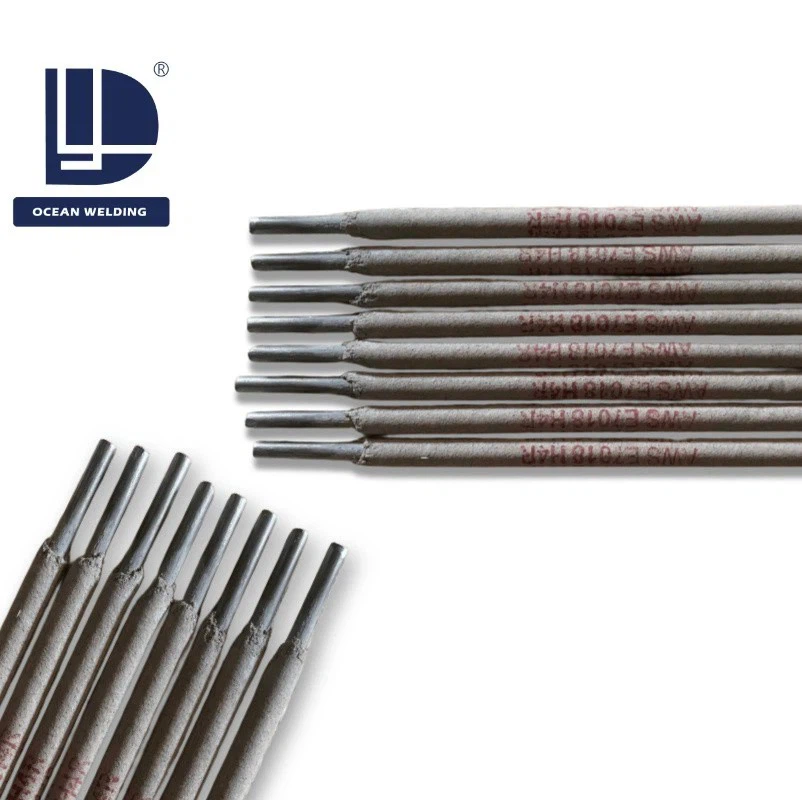
All-position welding improves construction efficiency
The "1" in the model number represents all-position adaptability. This allows welding in any position-flat, vertical, horizontal, or overhead-without the need to change welding rods due to structural limitations, significantly increasing construction flexibility.
Moisture-resistant design reduces storage costs
Embedded with the "R" logo (moisture-resistant), unopened welding rods can be stored for long periods in a dry, room-temperature environment (common low-hydrogen welding rods require sealed storage or refrigeration), reducing storage and drying costs. However, after opening, they should be dried at 350-400°C for 1-2 hours and stored in an insulated container at 80-100°C to prevent the formation of pores.

Differences from similar welding rods
| Welding rod models | Core differences | Applicable scenarios |
|---|---|---|
| E7018-H4R | Moisture-resistant (R), low storage requirements | Long-term storage, outdoor construction, etc. |
| E7018-H4 | Not moisture-resistant, requires strict sealing and refrigeration | Short-term use, indoor fixed-station welding |
| E6013 | Titanium coating (acidic), high hydrogen content | Ordinary mild steel, non-stress structure welding |
Precautions for use
1. Power Supply Requirements:
DC reverse polarity (DCEN) must be used. AC power is prohibited, as this may cause arc interruption or porosity.
2. Drying and Storage:
- Unopened welding rods: Can be stored in a dry environment with a humidity of ≤60% for one year.
- Opened or hygroscopic welding rods: Dry at 350°C for one hour (to remove moisture and prevent excessive hydrogen). After drying, store in an insulated container at 80-100°C. If exposed to air for more than four hours after removal, re-dry the welding rod. Dry the welding rod up to three times to prevent the coating from detaching.
3. Preheating and Postheating:
- When welding thick plates (≥25mm) or rigid structures, preheat to 80-150°C (adjust according to the carbon equivalent of the steel).
- If necessary, post-heat at 250-350°C after welding to accelerate hydrogen diffusion and further prevent cracking.
4. Welding environment:
Avoid welding in environments with humidity > 80% or wind speed > 8m/s (which can easily cause pores). Outdoor construction requires proper wind and moisture protection.
Specifications (diameter × length and current range)
| Diameter × Length (mm × mm) | AC Current (A) | DC Current (A) |
|---|---|---|
| 2.5×350 | 80-120 | 70-110 |
| 3.2×350 | 100-160 | 90-160 |
| 4.0×400 | 140-210 | 130-210 |
| 5.0×400 | 200-300 | 180-300 |
With its low hydrogen crack resistance, all-position applicability, moisture resistance and easy storage, E7018-H4R has become the preferred welding rod in bridges, pressure vessels, machinery manufacturing and other fields, balancing safety and construction convenience.
Core application areas
The E7018-H4R welding rod, with its low-hydrogen crack resistance, high strength, and all-position welding capabilities, is widely used in applications requiring stringent weld safety and structural stability. These applications include:
1. Large-scale steel structures: bridge load-bearing structures, high-rise building steel frames, crane booms, etc., which must withstand high loads and alternating stresses. Its low-hydrogen properties prevent structural failure caused by weld cracks.
2. Pressure vessels and pipelines: Chemical reactors, oil and gas pipelines, boiler cylinders, etc., where welds must withstand high pressure and corrosive media. Low-hydrogen coatings reduce the risk of hydrogen-induced cracking and ensure sealing and pressure resistance.
3. Machinery: Heavy machinery frames, machine tool beds, and structural components of construction machinery (excavators and loaders) require a balance between strength and toughness when welding thick plates. Its all-position welding properties are suitable for complex structural construction.
4. Power and energy equipment: Wind turbine towers and power plant steel structure supports require long-term outdoor use to withstand environmental stresses. Moisture-resistant design reduces weld defects caused by improper storage.
Transport and storage details

Transport Protection:
Packaging should be done in moisture-proof cartons and pallets. Non-slip mats should be placed on the bottom of the pallets to prevent stacking from tilting during transport.
For long-distance transport (especially in humid areas), cover with waterproof tarpaulins to prevent rain or condensation from seeping into the packaging.
Load and unload carefully during handling. Avoid dropping or knocking the welding rods to prevent the electrode coating from falling off or damaging the inner box.
Storage Requirements:
Ideal Storage Environment: Temperature 10-30°C, relative humidity ≤50%, in a well-ventilated, dry warehouse away from water sources, steam pipes, and corrosive substances.
Stacking Guidelines: Pallets should not be stacked more than three layers high. The bottom pallet should be raised 10 cm or more from the ground (using wooden supports) to prevent moisture from entering the container.
Shelf Life: Unopened products have a shelf life of two years under the above conditions. After opening, if the product is handled according to the strict drying procedures, it can be used within one year (record the opening date).
FAQ
Q: Why must the E7018-H4R be powered by a DC power supply and not an AC power supply?
A: Low-hydrogen (alkaline) coatings have poor conductivity, and AC power can easily lead to arc instability (arc breakage and excessive spatter). However, reverse DC provides a stable arc, ensuring full weld pool fusion and reducing porosity and incomplete penetration defects.
Q: Will drying the electrode multiple times after it has absorbed moisture affect its performance?
A: A maximum of three drying cycles (350°C/1 hour) is permitted. Exceeding this limit will cause alloying elements in the coating to burn out or weaken the adhesion between the coating and the core, leading to coating detachment and porosity during welding. It is recommended that this cycle be discontinued after more than three drying cycles.
Q: Can it be used with acidic electrodes such as the E6013 to weld the same structure?
A: Not recommended. Acidic electrodes have a high hydrogen content (prone to cracking), and their weld strength (E6013 tensile strength is approximately 414 MPa) is lower than that of E7018-H4R (483 MPa). Mixing these electrodes may result in uneven joint strength or increase the risk of cracking.
Q: What might cause porosity on the weld surface after welding?
A: Common causes include: insufficient electrode drying (hydrogen content exceeds the standard after moisture absorption), welding humidity >80%, oil/rust on the base material surface that has not been cleaned, and excessive current causing the weld pool to cool too quickly
Hot Tags: 7018 h4r, China, manufacturers, suppliers, factory, company, wholesale, discount, buy, low price, high quality, products
Previous
E7014 Welding RodNext
E6010You Might Also Like


Send Inquiry