




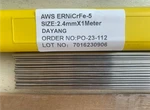

Welding Precautions For E316L Stainless Steel
Send Inquiry
Product Introduction
| Key Precaution Category | Specific Requirements | Reason/Purpose |
|---|---|---|
| Welding Material Selection | 1. For welding wire, ER316L (matching ultra-low carbon composition) is preferred; 2. For welding electrodes, select E316L-16/17 (low-hydrogen type to avoid hydrogen-induced cracking) |
Ensure the weld composition is consistent with the base metal, maintain excellent corrosion resistance (especially against intergranular corrosion) and mechanical properties, and prevent sensitization caused by excessively high carbon content |
| Pre-Weld Cleaning | 1. Clean the base metal groove and the area ≥20mm on both sides to remove oil, scale, rust, etc. Use mechanical grinding (with stainless steel grinding wheels) + acetone wiping; 2. Clean the welding wire with anhydrous ethanol to remove surface oil |
Prevent defects such as porosity and inclusions during welding, ensure the bonding quality of the fusion zone, and avoid contaminants affecting the weld's corrosion resistance |
| Shielding Gas Control | 1. TIG (GTAW) shielding gas: pure argon (Ar) with purity ≥99.99% and flow rate controlled at 8-15L/min; 2. Backside shielding: for thick plates or high-demand applications, pass argon on the backside (flow rate 5-8L/min) or use ceramic backing; 3. MIG (GMAW): Ar + 2%-5% CO₂ mixed gas (avoid weld oxidation caused by pure CO₂) |
Prevent oxidation and burning loss of alloying elements such as Cr and Ni in the wire/base metal at high temperatures, ensure good weld appearance, and improve the weld's corrosion resistance and toughness |
| Welding Parameter Control | 1. TIG (GTAW): current 80-150A, voltage 10-14V, welding speed 50-100mm/min; 2. MIG (GMAW): current 120-200A, voltage 18-24V, speed 80-150mm/min; 3. Strictly control heat input to avoid overheating (interpass temperature ≤150℃) |
Prevent grain coarsening caused by excessive heat input, which reduces the weld's impact toughness; avoid the formation of a sensitization zone (450-850℃) in the heat-affected zone (HAZ) of the base metal, which triggers intergranular corrosion |
| Preheating & Post-Heating Requirements | 1. No preheating required under normal conditions (plate thickness ≤20mm, ambient temperature ≥0℃); 2. When plate thickness >20mm or ambient temperature <0℃, preheating temperature ≤150℃ (avoid carbide precipitation caused by high temperature); 3. No mandatory post-heating required after welding (unless there are special stress resistance requirements, and the temperature must be controlled below 250℃) |
Prevent cold cracking during low-temperature welding; avoid base metal sensitization caused by excessively high preheating/post-heating temperatures, which damages corrosion resistance |
| Welding Operation Points | 1. Adopt short-arc welding, control the arc length to 1-2 times the wire diameter to reduce alloying element burning loss; 2. For multi-layer and multi-pass welding, clean the weld pass promptly after each pass and control the interpass temperature ≤150℃; 3. Avoid excessive welding oscillation (oscillation amplitude ≤3 times the wire diameter), and prioritize narrow-pass welding |
Reduce heat input and the risk of molten pool oxidation; ensure uniform weld formation and avoid defects such as incomplete fusion and incomplete penetration |
| Post-Weld Treatment | 1. Immediately clean the weld surface slag and spatter with a stainless steel wire brush after welding, and rinse with clean water; 2. For scenarios with high corrosion resistance requirements, passivation treatment is necessary (e.g., soaking in 20%-30% nitric acid solution for 15-30 minutes, or applying special passivation paste); 3. Avoid cleaning the weld with carbon steel tools (prevent iron ion contamination) |
Remove surface contaminants and scale, restore the weld surface passivation film (Cr₂O₃), and improve overall corrosion resistance; prevent local corrosion caused by iron ion embedding |
| Safety Protection | 1. Maintain good ventilation in the welding area and wear dust masks (to prevent inhalation of Cr and Ni compound fumes); 2. Wear arc-proof masks, flame-retardant work clothes, and insulated gloves; 3. Avoid direct inhalation of welding fumes; use local exhaust equipment if necessary |
Welding fumes of E316L contain harmful substances such as Cr⁶⁺, so it is necessary to prevent occupational health hazards; avoid skin and eye burns caused by arc light |
Hot Tags: welding precautions for e316l stainless steel, China, manufacturers, suppliers, factory, company, wholesale, discount, buy, low price, high quality, products
You Might Also Like



Send Inquiry