





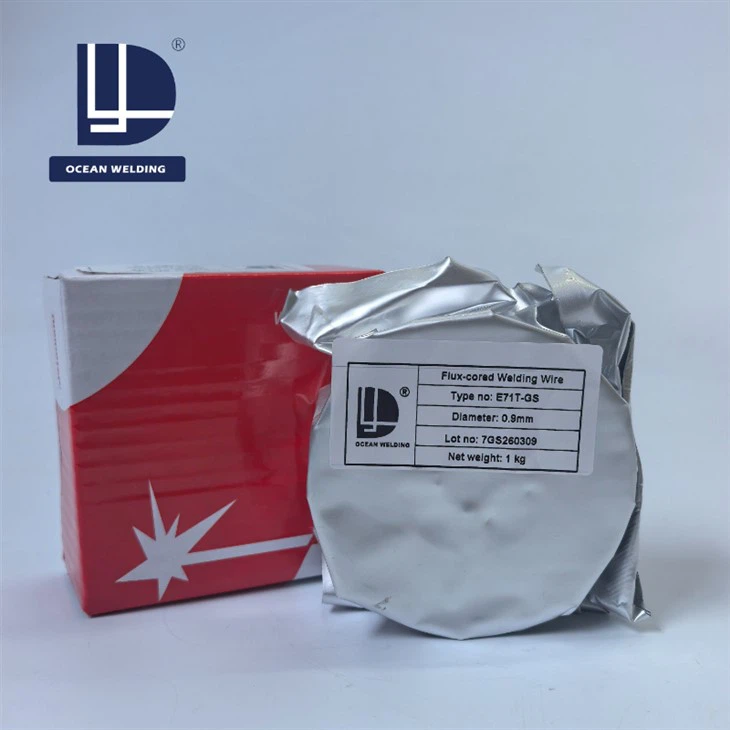
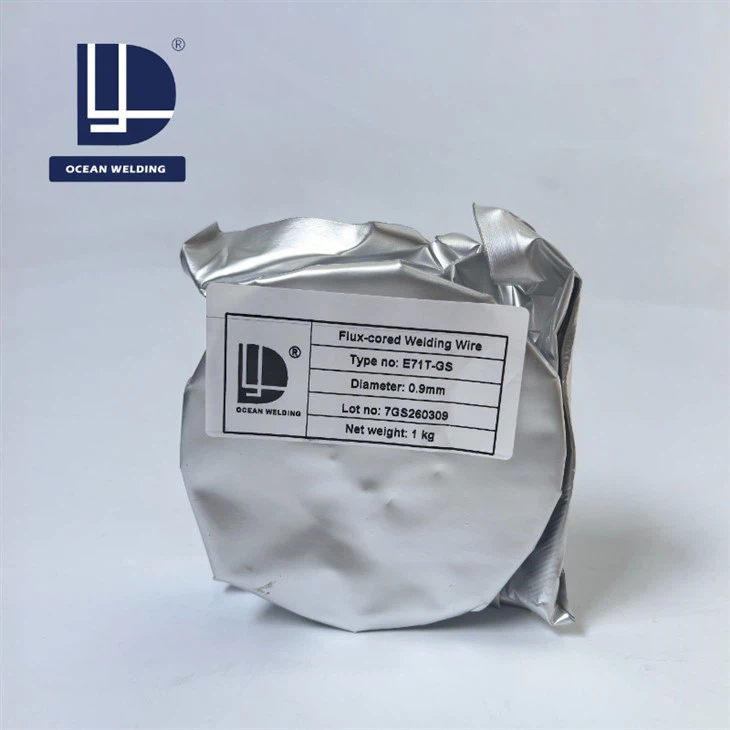

E71T-GS Self-Shielded Flux-Cored Wire
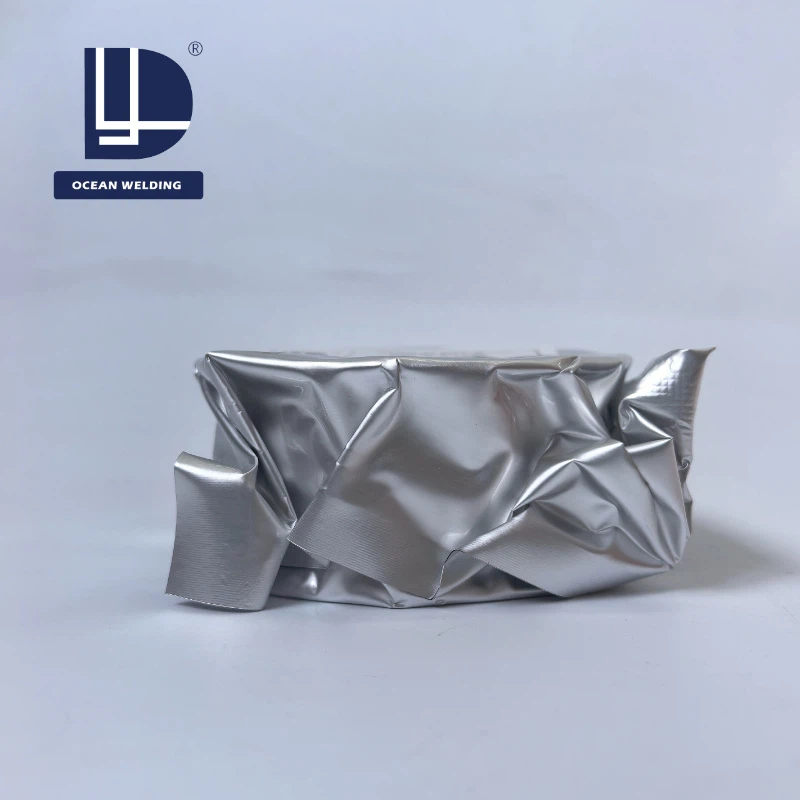
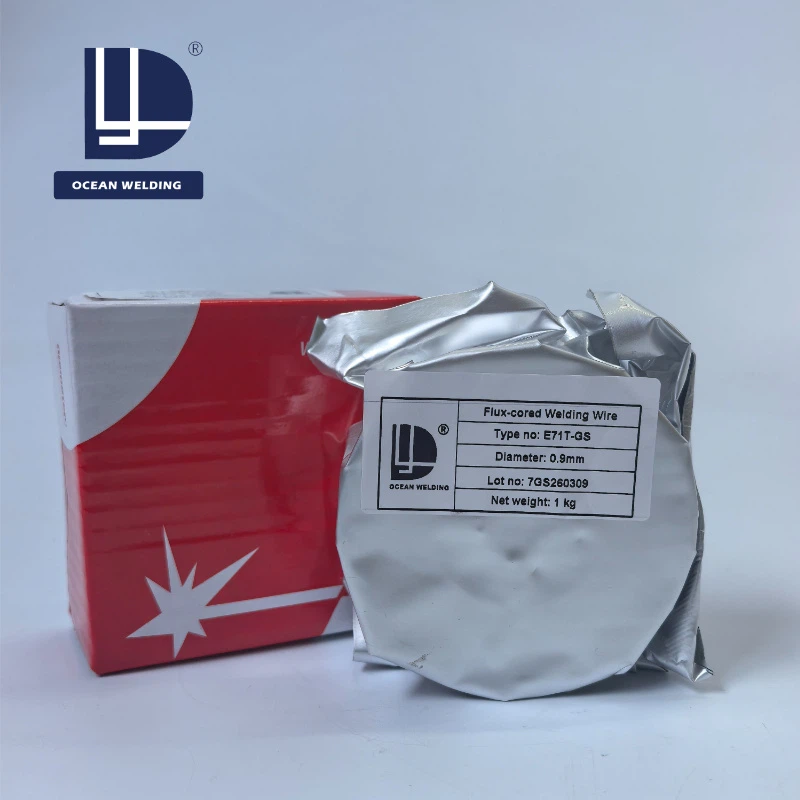
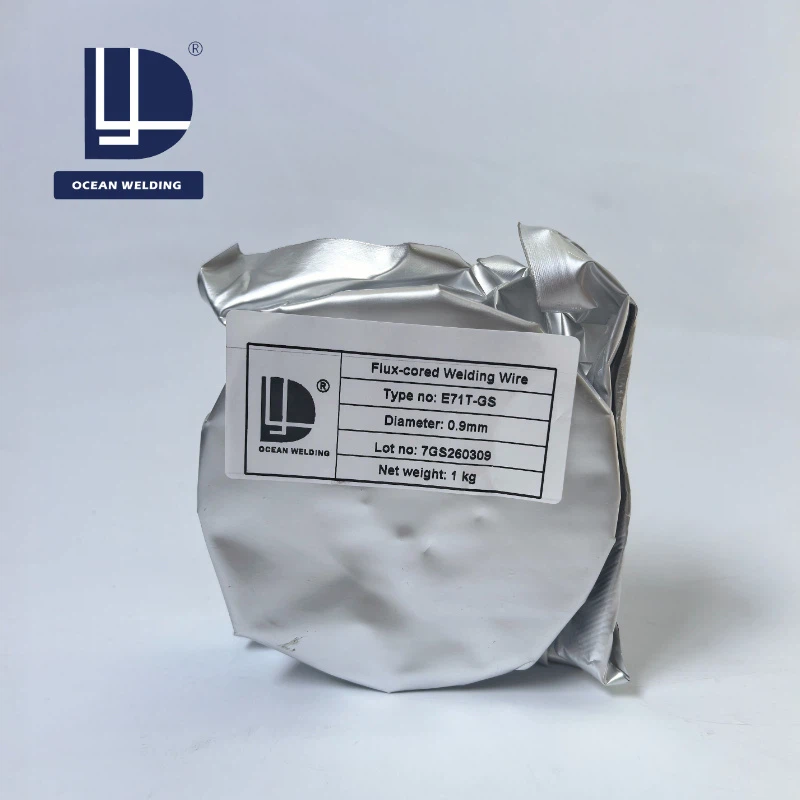
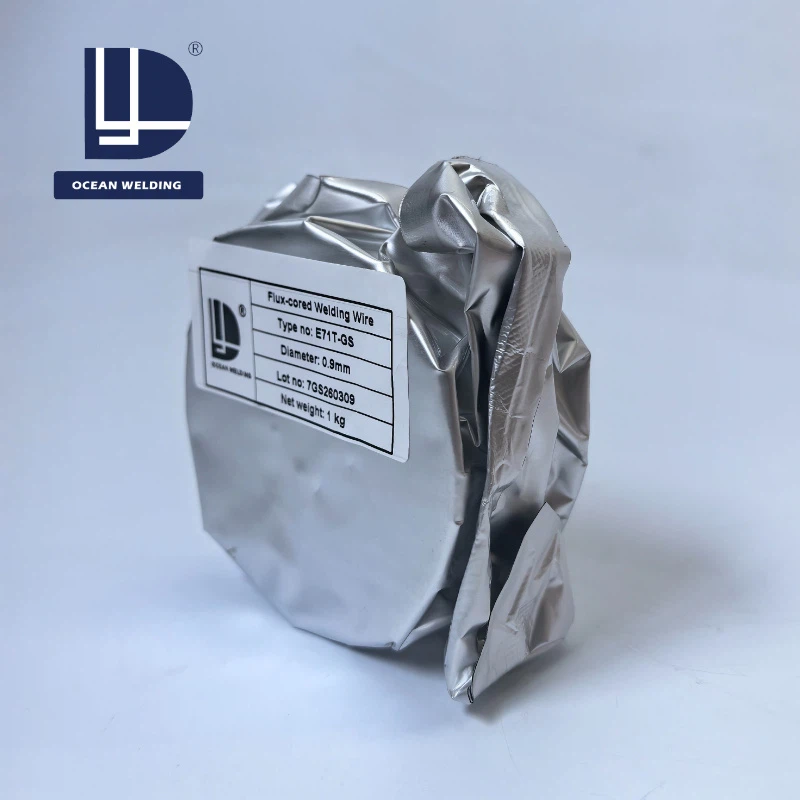
E71T-GS Gasless Flux-Cored Welding Wire
E71T-GS is a self-shielded (gasless) flux-cored carbon steel welding wire designed specifically for single-pass welding in all positions. Compliant with the AWS A5.20 standard, this wire generates its own shielding gas internally through its flux core during the welding process, thereby eliminating the need for external gas cylinders, pressure regulators, and hose assemblies. Consequently, E71T-GS has become the standard consumable for portable wire-feed welders and is widely utilized in environments where gas-shielded welding is impractical-such as outdoor sites, field operations, and workshops.
E71T-GS welding wire achieves a minimum tensile strength of 70,000 PSI (480 MPa) and produces a stable arc with minimal spatter during welding. Compatible with small 110V/120V or 230V MIG welders, it allows for the welding of general and structural low-carbon steels in a gasless mode (FCAW-S)-without the need for an external gas cylinder-yielding strong, secure welds with a clean and aesthetically pleasing finish.
Key Features of E71T-GS Wire
- No Shielding Gas Required: Enables true gasless operation; the self-shielded flux-cored wire generates its own protective atmosphere.
- All-Position Welding: Supports flat, horizontal, vertical-up, and overhead welding positions, with stable and reliable weld pool control.
- AWS A5.20 Compliant: Meets the same technical specifications as E71T-GS products from all leading brands on the market.
- 110V / 230V Compatible: Both 0.030" and 0.035" wire sizes are suitable for use with MIG welders powered by standard household outlets.
- High Wind Resistance: The self-generated shielding atmosphere offers far superior resistance to wind and drafts compared to gas-shielded MIG welding.
- Minimal Spatter: Features a smooth arc transfer, resulting in minimal post-weld cleanup.
- Easy Slag Removal: The slag is thin, light, and self-peeling, facilitating quick and easy visual inspection of the weld seam.
E71T-GS Specifications
| Property | Value |
|---|---|
|
AWS Classification |
AWS A5.20 E71T-GS |
|
Wire Type |
Self-shielded flux-cored (FCAW-S) |
|
Shielding Gas |
None - gasless |
|
Polarity |
DCEN (DC Electrode Negative) |
|
Welding Positions |
All (F, H, V-up, OH) |
|
Pass Limitation |
Single-pass |
|
Base Metals |
Mild steel, low-carbon steel (A36, A53, A500) |
|
Tensile Strength |
≥70,000 PSI (480 MPa) |
|
Yield Strength |
≥58,000 PSI (400 MPa) |
|
Elongation |
≥22% |
E71T-GS Chemical Composition
| Element | Typical (%) |
|---|---|
|
C |
0.10–0.20 |
|
Mn |
0.50–0.80 |
|
Si |
0.20–0.40 |
|
Al |
0.50–2.50 |
E71T-GS Polarity
DCEN Is Mandatory
E71T-GS requires the use of DC reverse polarity (i.e., the electrode connected to the negative terminal), which is also commonly referred to as "straight polarity." In this configuration, the welding wire lead must be connected to the negative terminal of the power source, while the ground clamp must be connected to the positive terminal.
| Polarity | E71T-GS Performance |
|---|---|
|
DCEN (correct) |
Smooth arc, low spatter, proper shielding, sound weld |
|
DCEP (wrong) |
Excessive spatter, erratic arc, porosity, poor shielding |
Applications
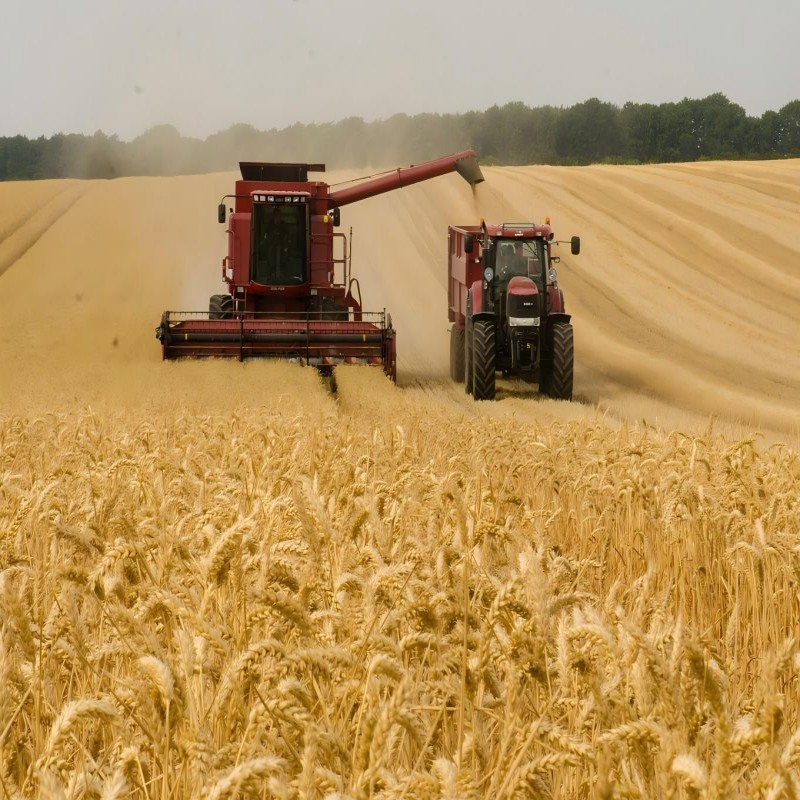
Farm & Ranch
Equipment and implement repairs
Livestock handling equipment (chutes, panels, feeders)
Tractor bucket, blade, and attachment welds
Barn structure and fencing repairs

Light Construction & HVAC
Steel stud connections and embed plates
Ductwork brackets and hangers
Non-structural attachment welding
Equipment mounting plates and pads

Field & Outdoor Repair
On-site equipment repair where gas is unavailable
Outdoor welding in wind - no gas blow-away concerns
Emergency structural repairs on construction sites
Mobile welding service operations
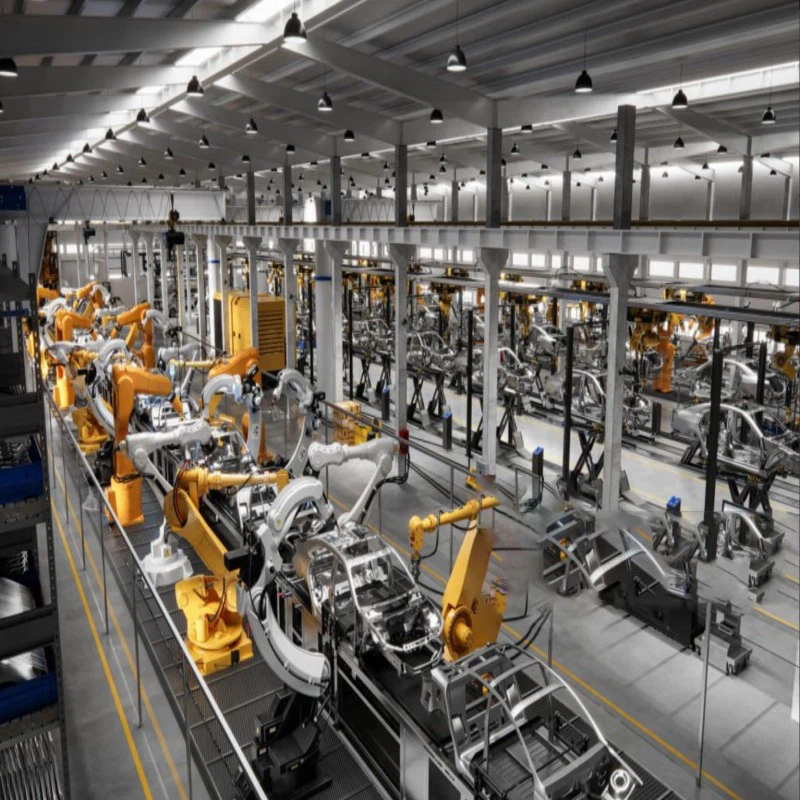
Automotive & Off-Road
Utility vehicle and ATV frame reinforcement
Roll cage gussets and bracing (non-certified)
Exhaust hangers, tool boxes, and bumper fabrication
Trailer floor and cross-member repair
E71T-GS vs ER70S-6: Gasless vs Gas-Shielded MIG Wire
| Factor | E71T-GS (Gasless Flux Core) | ER70S-6 (Solid MIG Wire) |
|---|---|---|
|
Shielding |
Self-shielded - no gas |
75Ar/25CO₂ or 100%CO₂ |
|
Polarity |
DCEN |
DCEP |
|
Equipment |
Wire feeder only |
Wire feeder + cylinder + regulator |
|
Wind Tolerance |
Excellent |
Poor - gas disrupted by wind |
|
Spatter |
Moderate |
Low |
|
Slag |
Yes - light, removable |
No slag |
|
Bead Appearance |
Slightly rougher |
Smooth, clean |
|
Multi-Pass |
No (single-pass) |
Yes |
|
Portability |
Maximum |
Limited by gas setup |
|
Wire Cost |
Higher per lb |
Lower per lb (plus gas cost) |
|
Best For |
Outdoor, field, DIY, portable |
Shop, production, code work |
Choose E71T-GS when you require portability, are working outdoors, face windy conditions, or are using a compact 110V welder that lacks gas shielding capabilities.
Choose ER70S-6 when you are working indoors, need to perform multi-pass welding, require code-compliant weld quality, or prioritize weld appearance.
Welding Technique Tips for E71T-GS

- Always use the "drag" (or pull) technique: Maintain a drag angle of 15–30°. Never use the "push" technique when welding with flux-cored wire-pushing causes slag to flow ahead of the weld pool, leading to slag inclusions and porosity defects.
- Wire Stickout (Extension): 12–20 mm. The distance required between the contact tip and the workpiece for self-shielded Flux-Cored Arc Welding (FCAW) is longer than that required for Solid-Wire Gas Metal Arc Welding (MIG). A stickout that is too short will result in excessive spatter; one that is too long will lead to an unstable arc.
- Vertical-Up Welding: Reduce the wire feed speed and welding voltage settings by approximately 15% compared to flat-position welding. Employ a triangular or small "Z" weaving technique, pausing briefly at the edges of the weld bead (the toes) to ensure proper fusion.
- Thin-Plate Welding: Select 0.030-inch (approx. 0.76 mm) diameter wire and set the welding machine parameters to the lowest settings. Using a faster travel speed combined with a straight-line bead (narrow bead) effectively prevents burn-through on thin-plate workpieces.
- Gap Bridging: Thanks to the supportive nature of the slag, E71T-GS flux-cored wire performs better than solid wire when bridging gaps. For workpieces with a root gap of 2 mm (1/16 inch) or less, slightly reduce the wire feed speed to allow the weld pool to naturally bridge and fill the gap.
Storage and Handling
- Please store E71T-GS in its original, sealed packaging (at room temperature and a relative humidity of < 60%).
- Once opened, if the wire spool is not to be used immediately, please place it inside a sealed plastic bag or wrap it securely.
- Moisture contamination of the welding wire can lead to porosity in the weld bead; if the spool has been exposed to a humid environment, please discard the outer layers of the wire that have absorbed moisture.
- Never attempt to bake flux-cored wires, as high temperatures will degrade the chemical composition of the flux core.
- Please use a knurled V-groove drive roll (rather than a smooth V-groove) to ensure proper grip on the tubular wire while preventing it from being flattened.
- Ensure that the specifications of the wire liner match the diameter of the welding wire; an oversized liner can result in unstable wire feeding.
FAQ
Q: What are the primary applications for E71T-GS welding wire?
A: E71T-GS is a gasless (self-shielded) flux-cored welding wire designed specifically for single-pass welding of low-carbon and general carbon steels. It is the preferred consumable for DIY enthusiasts, farm operations, field repairs, and light manufacturing applications utilizing portable MIG welders-particularly in situations where shielding gas is unavailable or inconvenient to use.
Q: Does E71T-GS welding wire require shielding gas?
A: No. E71T-GS is a self-shielded wire; the flux contained within its core generates the necessary shielding gas during the welding process. Consequently, there is no need for gas cylinders, pressure regulators, or gas hoses. This constitutes its key advantage over solid MIG wires (such as ER70S-6), which typically require an external supply of 75% Argon / 25% Carbon Dioxide (75Ar/25CO₂) or pure Carbon Dioxide (100% CO₂) as a shielding gas.
Q: Which polarity setting is required for E71T-GS welding wire?
A: DCEN (Direct Current Electrode Negative). This means the welding wire is connected to the negative terminal (−), while the workpiece (ground clamp) is connected to the positive terminal (+). Incorrectly using DCEP (Direct Current Electrode Positive-typically used for solid MIG wires) will result in excessive spatter and severely compromise weld quality. It is crucial to carefully check and adjust the welding polarity whenever switching between solid wires and flux-cored wires.
Q: What is the difference between the E71T-GS .030 and .035 models?
A: These numbers denote the wire diameter (in inches)-specifically 0.030 inches (approx. 0.8 mm) and 0.035 inches (approx. 0.9 mm). The E71T-GS .030 wire is better suited for welding thinner materials or for use with 110V welders that have a lower current output. The E71T-GS .035 is the most versatile and universal all-around choice; whether paired with a 110V or 230V welder, it is capable of handling a wide range of material thicknesses. Please select the appropriate model based on the recommended wire diameter range specified in the instruction manual for your specific welder.
Q: Can E71T-GS welding wire be used for structural welding or "Code Welding" projects (welding that must comply with specific codes)?
A: No. E71T-GS wire is suitable only for single-pass welding and is limited to general, "Non-code" applications. For multi-pass welds governed by AWS D1.1, ASME, or other structural codes, you should use E71T-11 (self-shielded, multi-pass capable, impact-tested) or E71T-1 (gas-shielded).
Q: What does the "GS" in E71T-GS stand for?
A: G = General operating characteristics (defined by the manufacturer rather than a fixed usability classification prescribed by AWS). S = Single-pass only. Combined, the "-GS" designation indicates a general-purpose, single-pass-only flux-cored welding wire.
Q: Are E71T-GS and E71T-11 the same thing?
A: No, they are not. E71T-11 is a wire suitable for multi-pass welding that has undergone impact testing; it meets stricter AWS requirements and can be used for welding projects that must comply with structural codes. E71T-GS, on the other hand, is limited to single-pass welding, has no impact testing requirements, and does not hold a code-certified classification. Although E71T-11 is more expensive, its scope of application and capabilities are far more extensive.
Q: Why am I generating excessive spatter when welding with E71T-GS?
A: There are three main reasons: (1) Incorrect polarity setting-you must use Direct Current Electrode Negative (DCEN) rather than Direct Current Electrode Positive (DCEP) (this alone can resolve most spatter issues); (2) Insufficient wire stickout-this should be increased to 15–20 mm; (3) Welding voltage is too high-this should be reduced by 1–2V. Please be sure to check and confirm that the polarity setting is correct first.
Q: Can I use E71T-GS to weld stainless steel or aluminum?
A: No. E71T-GS is suitable only for welding carbon steel. If you need to weld stainless steel, please use E308LT or E316LT flux-cored wires. If you need to weld aluminum, you must use a spool gun in conjunction with pure argon shielding gas, and select either ER4043 or ER5356 solid wires.
Q: Can E71T-GS serve as a substitute for branded flux-cored wires currently on the market?
A: Yes. E71T-GS is a wire classification explicitly defined within the AWS A5.20 standard. Provided that an E71T-GS product complies with this standard-regardless of the manufacturer-its chemical composition and mechanical properties must meet the same minimum requirements. Our E71T-GS can directly replace any brand of E71T-GS wire of the same diameter.
Hot Tags: e71t-gs self-shielded flux-cored wire, China, manufacturers, suppliers, factory, company, wholesale, discount, buy, low price, high quality, products
You Might Also Like



Send Inquiry