




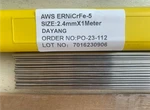

Precautions For Using E6011
1. Safety Protection: Top Priority, Not to Be Neglected
Complete Personal Protective Equipment (PPE) is a Must
During welding, always wear a welding helmet (equipped with standard-compliant light-filtering lenses to prevent eye damage from arc light), flame-retardant welding gloves (to protect against high temperatures and electric shock), flame-retardant welding overalls (covering arms and legs to avoid spark burns), and non-slip work shoes. Long hair must be tucked into a work cap. Short sleeves, shorts, or sandals are strictly prohibited during operation.
Ensure Good Ventilation
Welding produces harmful fumes containing manganese, iron oxide, etc. Always operate in a well-ventilated area (e.g., outdoors, workshops with exhaust systems). If working in an enclosed space, a mobile fume extractor must be used to avoid prolonged inhalation of fumes, which may cause health issues.
Be Alert to Fire and Electric Shock Risks
Keep flammable materials (such as gasoline, alcohol, paint) at least 5 meters away from the welding area. Prepare a dry powder fire extinguisher or a fire bucket. After welding, confirm no residual sparks remain before leaving.
Check if the welding machine and cables are in good condition (no damage or exposure of internal wires). The welding machine must be reliably grounded. Never operate the equipment with wet hands to avoid electric shock.
2. Pre-Operation Preparation: Attention to Details Ensures Quality
Electrode Inspection and Drying
Before use, inspect the electrode appearance: If the electrode coating is rusted, cracked, or peeling, or the electrode core is rusted, do not use the electrode. This prevents defects like porosity and slag inclusion during welding.
If electrodes are damp (e.g., the coating feels moist or the electrode is heavier than usual), place them in an electrode drying oven at 100-150℃ for 1 hour. After drying, store them in a holding oven at 80-100℃ and take them out for use as needed. (Damp unused electrodes must be re-dried, and the number of drying cycles should not exceed 2.)
Thorough Base Metal Cleaning
Before welding, use sandpaper, wire brushes, etc., to remove oil, rust, scale, and moisture from the welding area of the base metal. Uncleaned impurities will cause weld defects (e.g., porosity, lack of fusion) and reduce welding strength.
Accurate Equipment Parameter Setting
Select the appropriate welding current based on the electrode diameter (reference range below):
| Electrode Diameter (mm) | Welding Current (A) |
|---|---|
| 2.5 | 70-100 |
| 3.2 | 90-130 |
| 4.0 | 120-160 |
Excessively high current may cause the coating to turn red and peel, or burn through the electrode core. Excessively low current leads to unstable arcs and insufficient penetration. It is recommended to perform a test weld on scrap metal first to confirm the current is suitable before formal welding.
3. Welding Process: Standard Operation Guarantees Weld Quality
Arc and Electrode Manipulation Techniques
Adopt short-arc welding (arc length ≈ 1/2 of the electrode diameter). Avoid long arcs, as they reduce the protective effect of the coating and cause porosity.
The straight back-and-forth electrode manipulation method is recommended (especially for root pass welding). Maintain a uniform manipulation speed-avoid excessively fast or slow speeds (fast speeds may cause lack of fusion; slow speeds may burn through thin workpieces).
Adjustments for Different Welding Positions
E6011 electrodes can be used for flat welding, vertical welding, horizontal welding, and overhead welding, but current and techniques need to be adjusted for different positions:
For vertical, horizontal, and overhead welding, reduce the current by 10-15% compared to flat welding to prevent excessive molten pool flow.
For overhead welding, control the molten pool temperature, use short arcs, and manipulate the electrode quickly to reduce molten iron sagging.
Do Not Skip Interpass Cleaning
For multi-layer and multi-pass welding, after each pass, use a slag hammer to remove weld slag and spatter from the weld surface. Inspect for defects before welding the next pass to avoid slag inclusion and lack of fusion.
4. Electrode Storage: Proper Preservation Extends Service Life
Unopened electrodes should be stored in a dry, ventilated, and cool warehouse. Place them on wooden pallets (at least 30cm above the ground) and keep them at least 20cm away from walls to prevent dampness.
Maintain the warehouse environment at temperature ≥ 5℃ and relative humidity ≤ 60%. Close doors and windows on rainy days to prevent moisture from entering.
If opened electrodes are not used within a short period, seal them and put them back in the original packaging, or store them in a holding oven/drying cabinet to avoid moisture absorption by the coating.
Important Reminders
If you are using E6011 electrodes for the first time, practice on scrap steel first to familiarize yourself with their arc characteristics (strong arc force) before formal welding.
If weld defects (e.g., porosity, cracks, slag inclusion) are found after welding, first check for issues such as electrode quality, base metal cleaning, and current parameters. Make corrections before re-welding.
For critical applications (e.g., pressure pipelines, load-bearing structures), welding must be performed by personnel with valid welding qualification certificates to ensure the weld meets relevant standards.
If you have any questions, please feel free to contact our technical support team. We wish you smooth welding!
Hot Tags: precautions for using e6011, China, manufacturers, suppliers, factory, company, wholesale, discount, buy, low price, high quality, products
You Might Also Like


Send Inquiry