




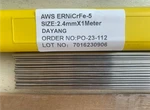

Chemical Properties Of E6011 Electrode
1. Core Composition and Chemical Functions 2. Key Chemical Properties and Characteristics 3. Chemical Composition of Deposited Metal (Typical Values per AWS A5.1 Standard) 4. Compatibility and Limitations of Chemical Properties
Send Inquiry
Product Introduction
1. Core Composition and Chemical Functions
| Component | Main Chemical Composition | Typical Content Range | Core Chemical Functions |
|---|---|---|---|
| Welding Core | Low-carbon steel (Fe as matrix), Mn, Si, P (impurity), S (impurity) | C ≤ 0.12%; Mn 0.30-0.60%; Si ≤ 0.03%; P/S ≤ 0.04% | 1. Act as the matrix of filler metal to ensure the basic mechanical properties of deposited metal; 2. Low-carbon design prevents welding cold cracks; 3. Trace Mn assists in deoxidation and reduces porosity risk |
| Electrode Coating | Cellulose (wood flour, starch), slag-forming agents (TiO₂, SiO₂), arc stabilizers (K₂O, Na₂O), deoxidizers (Mn/Si compounds), fluorides (CaF₂) | Cellulose 40-60%; Slag-forming agents 20-30%; Arc stabilizers 5-10%; Deoxidizers 5-10%; Trace fluorides | 1. Cellulose decomposes at high temperature to produce CO and H₂ (protective gases) that isolate O₂/N₂; 2. Slag-forming agents generate acidic slag to cover the molten pool (anti-oxidation) and adsorb impurities; 3. Arc stabilizers reduce arc ionization energy to ensure AC/DC welding stability; 4. Deoxidizers (Mn/Si) react with FeO to remove oxygen from the molten pool; 5. Fluorides assist slag formation and slight hydrogen removal |
2. Key Chemical Properties and Characteristics
| Category of Chemical Property | Core Mechanism | Chemical Significance/Impact |
|---|---|---|
| Strong Gas Shielding Capacity | Cellulose ((C₆H₁₀O₅)ₙ) in the coating decomposes at high temperature to generate protective gases mainly composed of CO and H₂ | Prevents molten pool metal from oxidation by O₂ (avoiding FeO porosity) and intrusion by N₂ (preventing Fe₄N embrittlement), ensuring welding quality |
| Acidic Slag Characteristics | Slag-forming agents are mainly acidic oxides (TiO₂, SiO₂), forming low-melting slag (1100-1300℃) with pH < 7 | 1. Reacts with alkaline impurities (FeO, MnO) to form composite slag, which is discharged from the molten pool; 2. High tolerance to slight rust/oil on the base metal, reducing pre-treatment requirements; 3. Good slag fluidity, suitable for all-position welding |
| Deoxidation and Impurity Removal Capacity | Mn in the welding core + Mn/Si compounds in the coating react with O₂ in the molten pool: Mn + FeO → MnO + Fe; Si + 2FeO → SiO₂ + 2Fe |
Reduces the oxygen content of deposited metal (≤ 0.05%) and minimizes oxide inclusions (FeO, Al₂O₃), improving the purity of deposited metal |
| Corrosion Resistance of Deposited Metal | Low-carbon steel matrix (no corrosion-resistant alloying elements like Cr or Ni); only a thin oxide film (Fe₃O₄/Fe₂O₃) forms on the surface | 1. Suitable scenarios: Dry atmospheric environment, short-term rust prevention; 2. Limitations: Cannot withstand humid, acid-alkali, or marine high-salt-spray environments; prone to electrochemical corrosion |
| Chemical Characteristics of Welding Fume | Combustion of Mn/Si/fluorides in the coating + incomplete decomposition of cellulose produce MnO₂, SiO₂, HF, and CO | 1. Health risks: MnO₂ may cause manganese poisoning; HF irritates the respiratory tract; CO is toxic; 2. Countermeasures: Forced ventilation and dust-proof/anti-toxic masks are required |
3. Chemical Composition of Deposited Metal (Typical Values per AWS A5.1 Standard)
| Element | Content Range | Core Chemical Function |
|---|---|---|
| C (Carbon) | ≤ 0.15% | Controls carbon content to avoid weld cold cracks and ensure weldability |
| Mn (Manganese) | 0.40-0.80% | Assists in deoxidation, improves the toughness of deposited metal, and reduces porosity risk |
| Si (Silicon) | 0.10-0.35% | Enhances deoxidation effect and improves slag fluidity |
| P (Phosphorus) | ≤ 0.04% | Strictly limits impurities to prevent weld hot brittleness (grain boundary embrittlement at high temperature) |
| S (Sulfur) | ≤ 0.04% | Strictly limits impurities to prevent weld cold brittleness (grain boundary embrittlement at low temperature) |
| O (Oxygen) | ≤ 0.05% | Residual content after deoxidation, ensuring stable mechanical properties of deposited metal |
4. Compatibility and Limitations of Chemical Properties
| Dimension | Compatible Scenarios (Based on Chemical Properties) | Limitations (Based on Chemical Properties) |
|---|---|---|
| Base Metal Type | Low-carbon steel (Q235, A3 steel): The composition of deposited metal matches the base metal, with no chemical incompatibility | Not suitable for stainless steel or low-alloy steel: Significant composition differences may cause embrittlement or cracking |
| Welding Environment | All-position welding (flat/vertical/horizontal/overhead welding): Strong gas shielding + good slag fluidity | Scenarios requiring ultra-low hydrogen (thick-plate welding): Moderate hydrogen content (no special hydrogen-removal design), prone to delayed cracks |
| Base Metal Condition | Slightly rusted/oiled base metal: Acidic slag can neutralize some impurities, reducing cleaning requirements | Severely oiled/rusted base metal: Excessive impurities exceed the slag tolerance limit, leading to porosity/inclusions |
| Service Environment | Dry indoor structures, non-load-bearing supports: Atmospheric corrosion resistance meets basic needs | Chemical industry (acid-alkali), marine (salt spray), or humid environments: No corrosion-resistant elements, so welds are prone to rust failure |
Hot Tags: chemical properties of e6011 electrode, China, manufacturers, suppliers, factory, company, wholesale, discount, buy, low price, high quality, products
You Might Also Like


Send Inquiry