


During the welding process, the welder can see a layer of covering floating on the surface of the molten pool, which is commonly known as welding slag. How to distinguish welding slag and molten iron in electric welding is very important for welders who are beginners in electric welding. I personally think that should be the case.
First, the welding slag is the product of the melting of the electrode coating and the high-temperature metallurgical reaction of the weld. Welding slag is mainly composed of metal oxides or non-metal oxides and other mineral salts.
Since its density is much smaller than that of liquid molten iron during welding, welders can easily observe a layer of floating objects on the upper part of the molten pool during welding.
In terms of color, it is darker than the liquid molten iron in the molten pool, and flows in the opposite direction to the welding direction and on both sides of the rear, and cools as the welding continues, becoming welding slag.
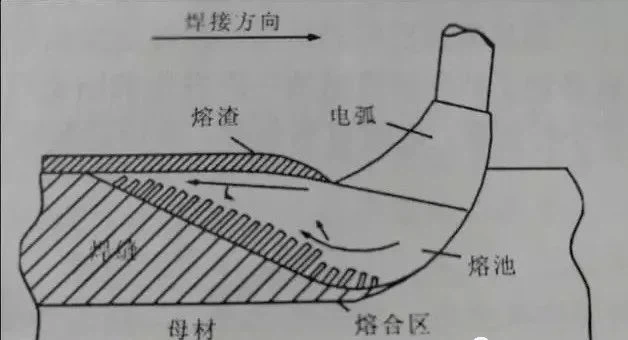
Second, the welding slag mainly protects the weld bead during the welding process.
The molten slag covers the liquid metal in the molten pool to separate the liquid metal from the air, preventing the intrusion of harmful gases such as oxygen, nitrogen, and hydrogen in the air, thereby protecting the weld bead.
Therefore, during the welding process, we must pay attention to the welding angle to ensure that the welding slag flows to the rear and the back sides, so as to observe the formation of the weld, avoid defects such as slag inclusion and pores, and ensure the welding quality.
Third, according to an experienced welder on site, those who distinguish molten iron during welding will find that the welding slag floating on the liquid molten iron, like oil splashes in the water, floats on the molten pool. easy to identify.


