


Recently, the news that my country's third aircraft carrier, the Fujian ship, has been launched, once again inspired every nerve cell of the Chinese people. However, in the aircraft carrier manufacturing process, one of the most inconspicuous processes may have the most incredible effect on quality and safety. What do you think is the process? That is welding.
In the manufacturing process of aircraft carriers, the quality of welds is not only crucial for aircraft carriers, but also is the most important link in various industries such as nuclear power, pressure vessels, shipbuilding, and high-speed rail. Because of a small welding defect, it may be The source of the late security risks, the embankment of a thousand miles, begins with the ant nest. Therefore, it is conceivable how important the quality of the weld is.
So, how does the 50mm thick aircraft carrier deck ensure its welding quality?
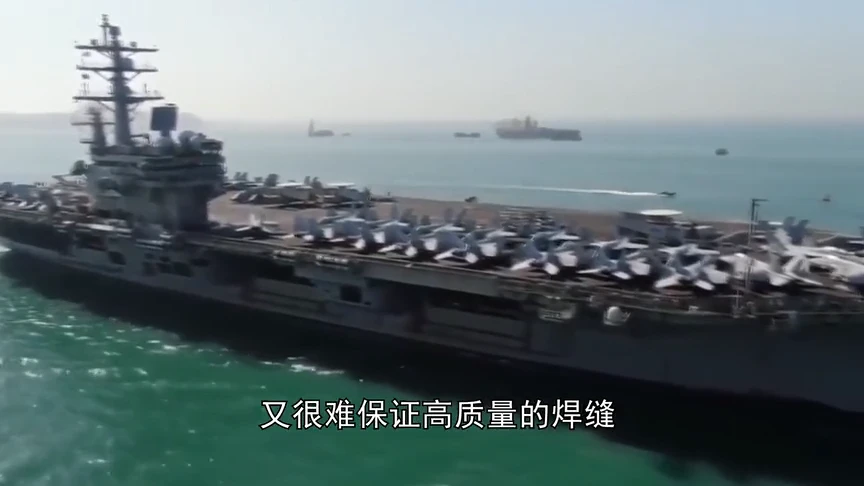
First of all, let's first understand what material the deck of the aircraft carrier is. Aircraft carrier decks generally use high-strength alloy steel plates with a yield strength of over 400 MPa and a thickness between 30 and 50 mm. At present, the HY series of the United States and the AK series of Russia are the most outstanding. Related steel companies in my country have also made breakthroughs in this field, and successfully used domestic steel in the construction of domestic aircraft carriers. At present, aircraft carrier deck steel is generally rolled by large rolling mills. my country has the world's largest 5.5-meter extra-wide thick plate rolling mill.
Since the deck area of an aircraft carrier usually reaches more than 15,000 square meters, these steel plates must be welded together. So, which welding process is used for the welding of this deck?
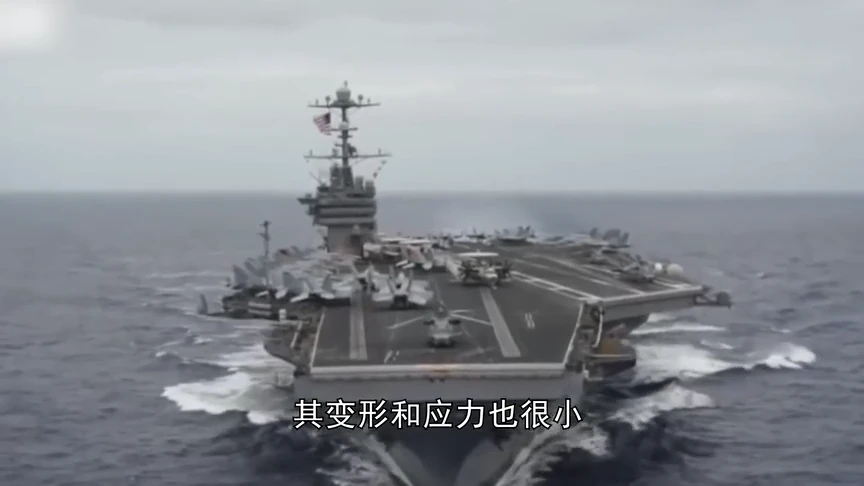
We all know that in fact, various welding processes are similar, but what we need is high-efficiency and high-quality welding. Therefore, among all arc welding methods applicable to aircraft carrier decks (similar to HSLA-100 steel), GTAW (tungsten electrode Inert gas shielded welding) has the least inclusions in the weld, but this welding process has low efficiency and is more suitable for thin plate welding. Therefore, in order to deal with deck steel with a thickness of more than 30mm, BGTAW (submerged arc gas tungsten arc welding) can be used. , This process does not require grooves when welding thick plates, and the total heat input is smaller than that of ordinary welding methods, so the efficiency of welding aircraft carrier decks is very high, but in any case, strict welding process specifications must be formulated to control the welding joints. To ensure the crack resistance and mechanical properties of the weld, NG-SAW narrow gap submerged arc welding can also be selected for similar welding processes.
In addition, as we all know, welding will cause deformation, and how to ensure the deck flatness of such a large area of deck welding is less than three thousandths, this is a key technology, and no relevant information has been found, it should be kept confidential. As far as welding deformation control is concerned, welding professionals can basically analyze how to control it, so I won't go into details here.


