If you are engaged in welding structural steel, pressure vessels, piping, ships, or any project requiring compliance with specific industry standards (such as ASME certification), you would choose E7018-a low-hydrogen electrode with a tensile strength of 70,000 psi that effectively prevents hydrogen from entering the weld metal, thereby avoiding cold cracking issues that could damage your professional reputation. Conversely, if you are welding sheet metal, brackets, farm gates, or HVAC ductwork, performing cosmetic repairs, or simply teaching your child how to strike an arc in the garage, you would choose E6013-a titania-type (rutile) electrode with a tensile strength of 60,000 psi. It offers high forgiveness, allowing for easy arc initiation even with a simple welder operating at just 40 amps, and produces aesthetically pleasing welds even on rusty metal surfaces.
This is not a new perspective. What is truly new is that, compared to five years ago, the debate over the merits of these two electrodes has taken on heightened importance in 2025. The global welding consumables market exceeded $17.85 billion in 2024 and is projected to reach $26.98 billion by 2032, growing at a compound annual growth rate (CAGR) of 5.3%, with covered electrodes still commanding a 33.45% market share. Underlying these figures, the market structure is shifting significantly toward low-hydrogen products: Lincoln Electric's consumables business saw a 22.2% year-over-year increase in the first quarter of 2026, reaching $636 million, driven largely by price adjustments implemented to offset rising raw material costs. Today, every welder purchasing a 5-pound box of welding electrodes is operating within a market undergoing transformation-driven by demands ranging from U.S. Navy shipbuilding and offshore wind power to LNG pipeline construction, and shaped by a high-profile welding scandal that thrust the necessity of 7018 electrodes into national headlines.
The following is a 2025 guide comparing 7018 and 6013 electrodes; while it covers technical details, it also takes into full account current supply chain conditions, market pricing, and the context of recent major news stories.
First, let's decode the AWS designations: revealing the actual meaning behind "7018" and "6013."
Both classifications originate from the AWS A5.1 / A5.1M standard, which governs carbon steel covered electrodes used in Shielded Metal Arc Welding (SMAW). The meanings of the five-character codes are as follows:
E - The product is an electrode.
60 / 70 - Minimum tensile strength of the deposited metal in thousands of pounds per square inch (psi) (6013 corresponds to 60,000 psi; 7018 corresponds to 70,000 psi).
1 - The electrode is suitable for all welding positions (flat, horizontal, vertical, and overhead).
3 / 8 - Coating type and applicable current: "3" denotes a high-titania potassium (rutile) type, suitable for AC, DCEP (Direct Current Electrode Positive), or DCEN (Direct Current Electrode Negative); "8" denotes an iron-powder, low-hydrogen potassium type, suitable for AC or DCEP.
Common suffixes found on packaging (such as -1, H4, H8, H16, R, MR, M) serve as additional designators. For 7018 electrodes, these markings are critical: H4 indicates a diffusible hydrogen content of ≤ 4 ml per 100 g of deposited metal; R / MR (meaning "moisture-resistant") indicates that the electrode has passed a 9-hour exposure test at 80°F (approx. 27°C) and 80% relative humidity (RH). The E7018-1 H4R designation represents a premium specification combination that is increasingly becoming the standard choice across the offshore engineering, nuclear, and shipbuilding industries.
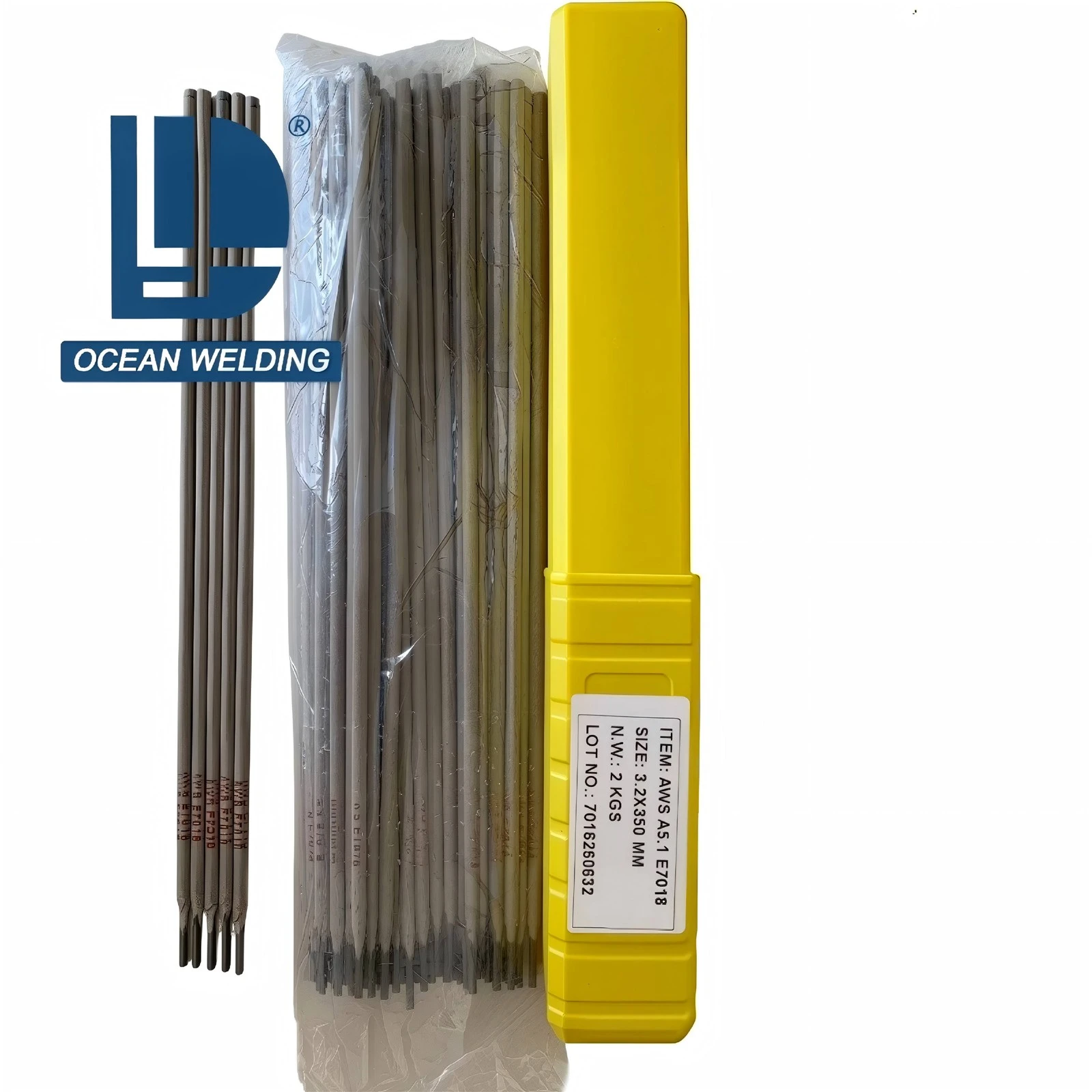
Next, let's look at a comparison chart between 7018 and 6013.
| Attribute | E6013 (rutile / high-titania K) | E7018 (iron-powder low-H K) |
|---|---|---|
| Minimum tensile strength | 60,000 psi (415 MPa) | 70,000 psi (490 MPa) |
| Minimum yield strength | ~48 ksi | ~58 ksi |
| Elongation (in 2 in.) | 17 % | 22 % |
| Charpy impact | Not required | ≥ 27 J at −29 °C (−45 °C for E7018-1) |
| Coating chemistry | Rutile, acidic slag | Basic, iron-powder low-hydrogen, potassium binder |
| Diffusible hydrogen | Not low-H (typically > 15 mL / 100 g) | ≤ 16 mL (standard), H8 ≤ 8, H4 ≤ 4; premium H4R ≈ 2–4 mL |
| Polarity | AC / DCEP / DCEN | AC or DCEP only |
| Positions | All positions, including downhill | All positions except vertical-down |
| Penetration | Shallow – medium | Medium (myth-buster: 7018 isn't a "deep-pen" rod either) |
| Storage sensitivity | Tolerant of ambient humidity | Must be baked ~250–300 °F rod oven; re-bake 700–800 °F if wet >4 h |
| Slag & bead | Easy release, very cosmetic | Uniform ripples, easy chip; short-arc drag technique |
| Deposition efficiency | ~ 95–105 % | ~ 105–115 % (iron-powder boost) |
| Base metals | Mild steel, thin gauge, non-critical | Mild + low-alloy structural steels: Q345 / A36 / A572 Gr.50 / A516-70 / ABS AH36 |
| Typical amperage (1/8″) | 80–130 A | 110–165 A |
| Code-work status | Rarely used on pressure / structural code work | Standard for AWS D1.1, ASME IX, API 1104 low-H requirements |
| Retail price (US, 2025) | ~ USD 2.50 – 3.10 / lb | USD 3.75 – 4.25 / lb (Hobart, ESAB, Lincoln) |
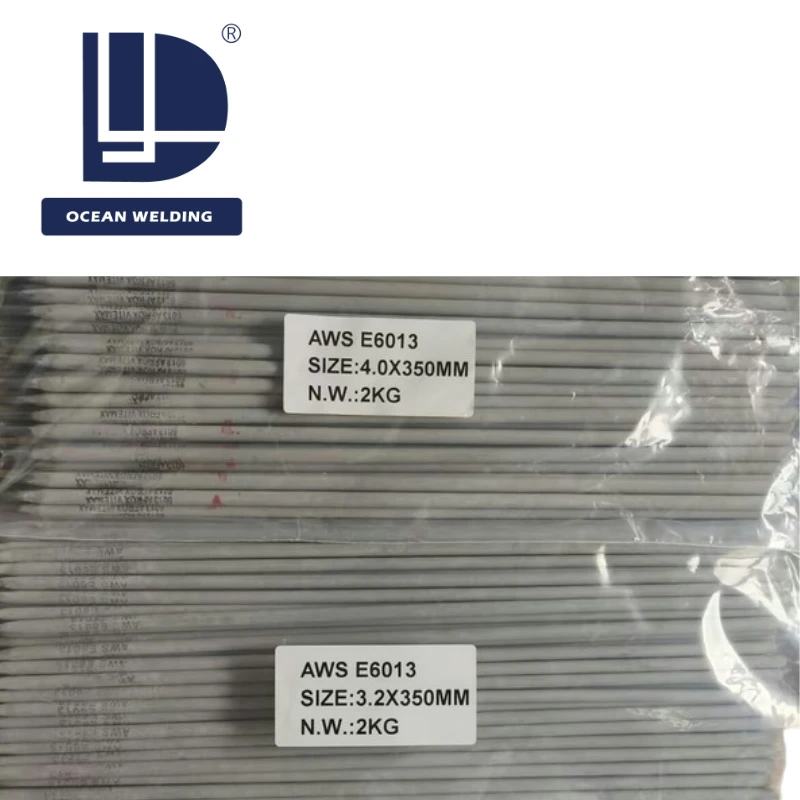
Some may wonder why this comparison is particularly important in 2025.
1. Market Demand Shifts Toward Lower Hydrogen Content and Higher Sales Volumes
Beyond the overall growth forecast by Credence Research-projecting an increase from $17.85 billion to $26.98 billion-Polaris Market Research estimates that the broader welding materials market will expand from $16.13 billion in 2024 to $25.40 billion in 2034 (a CAGR of 4.7%). Data from QYResearch regarding a specific segment-arc welding electrodes-indicates market growth from $3.75 billion in 2025 to $4.83 billion in 2031 (a CAGR of 4.3%); key suppliers in this space include Lincoln Electric, ESAB, voestalpine (Böhler Welding), Kobelco, and Miller. Nippon Steel Welding's launch of the SF-1E seamless flux-cored wire highlights a "diffusible hydrogen content of only 2.7 mL/100g" as a key selling point; this specification redefines the "low-hydrogen" standard for premium products and has driven sales growth for E7018 H4 and H4R class electrodes in the Shielded Metal Arc Welding (SMAW) sector.
2. Rising Prices and Growth Driven by Welding Consumables
Lincoln Electric's financial report for the first quarter of 2026 confirmed-with concrete figures-what welding supply distributors had been telling customers for the past 18 months: revenue from the consumables business rose by 22.2% year-over-year to reach $636 million. Lincoln Electric explicitly attributed this growth to "pricing actions"-essentially a euphemism for passing on raw material costs [4]. This situation aligns with benchmark retail pricing: 5-pound packs of Lincoln Excalibur® 7018 MR electrodes currently sell for approximately $4.25 per pound; ESAB Atom Arc 7018 for about $3.90 per pound; Hobart 7018 for about $3.75 per pound; and economy-grade 6013 electrodes for between $2.50 and $3.10 per pound. While the absolute price gap between 6013 and 7018 electrodes has widened, the real growth within the 7018 category has occurred in moisture-resistant H4/H4R-rated (i.e., "MR" type) products.
3. Shipbuilding, submarine construction, and infrastructure projects drive demand for low-hydrogen electrodes
In August 2024, the Associated Press (AP) cited Congressional Budget Office (CBO) analyst Eric Labs, who stated that the U.S. Navy's shipbuilding sector was in its "worst shape in 25 years": Marinette Marine shipyard offered $10,000 retention bonuses to keep welders, and the Navy invested $100 million in shipyard workforce retention programs. Subsequently, in November 2024, HII Newport News Shipbuilding identified welding quality issues affecting approximately 23 U.S. Navy vessels-including the aircraft carrier USS *George Washington* (CVN-73) and *Virginia*-class submarines SSN-795 and SSN-796-attributing the problems to the work of about 20 welders. This unfolding story serves as a prime example of the rigorous low-hydrogen welding standards required for E7018 electrodes; after all, no one would use 6013 electrodes to refurbish an aircraft carrier. When combined with the 2024 workforce study by Deloitte and the National Association of Manufacturers (NAM)-which projects 3.8 million manufacturing job openings between 2024 and 2033, with approximately 1.9 million remaining unfilled due to the skills gap-and U.S. Bureau of Labor Statistics (BLS) data showing 381,000 manufacturing job openings as of April 2025, the overall picture becomes clear: the pool of welders is shrinking while the volume of welding tasks requiring strict compliance grows, forcing every active welder to pull more low-hydrogen electrodes from their holding ovens to get the job done.
4. Sustainability has become a tangible driver of purchasing decisions
Ocean Welding has launched the E7018 electrode. As a Shielded Metal Arc Welding (SMAW) electrode, its market introduction reflects current industry trends toward environmental responsibility: buyers in the European Union have begun requiring suppliers to provide data on CO₂ emissions per kilogram of weld metal. Basic low-hydrogen 7018 electrodes (which contain iron powder) typically offer higher deposition efficiency than rutile 6013 electrodes (exceeding 110% for the former versus approximately 100% for the latter); this higher efficiency helps narrow the gap in CO₂ emissions generated per unit of deposited metal.